
Tuscan Chicken Thighs
 Add Preferred Source
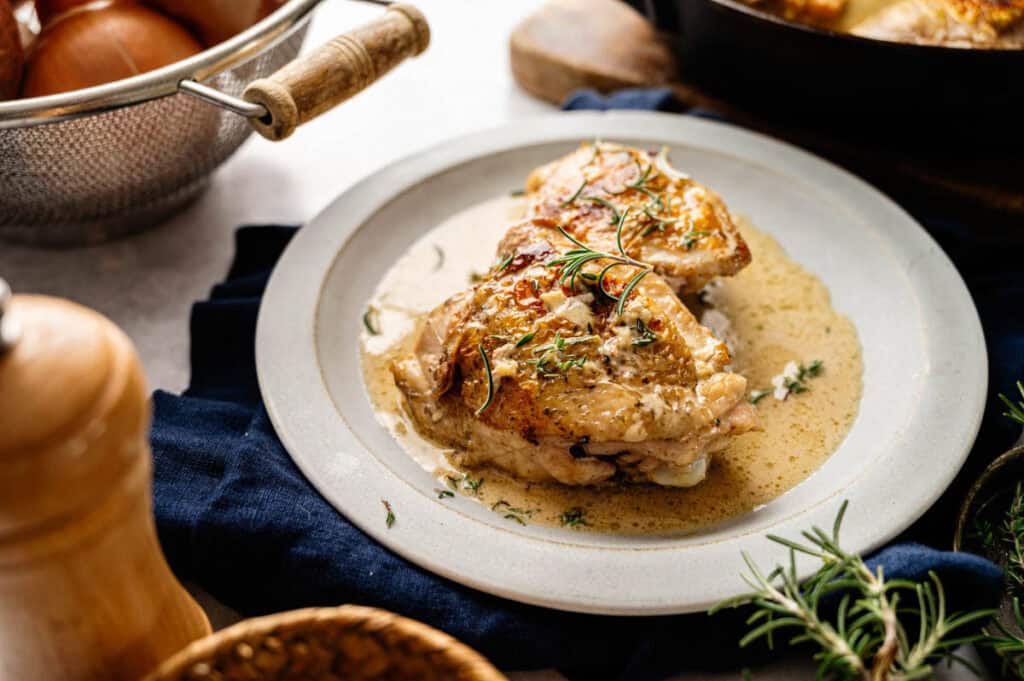
With juicy meat, creamy sauce, and a little Italian flair, these Tuscan Chicken Thighs are exactly what I love making on a weeknight. Golden chicken thighs with crispy skin sit in a silky cream sauce of garlic, fresh rosemary, and thyme. Every bite is incredibly tender and the sauce is so good you’ll want to mop it up with bread.
This post contains affiliate links. As an Amazon Affiliate, if you purchase through those links, I earn a commission. Thank you!
I make this for date nights, family dinners, and when I’m hosting guests because it looks impressive but doesn’t stress me out. It’s one-pan comfort food that makes weeknights so much easier. The creamy sauce pairs beautifully with pasta, rice, or crusty bread, and honestly kids and adults both go back for seconds. Store leftovers in the fridge for up to 3 days.
Ingredients You’ll Need
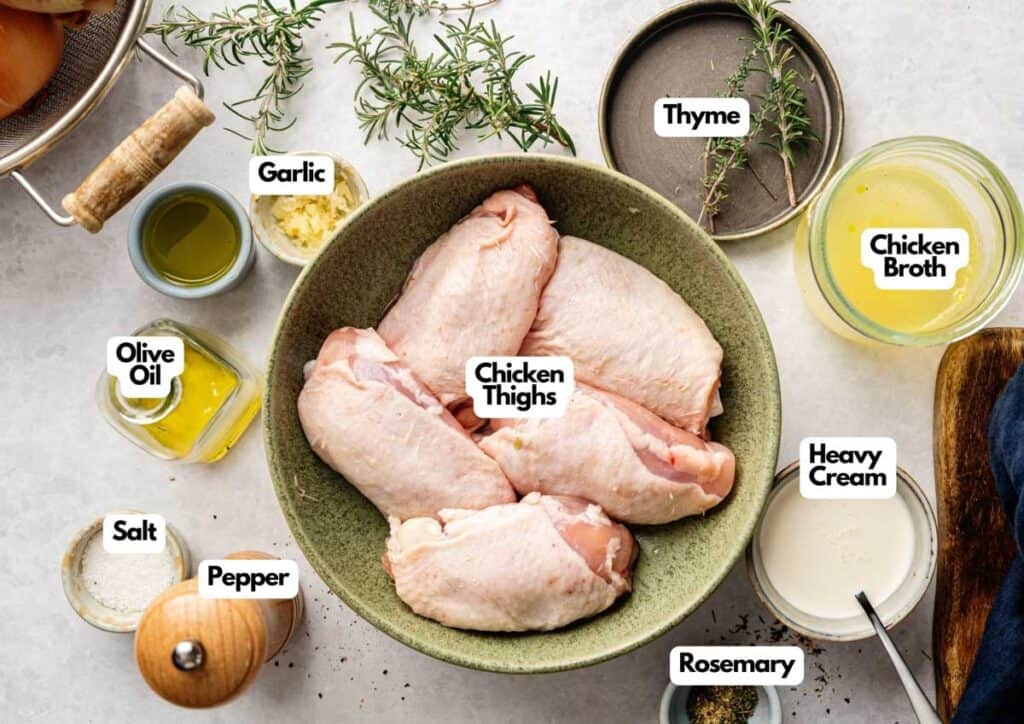
You’ll need all the ingredients shown in the photograph below.
How to Make Tuscan Chicken Thighs with Step-By-Step Instructions
Scroll down for the full recipe card containing a full printable recipe and measurements in both US customary and metric units.
You’ll love how quickly this one-pan dinner comes together.
Prep the Chicken
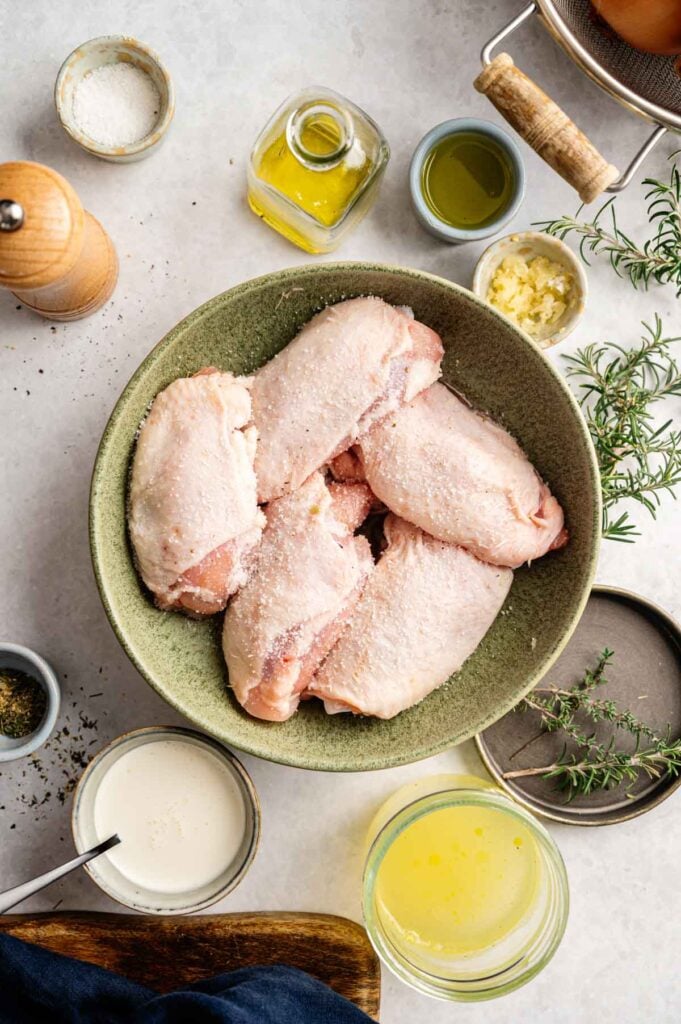
Pat the skin-on, bone-in chicken thighs dry with paper towels, then season both sides generously with salt and pepper. You can use garlic salt instead of regular table salt if you want to build an extra layer of garlic flavor throughout the dish.
Drying them first helps the skin become very crispy instead of steaming them in the pan. I use dark meat like bone-in thighs for maximum flavor, and because it’s so rich and the juiciest part of chicken.
However, you can also swap in boneless skinless chicken thighs or white meat like boneless skinless chicken breasts if you prefer. If you do so, just reduce the cooking time because boneless chicken thighs or breasts cook faster.
Sear Chicken
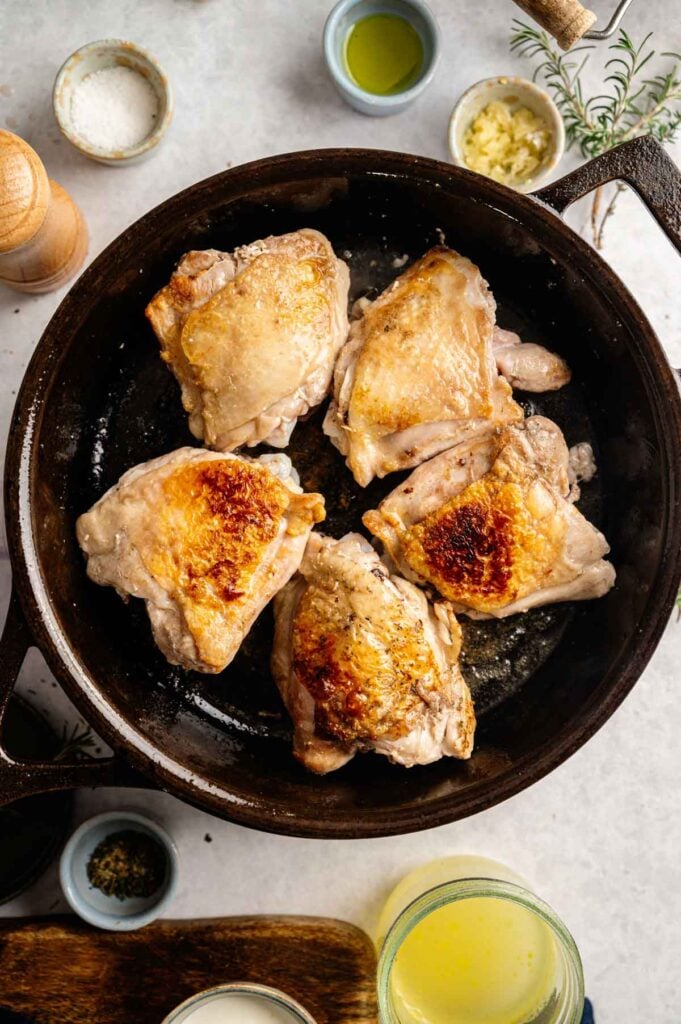
Heat the olive oil in a large skillet or heavy-bottomed pan over medium-high heat. Place the chicken thighs skin-side down and cook for 5 to 6 minutes per side, until the skin is golden brown and crisp.
You’ll know they’re ready to flip when the skin releases easily from the pan. I use a large non-stick skillet to keep cleanup super simple and silicone-tipped tongs for flipping. Remove the chicken from the skillet and set aside.
Build the Tuscan Sauce
Reduce heat to medium heat. In the same skillet, sauté garlic, rosemary, and thyme. If you want, boost the herb flavor by adding ½ teaspoon Italian seasoning or Italian herbs. Cook for 1 minute, stirring constantly with a wooden spoon, until fragrant.
Don’t let the garlic burn, or it’ll turn bitter. If you don’t have fresh garlic, substitute with ½ teaspoon garlic powder and add ¼ teaspoon onion powder. It won’t have quite the same punch as fresh, but it still flavors the sauce nicely.
Deglaze the Pan and Simmer
Pour in the chicken broth and use your wooden spoon to scrape up any browned bits from the bottom of the pan. Those bits are pure flavor. Chicken stock also works perfectly here if you don’t have broth.
For a touch of tang, you may add cherry tomatoes or fresh tomatoes to the skillet after deglazing it. They’re completely optional, and it’s up to you if you want those bursts of acidity to balance the cream. Simmer for 2 minutes to slightly reduce the liquid.
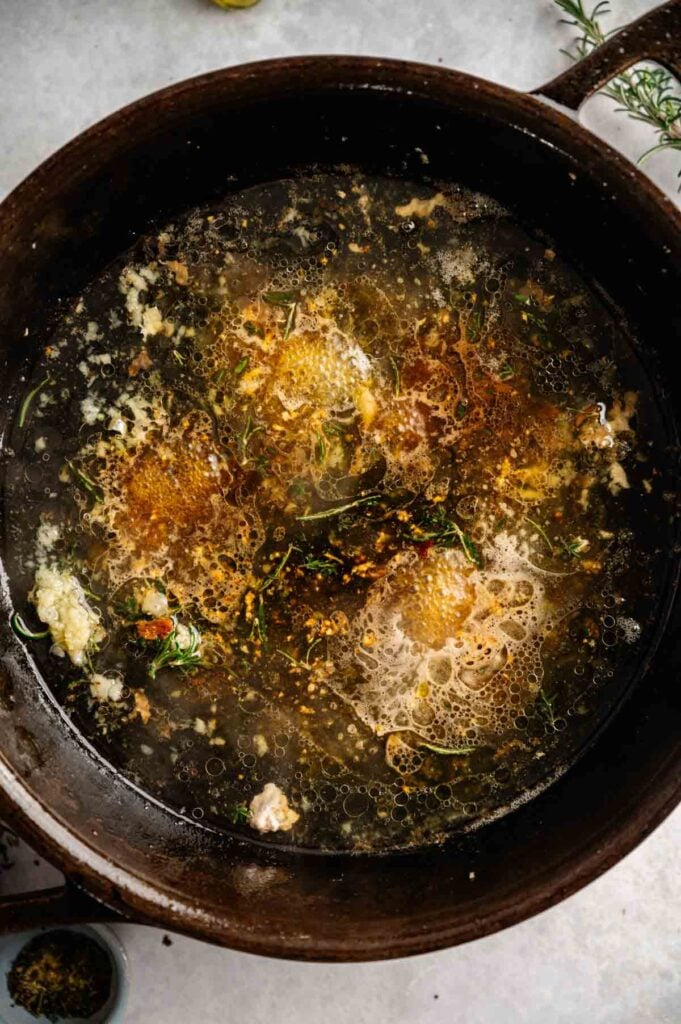
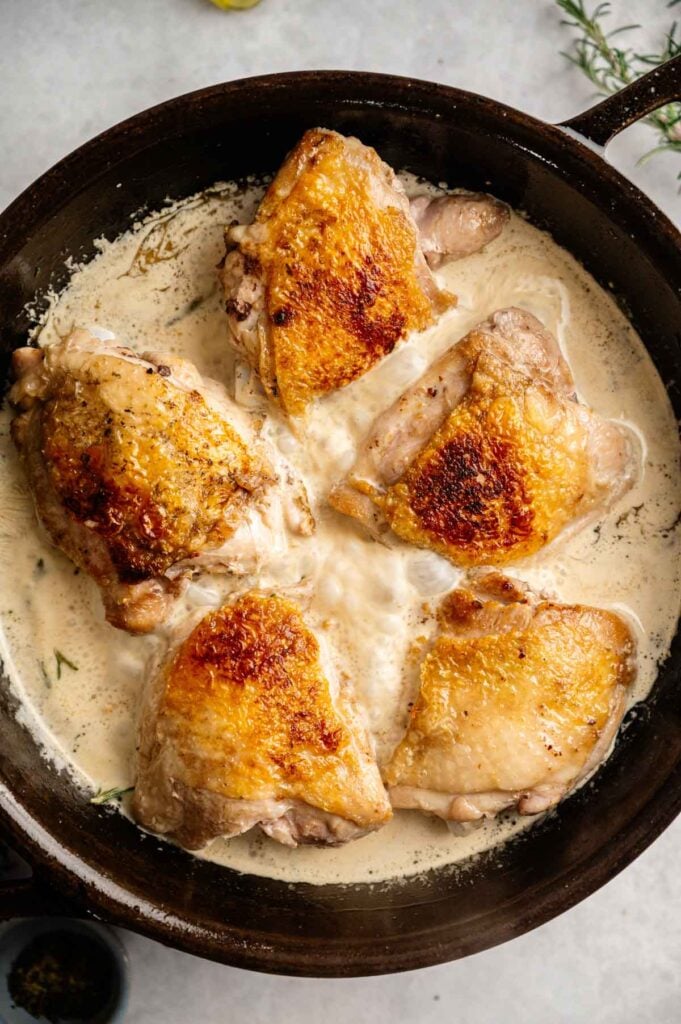
Add Cream and Chicken
Stir in the heavy cream, then return chicken thighs to the skillet, nestling them into the creamy sauce. Make sure the chicken skin stays above the liquid so it doesn’t get soggy or lose its crispness.
Feel free to melt Parmesan cheese into the sauce right after adding the cream; it thickens naturally and beautifully into a rich, nutty coating that clings to every bite.
However, if you want to make this Tuscan chicken thighs recipe dairy-free, don’t add any cheese and replace the heavy cream with coconut milk. You’ll get a slightly sweeter, tropical note, but it still creates a luscious, creamy sauce.
For a more traditional, classic Tuscan cooking, you can toss in sundried tomatoes or sun-dried tomato strips to bring a sweet, concentrated tomato flavor and turn the sauce a gorgeous reddish color, and save the tomato oil for drizzling if you like.
Finish Cooking
Reduce heat to low and simmer for 10 to 12 minutes, or until the chicken is fully cooked and reaches an internal temperature of 165°F on a meat thermometer and the sauce has slightly thickened. No guessing here; an instant-read thermometer is the way to go.
You could also add spinach, like chopped spinach or baby spinach, during the last 2 to 3 minutes of cooking, so they wilt just right into the sauce, adding extra nutrients and that pop of color. Either fresh spinach or frozen spinach would be fine.
Serve and Enjoy
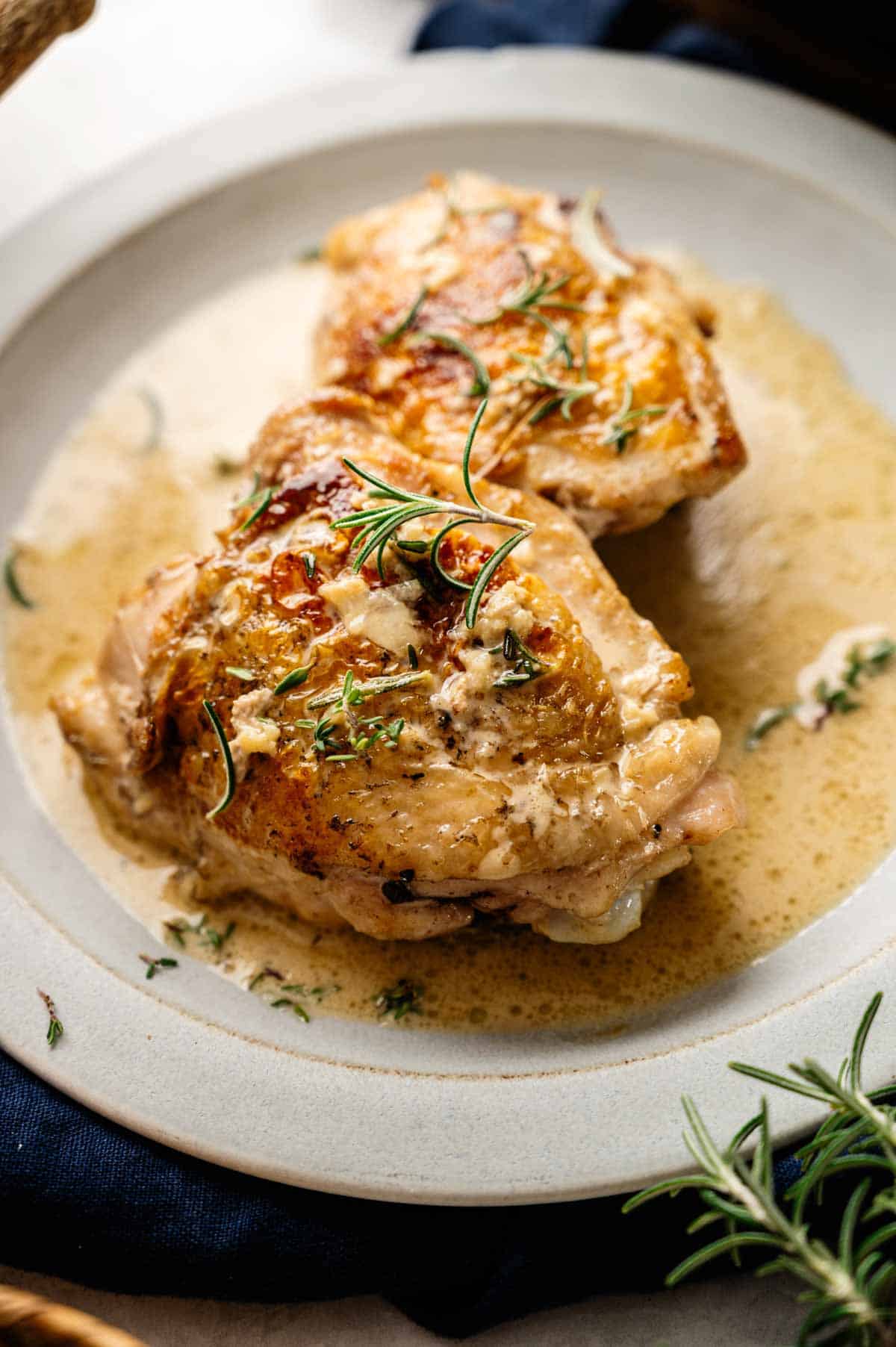
Taste test sauce and adjust the seasoning if needed. Serve immediately straight from the skillet or transfer to a serving platter. Garnish with extra thyme or fresh parsley for brightness. An optional squeeze of lemon juice also adds a nice citrus note.
Eat and enjoy while everything’s warm!
If you’re bringing this to potlucks, family gatherings, or bringing it to a friend’s house for dinner, pack it in a leakproof food container. The chicken thighs stay juicy and hold up beautifully, and the sauce stays creamy and doesn’t break down while you travel.
To keep it warm until serving time, wrap the container in a thick towel or transport it in an insulated carrier to maintain the temperature for a few hours.
Equipment
Ingredients
For the Chicken:
- 1.5 pounds bone-in skin-on chicken thighs (around 5-6 pieces)
- Salt and black pepper to taste
- 1 tablespoon olive oil
For the Sauce:
- 3 garlic cloves minced
- 1 teaspoon dried rosemary
- 1 teaspoon fresh thyme leaves
- ¼ cup chicken broth
- ¼ cup heavy cream

Video
Instructions
- Pat the chicken thighs dry with paper towels. Season both sides generously with salt and black pepper.1.5 pounds bone-in skin-on chicken thighs, Salt and black pepper
- Heat the olive oil in a large skillet over medium-high heat. Place the chicken thighs skin-side down and cook for 5 to 6 minutes per side, until the skin is golden brown and crisp. Remove the chicken from the skillet and set aside.1 tablespoon olive oil
- Reduce the heat to medium. In the same skillet, add the minced garlic, rosemary, and thyme. Cook for 1 minute, stirring constantly, until fragrant.3 garlic cloves, 1 teaspoon dried rosemary, 1 teaspoon fresh thyme leaves
- Pour in the chicken broth and use a wooden spoon to scrape up any browned bits from the bottom of the pan. Simmer for 2 minutes to slightly reduce the liquid.¼ cup chicken broth
- Stir in the heavy cream, then return the chicken thighs to the skillet, nestling them into the sauce.¼ cup heavy cream
- Reduce the heat to low and simmer for 10 to 12 minutes, or until the chicken is fully cooked and reaches an internal temperature of 165 degrees Fahrenheit and the sauce has slightly thickened.
- Taste the sauce and adjust the seasoning if needed. Serve warm.
Notes
Nutrition
How to Store Leftovers
Let the chicken cool completely before transferring it to an airtight container with the sauce. It’ll stay fresh in the fridge for up to 3 days. Reheat gently in a covered skillet over low heat or in the microwave at 50% power to keep the chicken from drying out.
For longer storage, freeze the chicken and sauce separately in a freezer-safe container for up to 2 months. Thaw overnight in the fridge before reheating. The sauce might separate slightly after freezing, but a quick stir while reheating brings it back together.
What to Serve With Tuscan Chicken Thighs
I love serving them over creamy mashed potatoes or buttered egg noodles, so nothing goes to waste with that incredible sauce. Roasted vegetables like asparagus, green beans, or Brussels sprouts add nice contrast to the richness.
For a lower-carb option, zucchini noodles soak up the creamy sauce without weighing you down, or you could toss everything with fettuccine for a complete one-dish meal where the wide pasta catches all that rich, garlicky cream.
Crusty bread, fresh bread, or garlic bread is absolutely delicious for soaking up every last bit of the creamy garlic herb sauce. You can also serve it alongside polenta, risotto, or mashed cauliflower if you’re looking for something different.
More Easy Recipes for You to Try at Home
If you love this recipe, here are more Italian-inspired dinners to try next.
