
The Best Creamy Mashed Potatoes
 Add Preferred Source
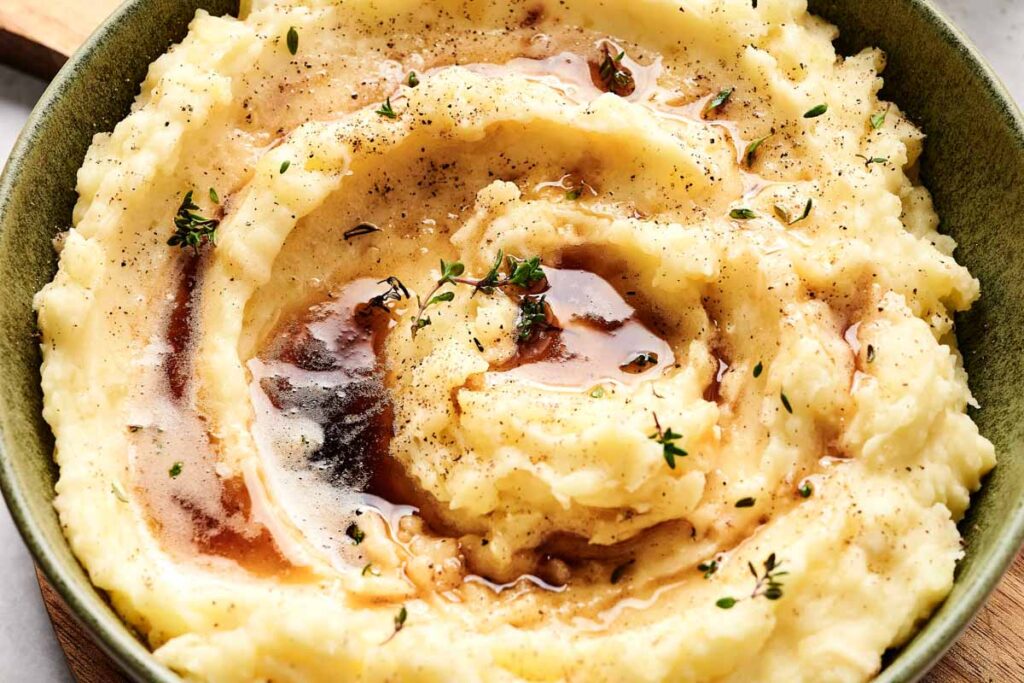
Mashed potatoes are the side dish people assume they can make in their sleep, right up until they turn out gluey, watery, or somehow bland. I keep this one creamy and smooth by leaning on three things: starchy potatoes, a gentle hand at the masher, and a whole head of roasted garlic passed through with the potatoes so it melts into every bite.

Four pounds of potatoes feed eight people, which makes it an inexpensive way to fill out a dinner, whether that’s a Tuesday next to meatloaf or a holiday table beside the turkey. The finishing pour of brown butter is optional, but it’s the part I’d fight you for.
This post contains affiliate links. As an Amazon Affiliate, if you purchase through those links, I earn a small commission. Thank you!
Why You’ll Love This Recipe
- Roasted garlic, not raw: a whole head goes soft and sweet in the oven, then gets mashed right in, so you get deep garlic flavor without any sharp bite.
- The texture holds up: starchy potatoes and a masher or ricer keep the potatoes light and creamy instead of gluey.
- It stretches: four pounds makes eight servings, so it feeds a crowd or leaves you leftovers for potato pancakes and shepherd’s pie.
- Make-ahead friendly: mash them a couple of days early and reheat with a splash of milk, so a busy holiday spread has one less thing to do at the last minute.
- Brown butter finish: a few minutes in a skillet turns plain butter nutty and golden, and it’s the difference between good potatoes and the kind people remember.
Ingredients You’ll Need
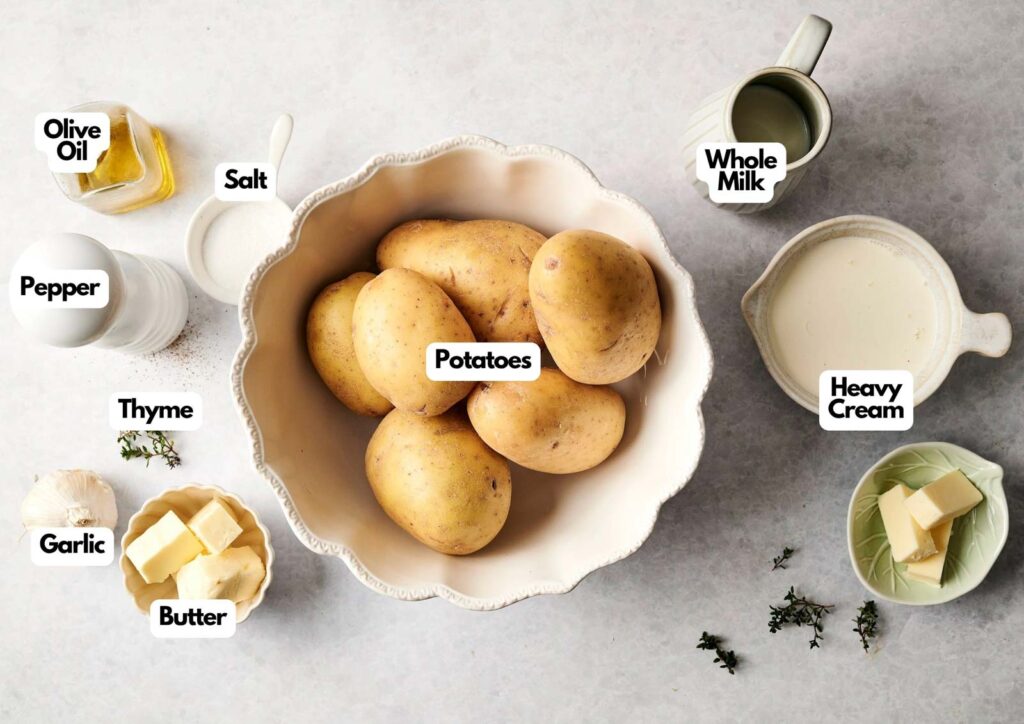
You’ll find the full list and measurements in the recipe card below. Here are the ones worth a word before you start.
- Potatoes: four pounds, peeled and quartered. Yukon Gold gives you the creamiest, most buttery mash, while russet potatoes usually cost less and mash up fluffier, so either works depending on what your store has and what you want to spend. Both are starchy enough to stay light. Skip waxy red potatoes here, since they turn gluey when mashed.
- Garlic: one whole head, halved and roasted with a teaspoon of olive oil until soft. Roasting takes the raw edge off the garlic, so a full head reads as mellow and sweet rather than punchy.
- Heavy cream and whole milk: two cups of each make the potatoes rich. If you’re keeping costs down, drop the heavy cream and use all milk. The potatoes come out a little lighter but still smooth.
- Butter: six tablespoons of salted butter go into the mash at room temperature, plus three more that you’ll brown for the top. Softened butter blends into the potatoes without cooling them down.
- Fresh thyme: three sprigs add a little earthiness to the potatoes. It’s optional if you don’t keep it on hand, but it plays well with the brown butter.
How to Make the Best Mashed Potatoes
A complete printable recipe and the measurements in both US customary and metric are available in the recipe card below.
Here’s how it comes together. You can roast the garlic while the potatoes boil, so the whole thing moves quickly.
Roast the Garlic
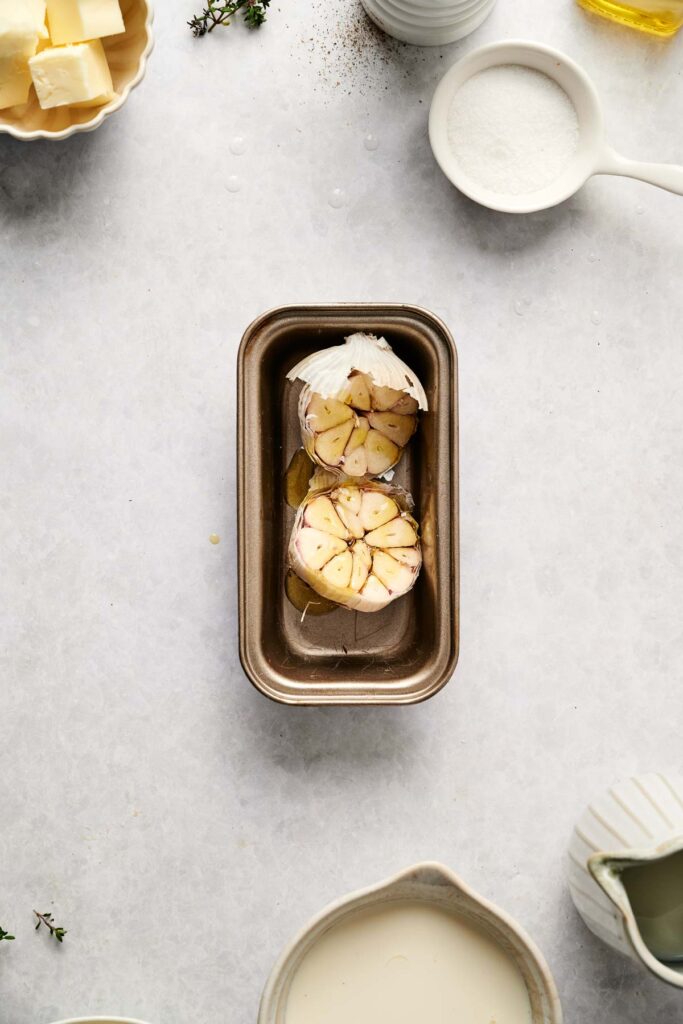
Heat the oven to 400ºF (200°C). Cut the head of garlic in half across the middle, set it on a piece of foil, drizzle with olive oil, and roast for about 12 minutes, until the cloves are soft and golden.

Boil the Potatoes
Put the peeled, quartered potatoes in a large pot and cover them with cold water. Starting in cold water matters because dropping potatoes into already-boiling water cooks the outsides before the centers are done and leaves lumps. Add a good pinch of salt, bring to a boil, and cook for 20 to 25 minutes, until a fork slides through easily. Drain the potatoes well.
Mash and Mix
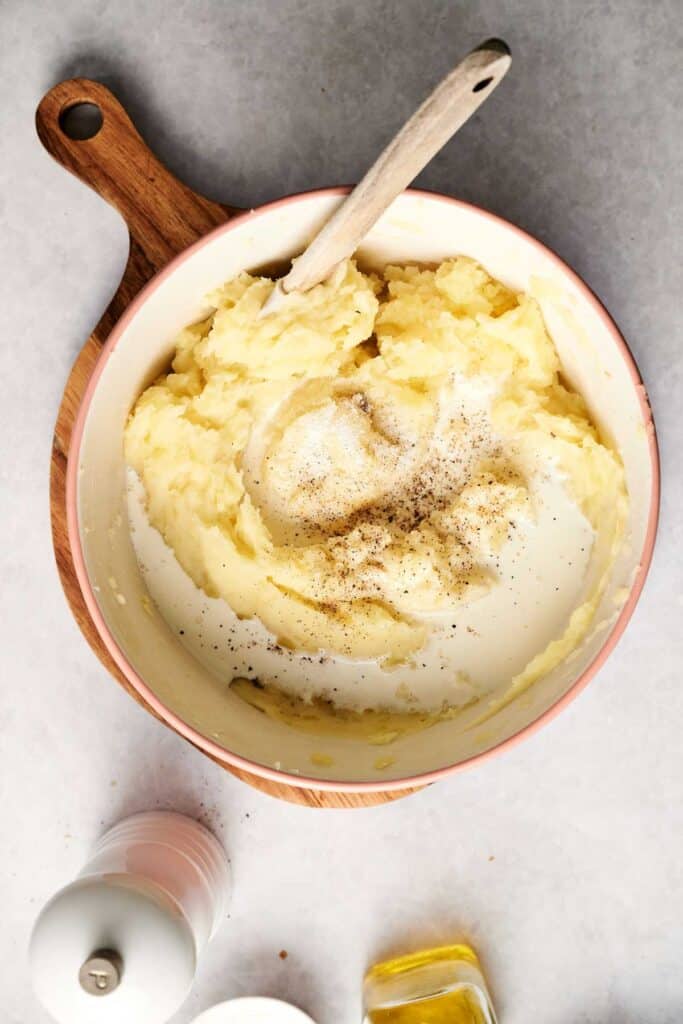
Pass the drained potatoes and the soft roasted garlic cloves through a potato ricer, or mash them in the pot with a potato masher. I stop the second they look smooth, since the more you work them, the more starch you release, and that’s what turns a good mash gluey. Stir in the heavy cream, whole milk, thyme, the room-temperature butter, and salt and pepper until everything comes together.
Brown the Butter
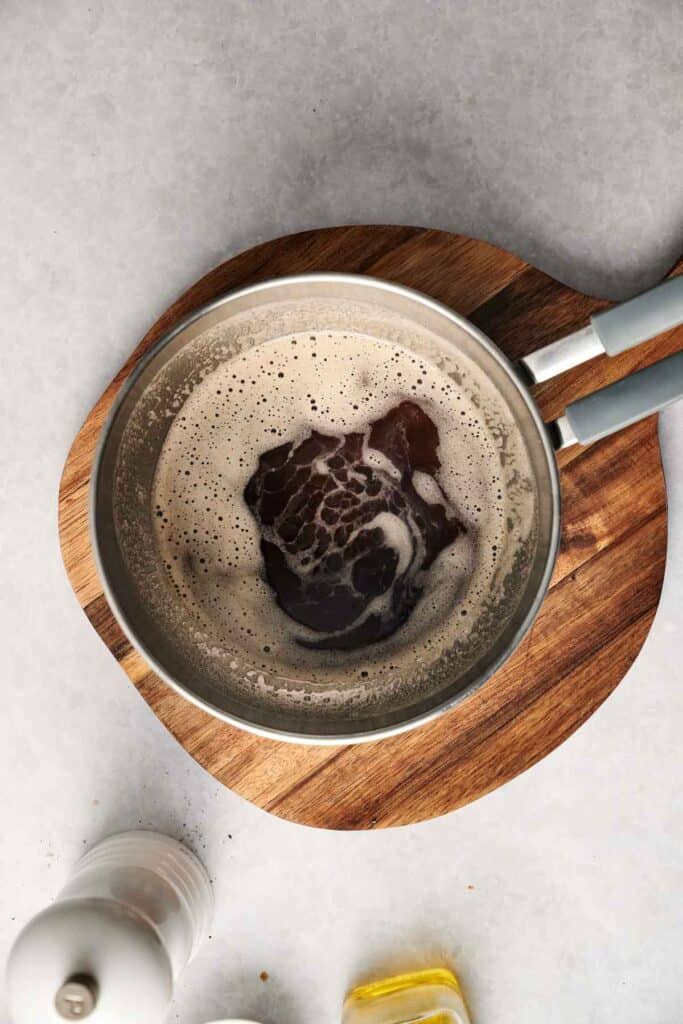
Melt the three tablespoons of butter in a small skillet over medium heat. Let it bubble for two to three minutes, swirling now and then, until it smells nutty and turns golden brown, then pull the butter off the heat right away so it doesn’t scorch.
Serve
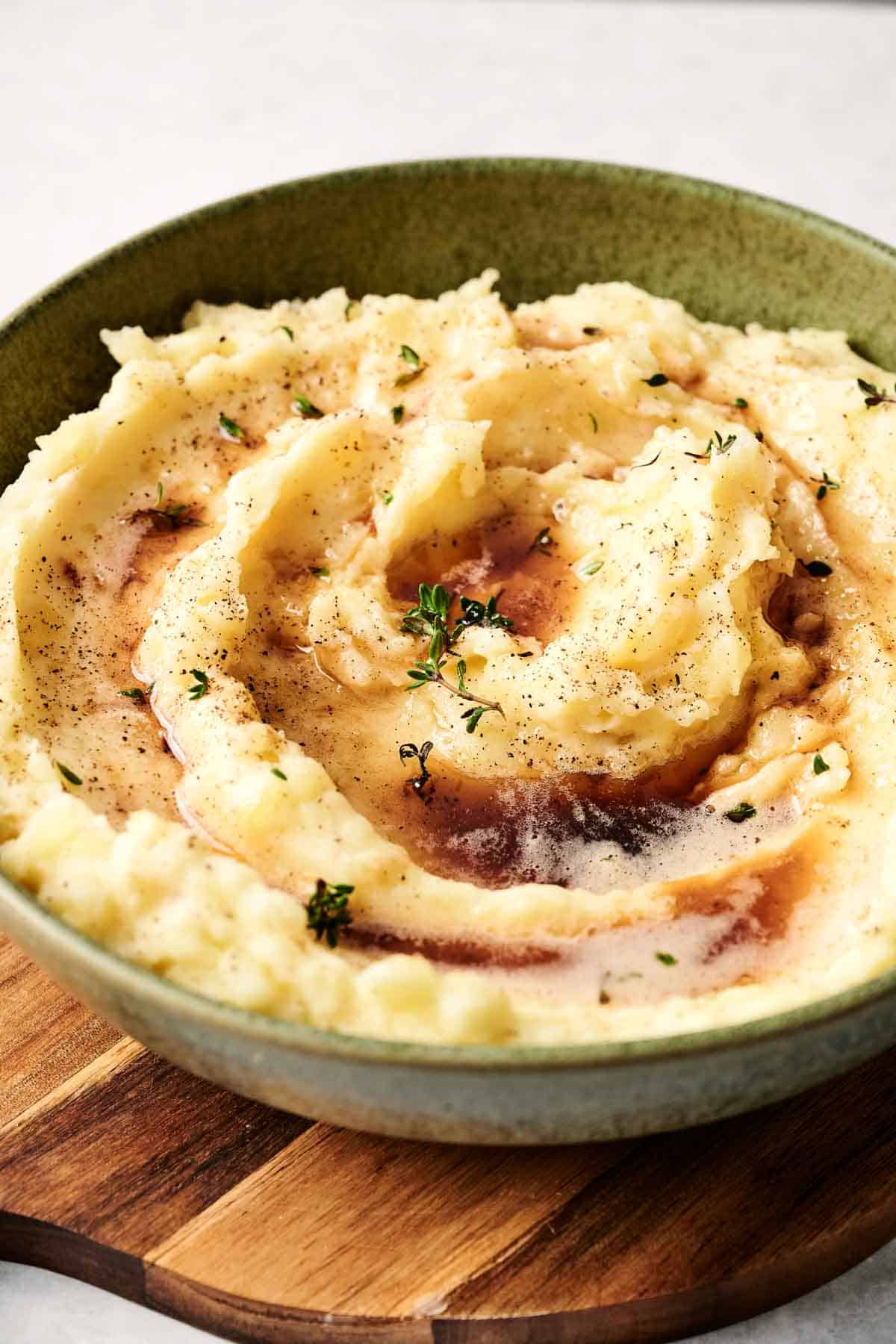
Spoon the potatoes into a warm dish, pour the brown butter over the top, and finish with fresh thyme and a few cracks of black pepper.
Recipe Notes and Tips
- Salt the cooking water, not just the finished potatoes. Seasoning the water flavors the potatoes from the inside, while salting only at the end leaves the centers flat.
- Warm your dairy if you can. Cold milk and cream cool the potatoes down, so taking the chill off them first helps everything blend more smoothly, though the recipe still works if you add them straight from the fridge.
- Don’t use a blender or food processor. They overwork the starch and turn the potatoes to paste. A masher or ricer is the only tool you want here.
- If the potatoes turn out gluey, it’s almost always over-mashing. Folding in a little extra warm butter can soften them, but the real fix is a gentler hand next time.
- A ricer gives you the smoothest, silkiest potatoes, while a masher leaves them a touch more rustic. Use whichever matches the texture you’re after.
Recipe Variations
- Use russets for a fluffier, lighter mash that usually costs less. Mandy makes it both ways, so it’s tested, though russets soak up a bit more butter and milk than Yukon Gold.
- Leaving the skins on gives you a chunkier, more rustic potato with extra texture. This departs from the recipe as written, which peels the potatoes, so it hasn’t been tested here. Treat it as a change and scrub the skins well first.
- A couple of spoonfuls of sour cream or cream cheese make the mash tangier and even richer. It’s a well-supported swap that won’t change your cooking times.
- For a dairy-free version, warm chicken or vegetable broth can stand in for the cream and milk. That hasn’t been tested here and gives a looser, thinner result, so add the liquid slowly.
How to Store Leftovers
Get leftovers into an airtight container and refrigerate them within two hours of serving. They’ll keep in the fridge for three to four days. To reheat, add a splash of milk or a little butter and warm them on the stovetop or in the microwave, stirring occasionally, until heated through to 165°F, as recommended by the USDA. They can also be frozen for up to 3 to 4 months.
To get ahead of a big meal, mash and mix the potatoes up to two days early, refrigerate, and reheat with a little extra milk to loosen them back up. Since these are dairy-based, don’t let them sit out longer than two hours, or one hour if the room is warmer than 90°F.
What to Serve With Mashed Potatoes
Mashed potatoes go with almost anything, but they’re at their best under something saucy. They’re the classic partner for roasted turkey and a pour of turkey gravy at the holidays, and just as good on a weeknight next to meatloaf or a bowl of beef stew. For something a little richer, spoon them under beef stroganoff so the potatoes catch the sauce.
FAQs
Almost always over-mashing, or a run through the blender. Working the potatoes too hard releases their starch, which turns them sticky. Mash gently with a masher or ricer and stop as soon as they’re smooth.
Yes, and it’s a common swap. Yukon Gold gives the creamiest, most buttery result, while russets come out lighter for a bit less money. Pick by the texture you’re after.
You can. This mash freezes better than a leaner one because the butter and cream help the potatoes hold their texture. Thaw overnight in the fridge before you reheat.
More Recipes to Round Out Dinner
If mashed potatoes are the side, here are a few mains they’d be glad to sit next to.
- Swedish Meatballs: a creamy gravy that practically begs for a scoop of potatoes underneath.
- Chicken Pot Pie: a full dinner on its own, but a spoonful of mash on the side never hurts.
- Chicken Tenders: an easy weeknight win the kids will eat without complaint, mash included.
- Maple Glazed Turkey Breast: a smaller holiday centerpiece that leaves plenty of room for sides.
- Slow Cooker Nacho Meatballs: saucy enough that you’ll want something to soak it up.
Ingredients
- 1 head garlic
- 1 teaspoon extra virgin olive oil
- 4 pounds potatoes peeled and quartered
- 2 cups heavy cream
- 2 cups whole milk
- 3 sprigs fresh thyme
- 6 tablespoons salted butter at room temperature
- Salt and black pepper
- 3 tablespoons butter for the brown butter

Video
Instructions
- Heat the oven to 400ºF (200°C). Cut the garlic in halves, pour olive oil, and bake for 12 minutes, until soft and browned.1 head garlic, 1 teaspoon extra virgin olive oil
- In the meantime, peel and boil the potatoes for 20-25 minutes, until the potatoes are fork tender.4 pounds potatoes
- Drain the potatoes. Pass the potatoes and roasted garlic cloves through a potato ricer, or mash them directly in the pot with a potato masher.
- Add the heavy cream, milk, thyme, butter, salt and pepper.2 cups heavy cream, 2 cups whole milk, 3 sprigs fresh thyme, 6 tablespoons salted butter, Salt and black pepper
- Brown the butter in a small skillet at medium – you just have to bring it past the melting stage for 2-3 minutes, as soon as it starts to get brown, remove it from the skillet.3 tablespoons butter
- Serve the mashed potatoes with the browned butter, fresh pepper, and thyme.
Notes
- Start the potatoes in cold, salted water so they cook evenly and season from the inside.
- Mash gently with a ricer or masher and stop as soon as the potatoes are smooth, since over-mashing releases starch and turns them gluey.
- Warm the milk and cream before adding them so the potatoes stay hot and blend smoothly.
- Get leftovers into an airtight container and into the fridge within two hours of serving, where they’ll keep for three to four days.
