
Beef Wellington
 Add Preferred Source
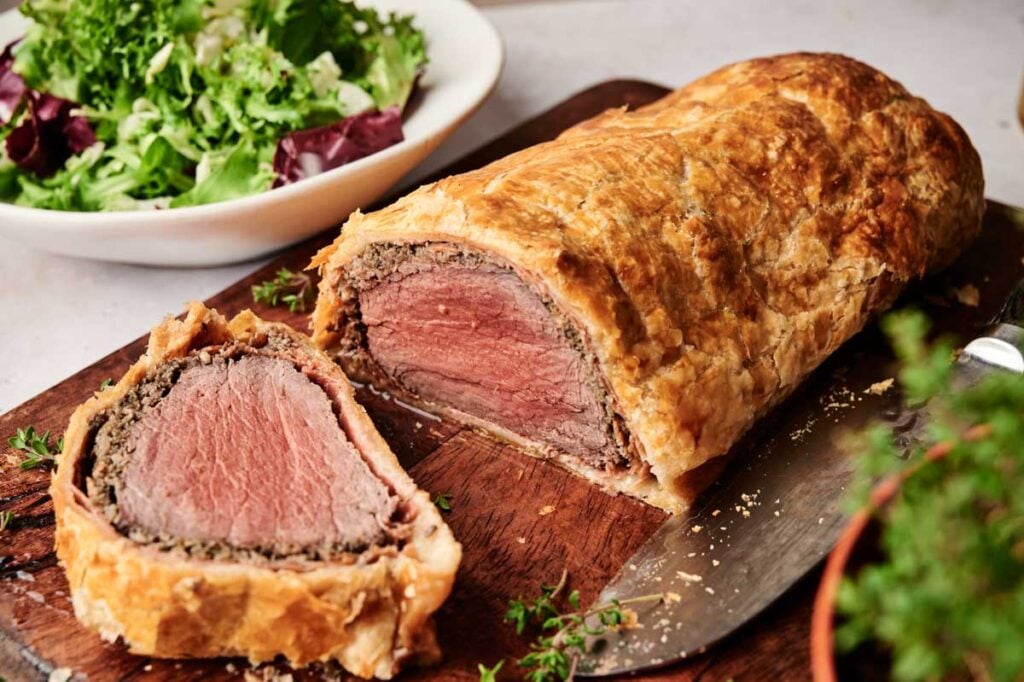
Beef Wellington is what I make when the dinner matters and I want one centerpiece that pulls the whole table in. It looks like something you’d order at a steakhouse and pay a lot for, but most of the work here is chilling and waiting, not knife skills you don’t have.

The thing that decides whether it works is moisture, so a dry mushroom layer and a well-chilled roast are what keep the pastry crisp underneath instead of going soft. Get those two right and the rest is mostly careful assembly.
This post contains affiliate links. As an Amazon Affiliate, if you purchase through those links, I earn a commission. Thank you!
Why You’ll Love This Recipe
- The prosciutto and mushroom layer keeps the beef juicy and gives the pastry a barrier, which is what stops the bottom going soggy.
- The messiest steps can be done hours ahead and chilled, so you’re not wrapping beef while guests are arriving.
- One center-cut tenderloin feeds twelve, so a premium cut goes further than it would as individual steaks.
- It’s a genuine special-occasion dinner you make at home instead of booking a table for it.
- Store-brand all-butter puff pastry bakes up just as flaky here as the name-brand, so that’s not where your money goes.
Ingredients You’ll Need
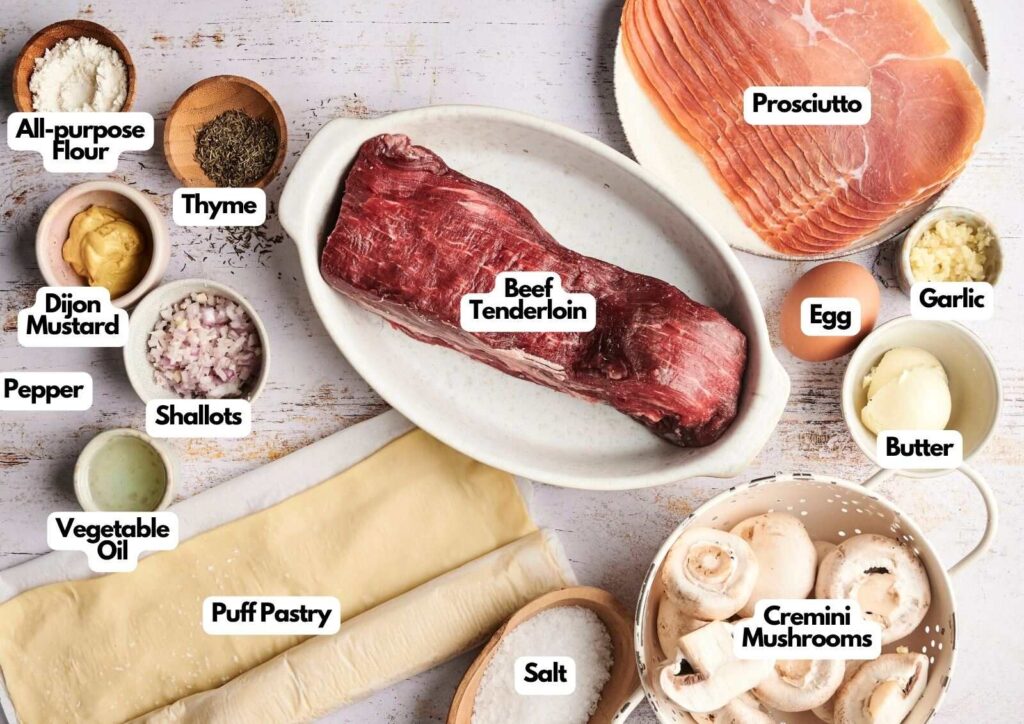
The printable card below has the full list with quantities. A few of the ingredients are worth a note before you shop.
- Beef tenderloin: a center-cut, trimmed roast is the classic cut for Wellington, and this middle section is the piece sometimes sold as chateaubriand. It’s the splurge in the recipe, so buy it when your store has it on sale, and one roast still covers twelve servings.
- Dijon mustard: this goes on the seared beef as a thin coat, not a sauce, and it adds a sharp note that cuts through all the richness.
- Cremini mushrooms: these get chopped fine for the duxelles, and you want to cook them down until the pan looks dry, since leftover water is the main reason a Wellington turns out soggy.
- Prosciutto: it wraps the beef under the pastry, seasons the meat, and works as a barrier that keeps the juices off the crust.
- Puff pastry: all-butter if you can find it. Store-brand works fine and bakes up just as well.
How to Make Beef Wellington
None of these stages is hard on its own. The whole thing comes down to keeping everything cold and giving each layer time to firm up before the next one.
Make the mushroom duxelles
Add the shallots, garlic, thyme, and cremini mushrooms to a food processor.
Pulse 10 to 12 times, scraping down the sides as needed, until finely chopped but still textured, not a paste. Transfer the mixture to a bowl.
Sear the tenderloin
Pat the beef tenderloin dry with paper towels and coat all sides with the Dijon mustard. Season with salt and black pepper. Heat the oil in a large frying pan over medium-high heat.
When the oil is shimmering, add the beef and sear, turning occasionally, until browned on all sides, about 8 minutes. Remove the beef and refrigerate it.
Dry out the mushroom mixture
In the same pan, melt the butter over medium heat. Add the duxelles and cook, stirring occasionally, until the mixture is dry and the mushrooms and pan begin to brown, about 15 minutes.
Spread it onto a large plate and refrigerate for 30 minutes to 1 hour, until completely cold. This is the step that protects your pastry, so don’t rush it.
Wrap the beef in prosciutto
Lay a large sheet of plastic wrap on your work surface. Arrange the cold prosciutto slices on it in overlapping rows, forming a rectangle large enough to fully wrap the beef.
Spread the chilled mushroom mixture evenly over the prosciutto, leaving a 1/2-inch border at the edges.
Set the beef horizontally on the prosciutto at the edge closest to you. Use the plastic wrap to roll the prosciutto and mushrooms tightly around the beef, with the seam face down.
Twist the ends of the wrap to seal and refrigerate for at least 30 minutes and up to 8 hours.

Wrap it in pastry
Preheat the oven to 350°F (180°C) and line a rimmed baking sheet with parchment paper. Roll out the puff pastry on a lightly floured surface.
Unwrap the chilled beef and place it seam-side down on the pastry. Wrap the pastry tightly around the beef, trim any excess, and seal the edges with egg wash.
Fold in the ends and brush them with egg wash too. Transfer the Wellington seam-side down to the prepared baking sheet and brush the entire surface with egg wash. Sprinkle with flaky salt, if you like.

Bake and rest
Bake for 40 to 50 minutes, or until the internal temperature reaches 140-150°F (60-65°C) for medium-rare, checking with a thermometer rather than relying on the clock, since the pastry hides what the beef is doing.
If the pastry browns too quickly during baking, tent it loosely with foil. Once baked, let the Wellington rest for 20 minutes on the baking sheet.

Recipe Notes and Expert Tips
- Keep the puff pastry cold right up until you use it. Warm pastry gets slack, tears, and melts into the beef instead of baking up crisp.
- The biggest thing between you and a soggy bottom is a dry duxelles, so cook that mushroom mixture until the pan is dry before you assemble.
- Chill the beef before it goes into the pastry, and if your kitchen is warm, chill the wrapped Wellington again before it bakes.
- Trust a thermometer over the clock or the color of the crust, because the pastry hides what the beef is doing and the carryover while it rests is bigger than you’d expect.
- Let it rest the full 20 minutes before you cut it, or the juices run out and the slices fall apart.
Recipe Variations
- Leave the mushrooms out if they’re not for you, lean on a double layer of prosciutto to protect the pastry instead, and know you’ll lose the earthy depth the duxelles brings. I haven’t tested that version here.
- For individual portions, cut the tenderloin into thick steaks and wrap each one on its own. The bake time drops and the assembly gets fiddlier, so treat it as untested in this recipe.
- Tenderloin is the splurge, and a well-trimmed center-cut sirloin can stand in if you want to spend less. It’s leaner and firmer and cooks differently, so watch your thermometer closely, and note I haven’t tested that swap here.
How to Store Leftovers
To get ahead, wrap the beef in the prosciutto and duxelles and chill it for up to 8 hours before you pastry-wrap and bake, adding the egg wash just before it goes in.
Keep it in the fridge until the oven is hot, since beef shouldn’t sit out in the 40-140°F (4-60°C) range for long.
Refrigerate leftovers within 2 hours and store them in an airtight container for 3 to 4 days. You can also freeze cooked Wellington for 2 to 3 months and thaw it overnight in the fridge.
Reheat leftovers, whether refrigerated or thawed, to 165°F (74°C) before serving.
What to Serve With Beef Wellington
Beef Wellington is rich, so the sides are better kept simple. Creamy mashed potatoes are the natural partner, something to catch the juices, and a crisp green salad or some lightly dressed greens keep the plate from feeling heavy.
If you want a sauce, a little horseradish cream or a red wine reduction stands up to the beef without fighting the pastry.
FAQs
No, it isn’t. A pink center is cooked beef, not raw. It’s just cooked to a lower temperature than a well-done roast. Bake the Wellington until a thermometer reads 140 to 150°F (60 to 65°C) for a medium-rare center. Color won’t tell you where you are, since the pastry hides the beef, so rely on the thermometer and let it rest for 20 minutes before slicing. USDA’s safe minimum for whole cuts of beef is 145°F (63°C) with a rest, so aim for the higher end of that range if you want to stay at or above it.
Almost always moisture. If the mushroom duxelles still holds water, or the beef goes in warm, that moisture steams the pastry from underneath. Cook the duxelles until the pan is dry, chill every component before you wrap, and the base bakes up crisp.
Not strictly, but it’s doing a job in there. It shields the pastry from the beef’s juices and adds a little salt as everything bakes. If you skip it, keep the duxelles especially dry so the base still has a fighting chance.
More Beef Dinners to Try
If you liked this one, here’s what I’d cook next.
- Beef Stroganoff is the one for a night you want rich, beefy sauce and none of the pastry work.
- Swedish Meatballs feed a hungry table fast, all in one pan.
- Homemade Lasagna goes together the day before, which helps a lot when you’re cooking for a crowd.
- Slow Cooker Pot Roast does the work itself while you get on with your Sunday.
- Easy Meatloaf is the back-pocket beef dinner for an ordinary weeknight.

Ingredients
- 1 puff pastry preferably all-butter
- 2 medium shallots coarsely chopped
- 2 cloves garlic minced
- 2 teaspoon thyme
- 2 cups cremini mushrooms coarsely chopped
- 2 ½ pound center-cut beef tenderloin roast trimmed
- 1 tablespoon dijon mustard
- 2 ¼ teaspoon salt divided
- ½ teaspoon freshly ground black pepper
- 2 tablespoons vegetable oil
- 2 tablespoons unsalted butter
- 5 ounces cold slices prosciutto about 6-8
- 1 large egg
- All-purpose flour for dusting
- Flaky salt for serving (optional)
Instructions
- Add the shallots, garlic, thyme, and cremini mushrooms to a food processor. Pulse 10–12 times until finely chopped, scraping the sides as needed. Transfer the mixture to a bowl.2 medium shallots, 2 cloves garlic, 2 teaspoon thyme, 2 cups cremini mushrooms
- Pat the beef tenderloin dry with paper towels. Coat all sides with Dijon mustard, then season with salt and black pepper.1 tablespoon dijon mustard, 2 ¼ teaspoon salt, ½ teaspoon freshly ground black pepper
- Heat vegetable oil in a large frying pan over medium-high heat. When shimmering, add the beef tenderloin and sear, turning occasionally, until browned on all sides (about 8 minutes). Remove the beef and refrigerate.2 tablespoons vegetable oil, 2 ½ pound center-cut beef tenderloin roast
- In the same pan, melt the butter over medium heat. Add the mushroom mixture and cook, stirring occasionally, until the mixture is dry and the mushrooms and pan begin to brown (about 15 minutes). Spread the mixture evenly onto a large plate and refrigerate for 30 minutes to an hour.2 tablespoons unsalted butter
- Lay a large sheet of plastic wrap on your work surface. Arrange the prosciutto slices in overlapping rows, forming a rectangle large enough to fully wrap the beef. Spread the chilled mushroom mixture evenly over the prosciutto, leaving a 1/2-inch border at the edges.5 ounces cold slices prosciutto
- Place the beef tenderloin horizontally on the prosciutto at the edge closest to you. Use the plastic wrap to roll the prosciutto and mushroom layer tightly around the beef ensuring that the seam is face down. Twist the ends of the wrap to seal, and refrigerate for at least 30 minutes or up to 8 hours.
- Preheat the oven to 350°F (180ºC) and line a baking sheet with parchment paper. Roll out the puff pastry on a lightly floured surface. Unwrap the beef and place it seam-side down on the pastry. Wrap the beef tightly in the pastry, trimming excess and sealing the edges with egg wash. Fold in the ends and brush them with egg wash as well.1 puff pastry, All-purpose flour
- Place the pastry-wrapped beef seam-side down on the baking sheet. Brush the entire surface with egg wash and sprinkle with flaky salt, if desired. Bake for 40–50 minutes, or until the internal temperature reaches 140–150°F (60–65ºC) for medium-rare. Cover loosely with foil if the pastry browns too quickly.1 large egg, Flaky salt
- Remove the Wellington from the oven and let it rest for 20 minutes on the baking sheet. Use a large, stiff spatula to transfer to a cutting board and slice crosswise into 1-inch pieces using a very sharp or serrated knife. Serve immediately.
Notes
- Keep the puff pastry cold until you use it, or it tears and bakes up less flaky.
- Cook the mushroom mixture until the pan is dry before assembling, or the base turns soggy.
- Sear the beef on all sides first for color before it goes into the pastry.
- Roll the prosciutto and mushroom layer tight around the beef with the plastic wrap so it holds its shape.
- Use a thermometer rather than color to judge the beef. Aim for 140 to 150°F (60 to 65°C) for medium-rare, and rest it so the temperature settles before slicing.
- Cooked leftovers keep in the fridge in an airtight container for 3 to 4 days; reheat them to 165°F (74°C) before serving.
