Easy Tuna Casserole (Ready in 25 Minutes)
 Add Preferred Source
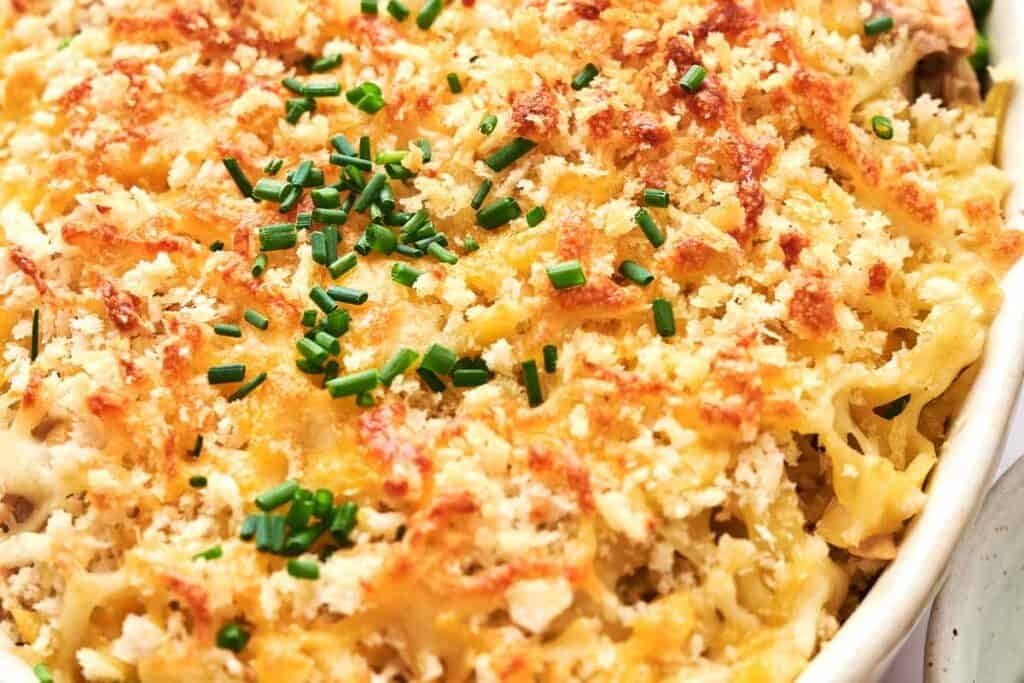
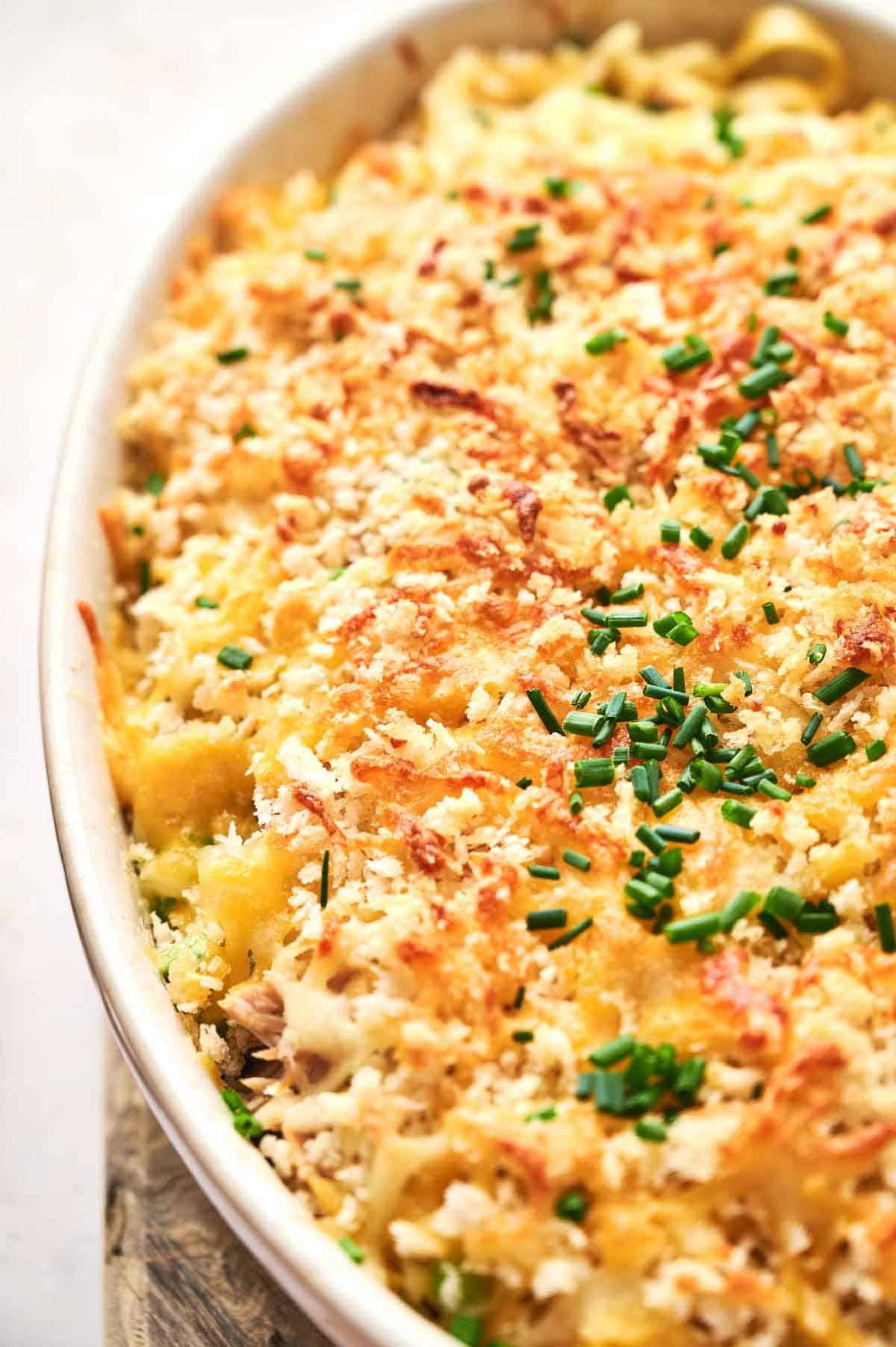
Tuna Casserole is the kind of no-fuss dinner I reach for on a busy night, because it leans on pantry and freezer staples and comes together in a few simple steps before it goes in the oven. Tender egg noodles and flaky canned tuna get folded into a creamy sauce, then it all bakes under melted cheddar and a Panko topping that turns golden and crisp.
It works just as well for a potluck as it does on a weeknight, since it feeds six from one dish, holds up warm on a shared table, and travels without much fuss. Tuna casserole is a longtime potluck standby, so it’s at home on a crowded table. Most of what goes into it, canned tuna, a can of soup, frozen peas, and a bag of noodles, is easy to keep on hand.
This post contains affiliate links. As an Amazon Affiliate, if you purchase through those links, I earn a commission. Thank you!
Why You’ll Love This Tuna Casserole
- It’s built from the pantry and freezer. Canned tuna, a can of vegetable soup, frozen peas, egg noodles, and a bag of shredded cheddar are the kind of staples most kitchens already have, so it rarely means a special trip.
- One dish feeds six. A cup of tuna and a can of soup stretch across six servings once the noodles, peas, and cheese go in, all baked in a single dish.
- It comes together in about 25 minutes. You boil the noodles, stir the base together, top it, and the oven finishes it in 15 minutes.
- The topping adds the crunch. Panko over shredded cheddar bakes into a golden, crunchy top against the creamy noodles, so each serving gets a browned, cheesy layer over the soft base.
- It’s mild and familiar. Noodles, cheese, tuna, and peas are the kind of mild, familiar flavors that suit a family dinner.
- Leftovers reheat well. Portions go from fridge to plate for a fast lunch or a second dinner over the next few days.
What You’ll Need
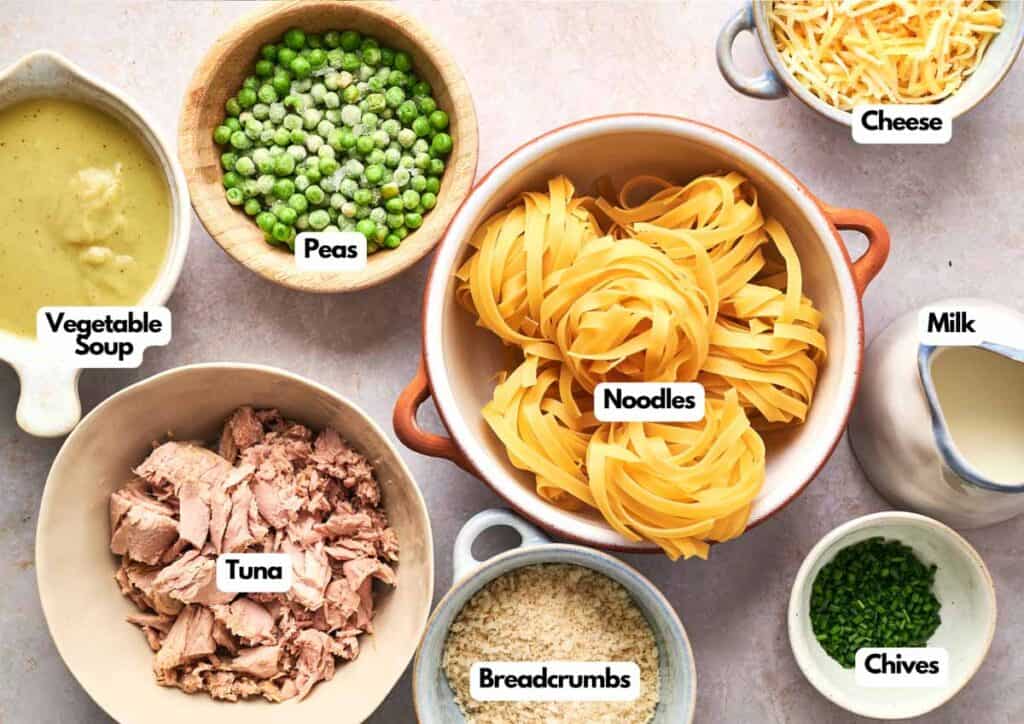
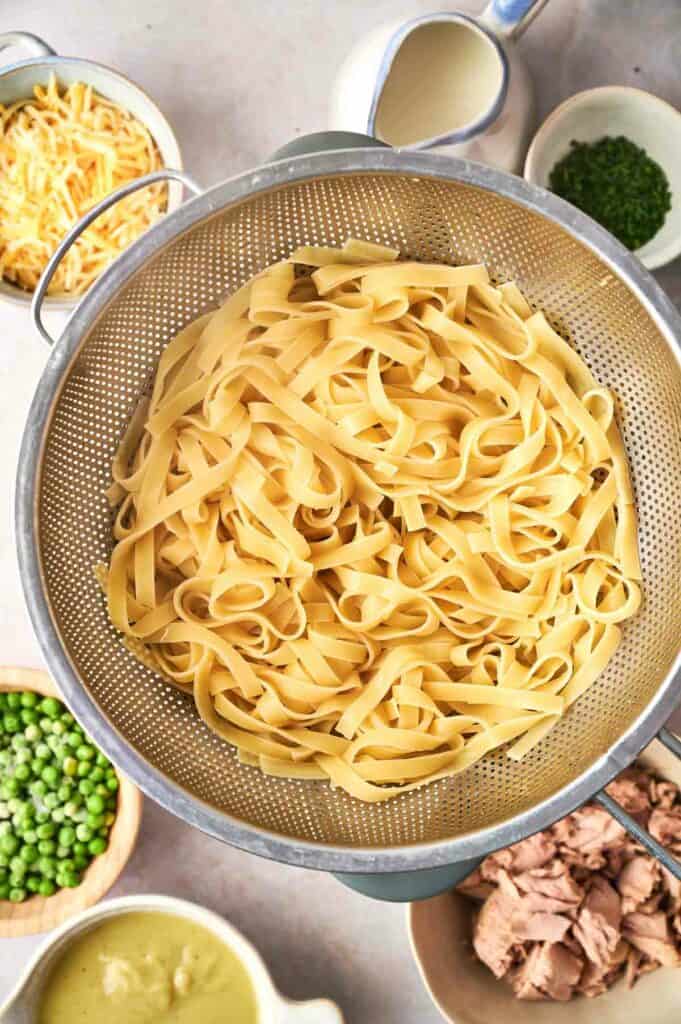
You’ll need all the ingredients shown in the photograph below.
Egg noodles. The soft base of the casserole; boil them a couple of minutes short of the package time so they don’t over-soften once they bake in the sauce.
Canned tuna. The protein, drained well before it goes in so the casserole doesn’t turn watery. Chunk or solid, packed in water or oil, all work here.
Canned vegetable soup. The shortcut sauce, stirred in straight from the can and loosened with milk, so there’s no from-scratch roux to make.
Milk. Thins the soup into a sauce that coats every noodle; whole milk makes it richer, but whatever you keep on hand does the job.
Frozen peas. Stirred in straight from the freezer for a little color and sweetness, with no need to thaw them first.
Shredded cheddar cheese. Half gets mixed through the base and half goes on top, where it melts and browns under the crumbs.
Panko breadcrumbs. Scattered over the cheese for a crisp, golden topping; Panko stays crunchier than regular breadcrumbs, which is the whole point of the layer.
Salt and pepper. Basic seasoning, to taste.
Chives. Thinly sliced and scattered over the top at the end for a fresh finish against the rich base.
How to Make Tuna Casserole
Scroll down for the full recipe card containing a full printable recipe and measurements in both US customary and metric units.
Prep the oven and noodles.
Heat the oven to 350°F (180°C) and bring a pot of salted water to a boil. Cook the egg noodles for 2 to 3 minutes less than the package directions, so they still have some bite, then drain them and set them aside. They’ll finish softening in the oven, and pulling them early is what keeps them from going mushy in the sauce.
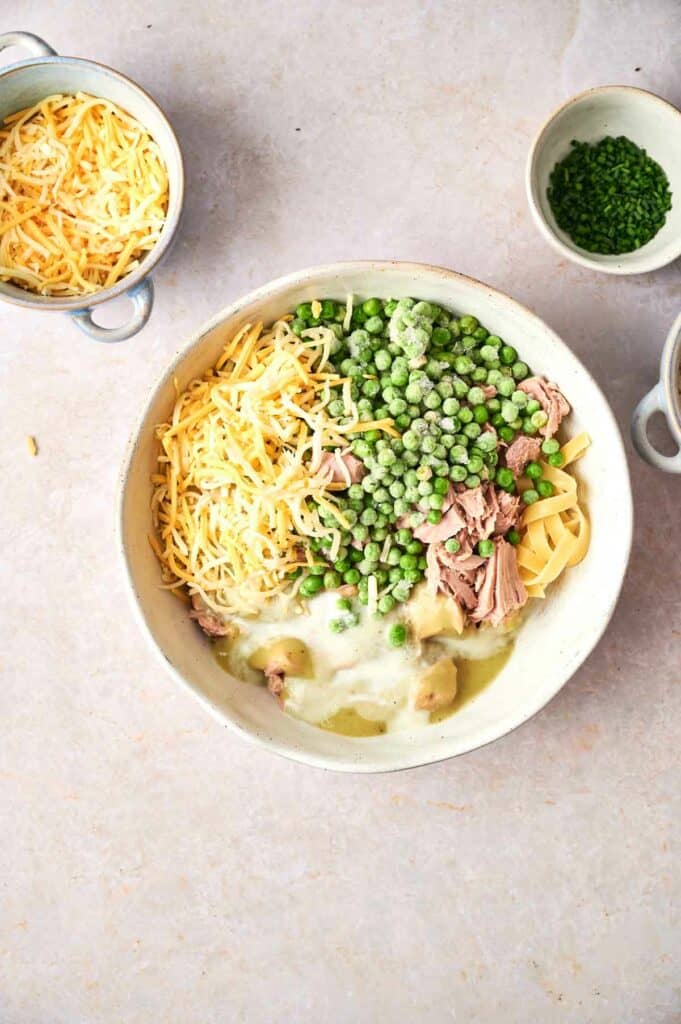
Mix the base.
In a large bowl, stir together the drained noodles, tuna, vegetable soup, milk, frozen peas, salt, pepper, and half of the shredded cheddar until everything is evenly coated in the sauce.
Assemble.
Lightly grease a baking dish, then pour in the mixture and spread it into an even layer. Scatter the remaining cheddar over the top, followed by the Panko breadcrumbs, so the crumbs sit above the cheese and crisp up as it bakes.
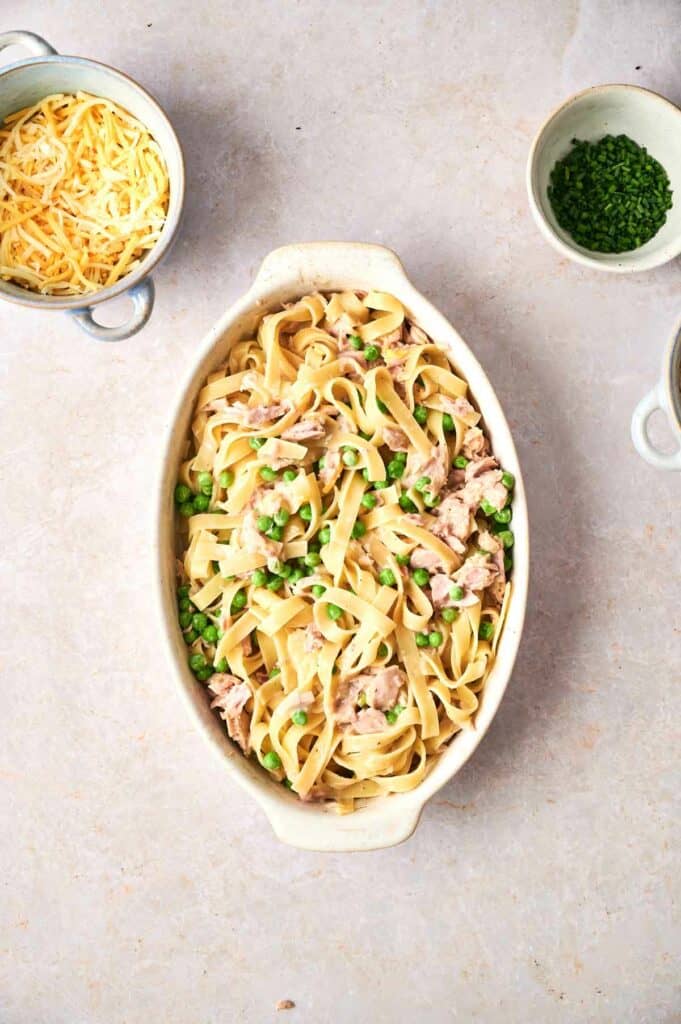
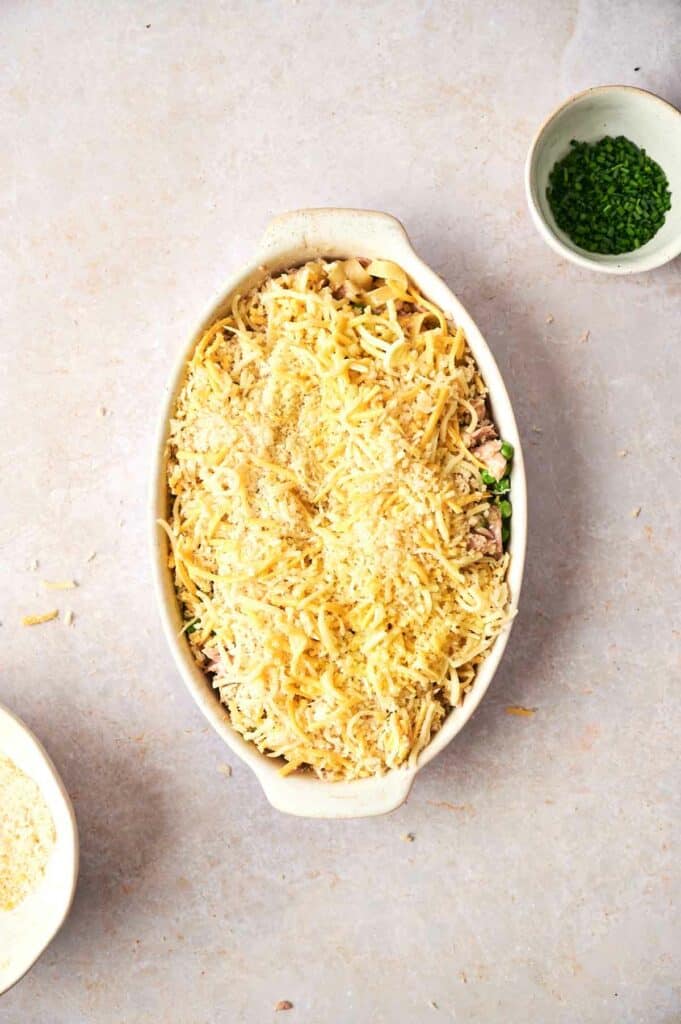
Bake.
Bake for 15 minutes, until the casserole is hot and bubbly at the edges and the Panko topping is golden. Because the tuna is already cooked and the noodles are par-boiled, this bake is really about heating it through, melting the cheese, and browning the top.
Finish and serve.
Scatter the sliced chives over the top and serve it warm.
Tips
- Undercook the noodles on purpose. Pulling them 2 to 3 minutes early keeps them from over-softening once they bake in the sauce. Fully cooked noodles going into the oven tend to come out mushy.
- Drain the tuna well. Pressing the liquid out before it goes in keeps the casserole creamy rather than watery.
- Keep the Panko on top of the cheese. Layering the crumbs above the cheddar, not mixed in, is what gives you a distinct crisp top instead of soggy crumbs buried in the sauce.
- Season the base, then taste. Canned soup and cheese already bring salt, so add salt and pepper to the mix and adjust from there rather than over-salting up front.
- Let it rest a couple of minutes. A short rest out of the oven lets the sauce settle so it holds together on the spoon.
Make It Your Own
Swap the soup. A can of condensed cream of mushroom soup is the classic base for tuna noodle casserole and stands in for the vegetable soup here; cream of celery works too. Either one makes the casserole a little richer and less vegetable-forward.
Change up the vegetables. Stir in a handful of corn, chopped broccoli, or diced celery along with (or instead of) the peas to bulk it out and add texture.
Add a little crunch or heat. A handful of crushed potato chips or crackers mixed into the Panko gives the top more crunch, and a pinch of red pepper flakes or a dash of hot sauce in the base warms it up.
Brighten it. A squeeze of lemon or a spoonful of Dijon stirred into the sauce cuts the richness if you’d like it a touch sharper.
Ingredients
- 3 cups egg noodles
- 1 cup canned tuna drained
- 1 can vegetable soup
- 1 cup milk
- 1 cup frozen peas
- 2 cups shredded cheddar cheese
- 1 cup Panko breadcrumbs
- Salt and pepper to taste
- 2 tablespoons chives thinly sliced
Video
Instructions
- Preheat your oven to 350ºF (180ºC).
- Bring a pot of salted water to a boil. Cook the egg noodles 2–3 minutes less than the package directions. Drain and set aside.3 cups egg noodles
- In a large bowl, mix together the noodles, tuna, vegetable soup, milk, frozen peas, salt, pepper, and half of the cheddar cheese.1 cup canned tuna, 1 can vegetable soup, 1 cup milk, 1 cup frozen peas, 2 cups shredded cheddar cheese, Salt and pepper
- Lightly grease a baking dish and pour in the mixture.
- Sprinkle the remaining cheese and the Panko breadcrumbs evenly on top.1 cup Panko breadcrumbs
- Bake for 15 minutes, or until hot and bubbly.
- Finish with sliced chives before serving.2 tablespoons chives
Notes
- Doneness: The tuna is already cooked, and the noodles are par-boiled, so the 15-minute bake only heats it through and crisps the topping; it’s done when hot and bubbly, with no raw-meat temperature to hit.
- Storage: Baked leftovers keep 3 to 4 days in the fridge or up to 3 months frozen; reheat to 165°F and re-crisp the Panko under the broiler. (Full steps are in the Storage and Reheating section above.)
- Nutrition: The nutrition figures below are an estimate provided for guidance, not a guarantee.
Nutrition
What to Serve With Tuna Casserole
This is a rich, creamy dish, so I like something fresh and sharp alongside to balance it. A green salad with a tangy vinaigrette is my usual first pick, and vegetables like broccoli florets, green beans, or asparagus do the same job. Garlic bread or a few dinner rolls are good for soaking up any extra sauce on the plate, and a scoop of coleslaw, some roasted carrots, sautéed mushrooms, or a cucumber-tomato salad keep things on the lighter side. The casserole is filling on its own, so a simple side or two is really all it needs.
Storage and Reheating
Cool it first. Let the baked casserole cool to room temperature, then move portions into an airtight container, or cover the baking dish tightly with plastic wrap or foil.
Refrigerate or freeze. In the fridge, baked leftovers keep for 3 to 4 days. To hold them longer, freeze for up to 3 months, then thaw overnight in the fridge before reheating.
Reheat. These are already-baked leftovers, so you’re warming them back through, not cooking them from raw. Reheat individual portions in the microwave for 1 to 2 minutes, or warm the whole dish covered with foil in a 350°F oven for about 15 minutes, until it’s steaming hot all the way through, to an internal temperature of 165°F. The Panko topping can soften after being stored or frozen; a minute or two under the broiler crisps it back up.
Taking it to a potluck or gathering? It travels well, but cooked food shouldn’t sit out at room temperature for more than 2 hours, or 1 hour if it’s a hot day above 90°F. Keep it covered and get leftovers back in the fridge within that window.
Making It Go Further
- One dish, several meals. A single casserole covers dinner and still sends leftovers to the next day’s lunch.
- Stretch it with vegetables. A handful of extra frozen or leftover veg mixed into the base bulks the dish out so a modest amount of tuna covers more plates.
- Cook once, freeze for later. Portion and freeze what you won’t get through that week for a fast dinner down the line.
More Casseroles to Try
If this tuna casserole earns a spot in your rotation, these are the other one-dish casseroles I come back to for the same reasons, a little effort, a comforting bake, and not much to wash up after.
- Cheeseburger Casserole turns the flavors of a cheeseburger into a scoopable weeknight dinner.
- Walking Taco Casserole is the fun, crunchy-topped one when the table wants taco night.
- Cowboy Casserole is my pick when I want another hearty, crowd-sized bake.
- Chicken and Rice Casserole is where I go for a creamy, cozy dinner built around chicken.
- Chicken Pot Pie Casserole keeps that same comforting, creamy feel with a savory filling.

That’s a shame. I offer free of charge recipes, which actually takes a great deal of thought, time, and money to produce, and in return, all I ask for in return is your email address. If you had signed up, you would have seen that I send a very friendly email and say words to the effect of ‘hey you printed my free recipe and I hope you enjoyed it, but if you don’t want to subscribe, then please click this button’ and then you would never hear from me again. Don’t worry, I don’t ever email anyone that doesn’t want to hear from me, so by posting this comment, you won’t be getting free recipes via email. I wish you all the best and hope your cooking adventures are fun and tasty!
Loved it! Easy to prepare and oh-so-yummy.
I love how easy it is too, glad you enjoyed it!