
Tanghulu Recipe for a Perfect Crunchy Candy Shell
 Add Preferred Source
You’ve probably watched someone bite through a glossy skewer of tanghulu online and heard that sharp candy crack, and now you want to make it in your own kitchen. This tanghulu recipe turns a bowl of sugar, some water, and whatever firm fruit you’ve got into candied skewers with a hard, glassy shell that shatters when you bite it.

Two things decide whether it works: the syrup has to reach a true hard crack, and the fruit has to be bone dry before it goes near the pot. I’ve learned to dry the fruit far longer than feels necessary, because a single damp spot is what turns the whole shell sticky.

This post contains affiliate links. As an Amazon Affiliate, if you purchase through those links, I earn a small commission. Thank you!
Why You’ll Love This Recipe
- It’s mostly sugar and fruit. The candy shell comes from just sugar and water, so the only thing you might not already have is a candy thermometer.
- The crunch is the whole point. A proper hard crack gives you that glassy shell that snaps loudly and then hits juicy fruit underneath.
- The active time is short. Most of the 40 minutes is the syrup coming up to temperature while you stand and watch it.
- It uses up fruit before it turns. Grapes and strawberries that are a day past their best still work, since they’re getting a candy coat anyway.
- Kids love eating it. It’s a fun one to make when you want something playful, though the hot sugar stays firmly an adult job.
Ingredients You’ll Need
Here’s what to know before you start. The printable card below has the full list with exact measurements.
- Sugar. Plain granulated sugar is all it takes, and it’s what forms the shell. The ratio that matters is two parts sugar to one part water, so this goes with 2 cups of water.
- Water. It dissolves the sugar and boils off as the syrup climbs to hard crack. Don’t add more thinking it helps; the extra just means a longer wait at the stove.
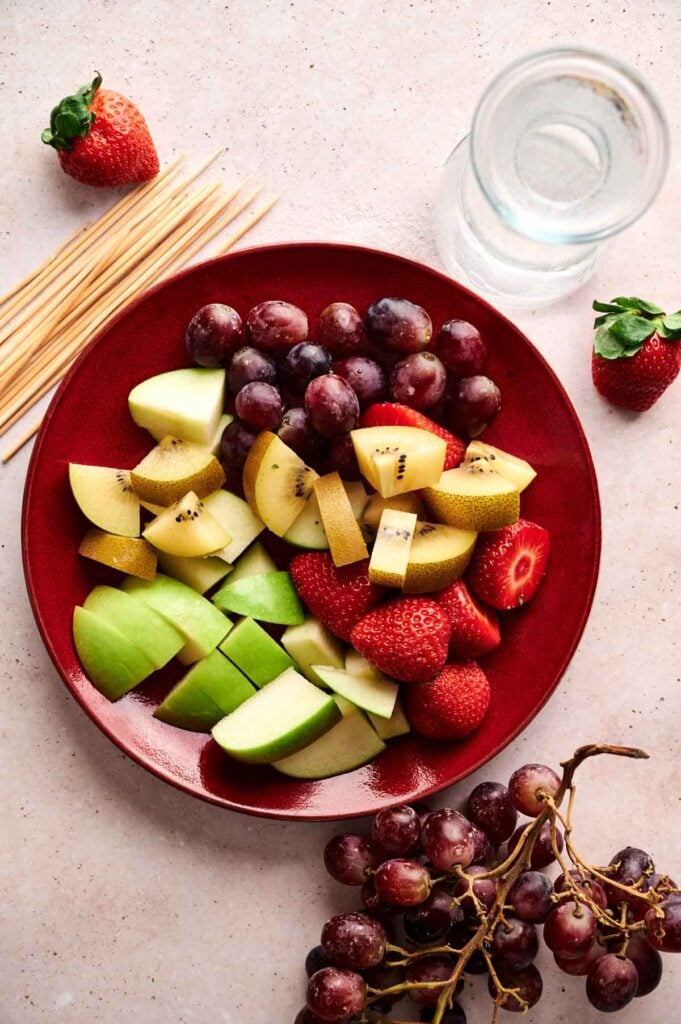
- Fresh fruit. Strawberries, grapes, kiwi, and apple are the usual choices. Pick fruit with a sturdy skin or surface, and pat every piece completely dry before skewering. Kiwi needs the most drying time, since it releases the most moisture of the four.
- Bamboo skewers. Longer skewers give you room to dip without bringing your fingers near the syrup, which matters more than it sounds once you feel how hot it gets.

How to Make Tanghulu
A complete printable recipe and the measurements in both US customary and metric are available in the recipe card below.
Dry the fruit
Rinse the fruit, then blot every piece dry with paper towels until no moisture is left on the surface.
Any water left on the fruit keeps the candy from setting hard. Remove the strawberry stems if you like.
Skewer the fruit
Thread 2 to 4 pieces onto each bamboo skewer, and mix the colors if you like how they look once the sugar sets.
Heat the sugar syrup
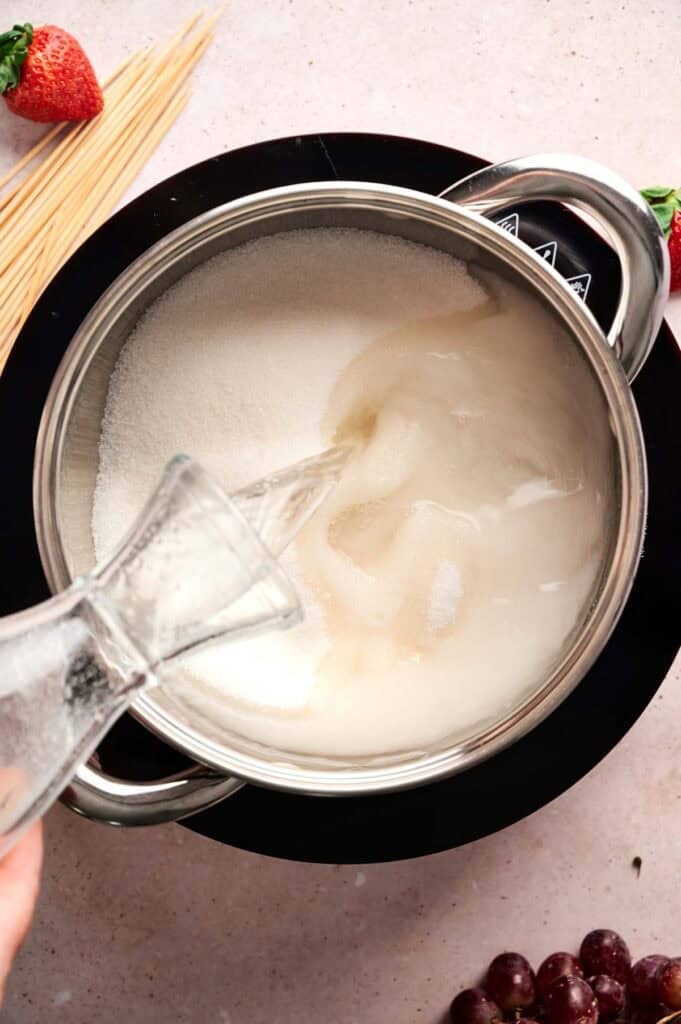
Combine the 4 cups of sugar and 2 cups of water in a deep saucepan and set it over medium-high heat. Don’t stir once it’s going, since stirring is what turns the syrup grainy.
Set it over medium-high heat. Don’t stir once it’s going, since stirring is what turns the syrup grainy.
Boil to hard crack
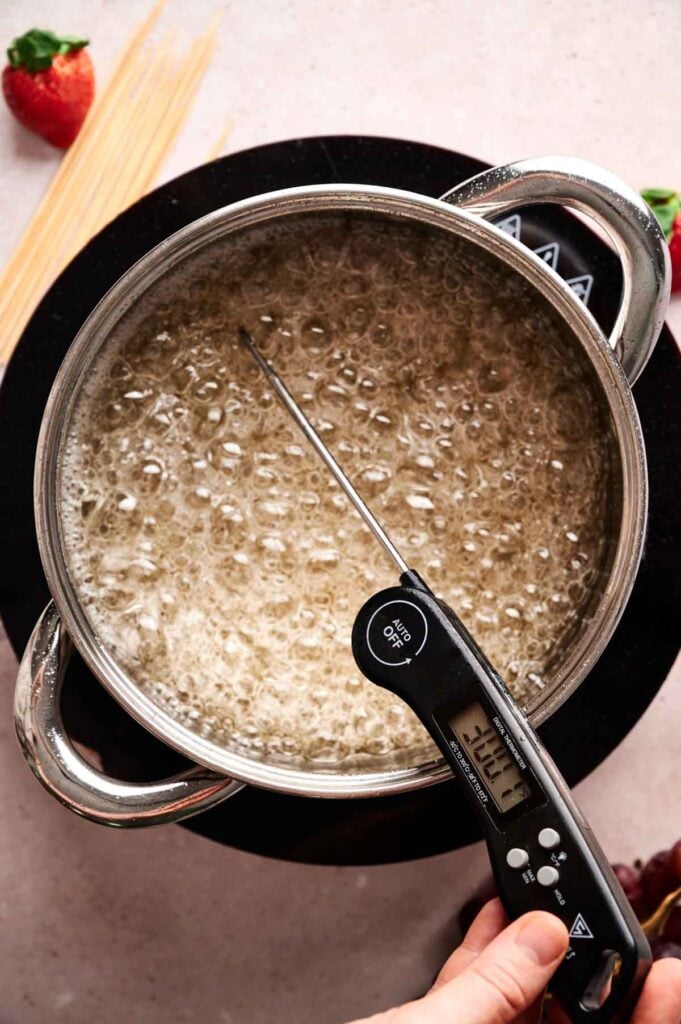
Let it bubble until the thermometer reads 300°F (150°C), the hard crack stage, which takes about 25 to 30 minutes.
This is the point to respect the pot: the syrup is far hotter than boiling water and it sticks to skin instead of running off, so keep children back and have your bowl of ice water ready on the counter.

Dip each skewer
Take the pot off the heat and tilt it so the syrup pools to one side.
Dip each skewer, turning to coat the fruit all over, then let the excess drip back into the pot.
Set the shell in ice water
Dip the coated skewer straight into a bowl of ice water for a few seconds.
That’s what hardens the shell fast and gives you the crunch. Repeat with the rest.
Cool and serve
Stand the skewers up in a tall glass or lay them on a parchment-lined tray, and let them cool and harden fully before serving.
Recipe Notes and Expert Tips
- Watch the color, not just the clock. If the syrup starts going golden, it’s tipping past hard crack toward burnt, so pull it off the heat.
- Go deep with the pot. A deep saucepan gives you room to dip and keeps the syrup from spitting over the sides.
- Work fast once the syrup’s ready. It keeps setting as it cools, so dip and dunk the skewers without long pauses between them.
- Watery fruit is the one to avoid. Watermelon, citrus segments, pineapple, and very ripe melon weep under the shell so it never sets, and they’re not worth the sugar.
Recipe Variations
- Any firm, dry fruit works. Grapes, strawberries, and apple slices all behave the same way in the syrup, and I’ve tested tanghulu with each of them.
- Cherry tomatoes are the viral version. Their firm skin holds up to the syrup the way grapes do. Fresh cherries are fiddlier, with pits to work around.
How to Store Leftovers
Tanghulu is a same-day treat. The shell starts drawing in moisture from the air the moment it sets, so the crunch fades over the day, faster in humid weather.
To get ahead, prep the fruit earlier in the day: wash it, dry it thoroughly, and thread the skewers, then keep them covered in the fridge and dip in fresh syrup just before serving.
The coating itself won’t survive being made far in advance.
For leftovers, lay the skewers in a single layer at room temperature. Refrigerating the finished skewers only softens the candy shell.
What to Serve With Tanghulu
Tanghulu is sweet and heavy on sugar, so it plays best against something that resets your palate.
A pot of light tea or a glass of sparkling water does that and keeps the sweetness from wearing thin.
For a small spread, a bowl of plain popcorn or a fresh fruit and cheese platter brings in something salty to balance the candy.
It suits movie nights and birthday parties, as long as you serve it fresh rather than setting it out for hours.
FAQs
The syrup didn’t reach a full hard crack, or moisture got in the way. If the shell is soft or chewy, the sugar needed to climb higher, all the way to 300°F (150°C). Damp fruit and humid air do the same thing, softening the shell after it sets.
Stickiness has two common causes. Either the syrup came off the heat before hard crack, or the fruit went in damp, and fixing those two clears up the tackiness.
Use the cold-water test. Drop a little syrup into a bowl of cold water, and if it hardens into a brittle thread that snaps cleanly, it’s at hard crack and ready. If it’s still soft or bendy, keep heating.
Fruit with a sturdy skin or surface that you can dry completely. Grapes, strawberries, kiwi, apple slices, and cherry tomatoes are the usual choices, while very wet fruit like watermelon, citrus, and pineapple weeps under the coating and won’t set.
No. The fridge adds moisture, and that softens the candy shell instead of keeping it crisp. Leave leftovers at room temperature.
More Fruity Sweet Treats to Try
If you want another fruity sweet treat after this one, here’s where I’d point you next:
- Mango Ice Cream for a night you want something cold and scoopable instead of a hard candy crunch.
- Strawberry Pretzel Salad when you need a make-ahead tray dessert to carry to a potluck.
- Key Lime Bars if you want a make-ahead citrus bar to cut into squares for a crowd.
- Rhubarb Crisp for a warm, oven-baked fruit dessert to serve under a scoop of ice cream.
- Lemon Cheesecake when you want a citrus dessert you eat with a fork rather than off a skewer.

Equipment
Ingredients
- 4 cups sugar
- 2 cups water
- bamboo skewers
Fresh fruits of your choice:
- Strawberries
- Grapes
- Kiwi
- Apples

Video
Instructions
- Rinse the fruit thoroughly and pat completely dry with a paper towel. For strawberries, you may remove the stems if desired. Thread 2 to 4 pieces of fruit onto each bamboo skewer. Set aside.Strawberries, Grapes, Kiwi, Apples
- In a deep medium or large pot, combine sugar and water. Heat over medium-high heat without stirring to prevent crystallization.2 cups water, 4 cups sugar
- Allow the mixture to boil until it reaches 300°F (150°C) — the hard crack stage, for about 25 to 30 minutes. Use a candy thermometer for precision.
- Once the syrup reaches temperature, remove the pot from heat. Tilt the pot slightly to create a deeper pool of syrup.
- Carefully dip each fruit skewer into the hot syrup, turning to coat completely. Let the excess drip off.
- Immediately dip the coated skewer into a bowl of ice water for a few seconds — this will quickly harden the sugar shell.
- Stand the finished skewers upright in a tall glass or place them on a parchment-lined tray. Let them cool and harden completely before serving.
Notes
- Dry the fruit completely before dipping, because any surface water keeps the shell from setting hard.
- Do not stir the syrup once it is heating, or it turns grainy and cloudy.
- Pull the syrup off the heat if it starts to turn golden, before it burns.
- Without a thermometer, drop a little syrup into cold water, and a brittle thread that snaps means hard crack.
- Use a deep pot so the syrup does not spit over the sides and there is room to dip.
- The hot syrup is far hotter than boiling water and sticks to skin, so keep children back and have ice water ready.
- Tanghulu is best eaten the same day it’s made, and refrigerating the finished skewers only softens the candy shell.
