
Homemade Tamales
 Add Preferred Source
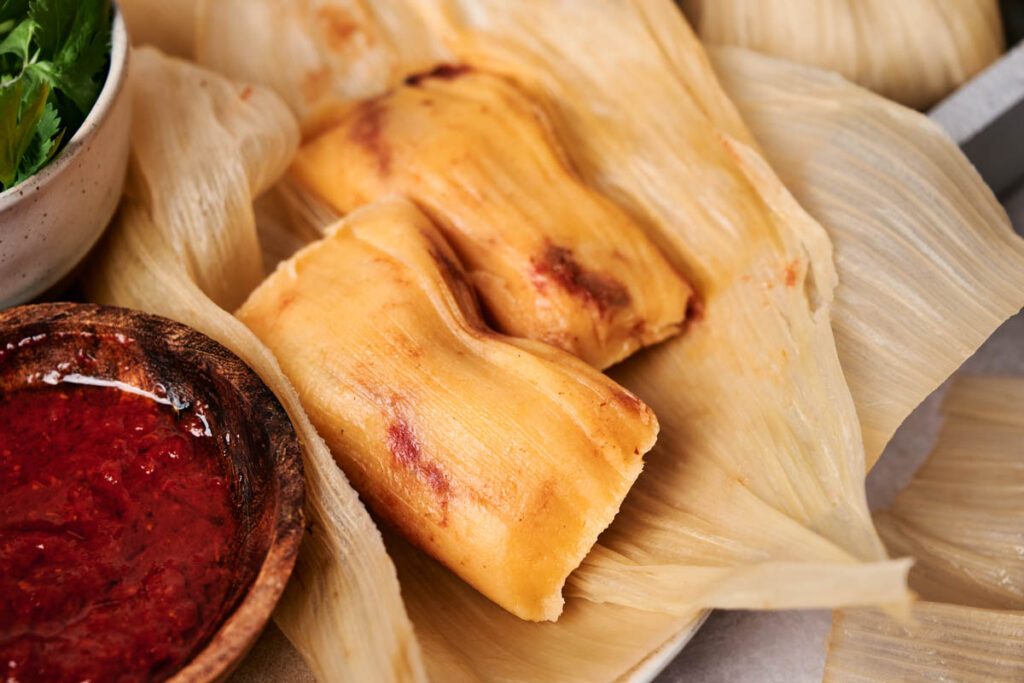
Homemade tamales are the dish a family makes together, usually around the holidays, with everyone crowded around one table spreading masa and folding husks. That afternoon of work is the whole point, and you’re left with a freezer full of dinners for the weeks after.

I make a big batch on purpose, because one pound of pork tenderloin stretches through the masa into twenty tamales and the extras freeze well. The part that decides how they turn out is the masa itself, so get it as soft as play dough and the rest is folding and steaming.
Why You’ll Love This Recipe
- One batch, a freezer full of dinners. A single afternoon turns into twenty tamales, and the ones you don’t eat the first night freeze for easy meals later.
- A pound of pork goes a long way. The meat is chopped small and spread through the masa, so one pound of pork tenderloin fills all twenty.
- It’s naturally gluten-free. The dough is built on corn masa harina, not wheat, so the recipe stays gluten-free as long as your broth is too.
- The filling comes from the pantry. Canned tomatoes, an onion, garlic, and a few spices do the work, with no specialty shopping trip.
- It’s a project you can share. Spreading masa and wrapping husks is easy work to hand around a table, so it suits a group.
Ingredients You’ll Need
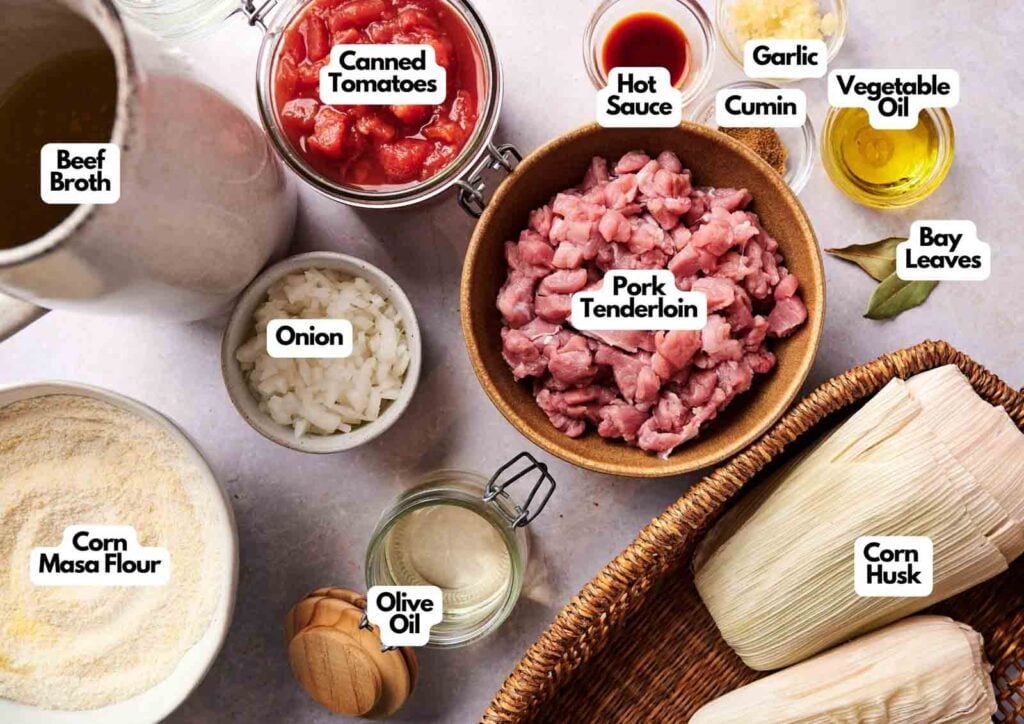
A few of these are worth a word before you start; the printable card below has the full list with quantities.
- Pork tenderloin. Lean and quick to brown, chopped small so it packs into the masa. A leaner cut keeps the filling from turning greasy inside the husk.
- Corn masa flour (masa harina). The corn flour made for masa, not the same as regular cornmeal, which won’t come together into a smooth dough.
- Beef broth. The liquid that brings the masa together. A gluten-free broth keeps the whole recipe gluten-free, since that’s the one ingredient where wheat can sneak in.
- Corn husks. Dried husks that need a long soak to turn soft and foldable; a bag of them keeps in the cupboard for the next batch.
- Canned diced tomatoes. A pantry staple that skips the chopping and gives the guiso its body.
- Cumin, bay leaves, and black pepper. The backbone of the filling, and all things you likely already have.
- Vegetable oil. Worked into the masa so the tamales steam up tender rather than tough.
How to Make Homemade Tamales
A complete printable recipe and the measurements in both US customary and metric are available in the recipe card below.
Creating tamales from scratch might seem daunting, but with these detailed steps, you’ll find it straightforward and enjoyable.
Soak the corn husks
Bring 8 cups of water to a boil in a large pot, then take it off the heat. Separate the corn husks, rinse them clean, and slip them into the hot water, pushing them under so they soak evenly.
Soak more than you think you’ll need, because each tamale is wrapped in a second husk and tied with a strip torn from another.
Cover the pot and leave them for about 2 hours, until they’re soft and bendable, then drain. Old or thin husks tear easily, so this long soak is what lets them fold without splitting.

Make the guiso
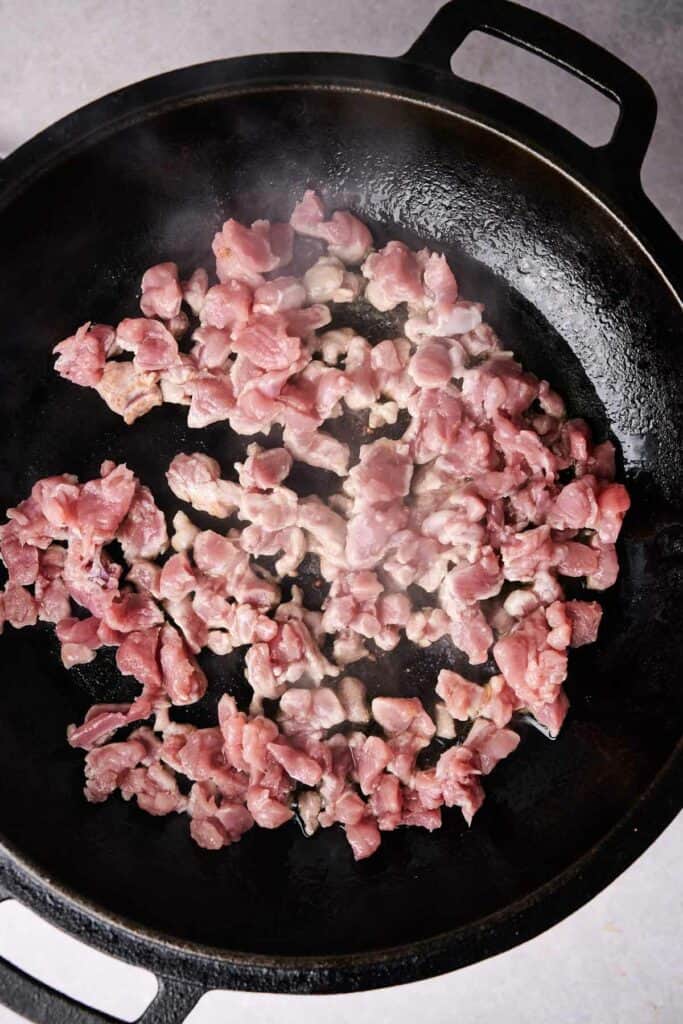
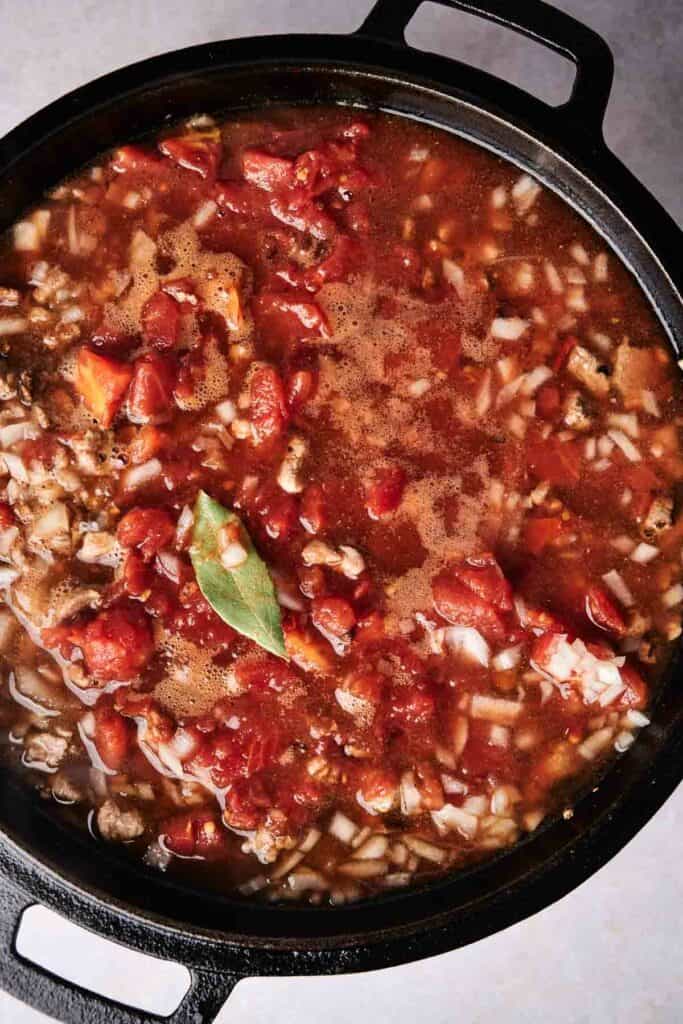
Heat 2 tablespoons of olive oil in a cast iron skillet and brown the chopped pork tenderloin over medium-high heat until the edges take on color.
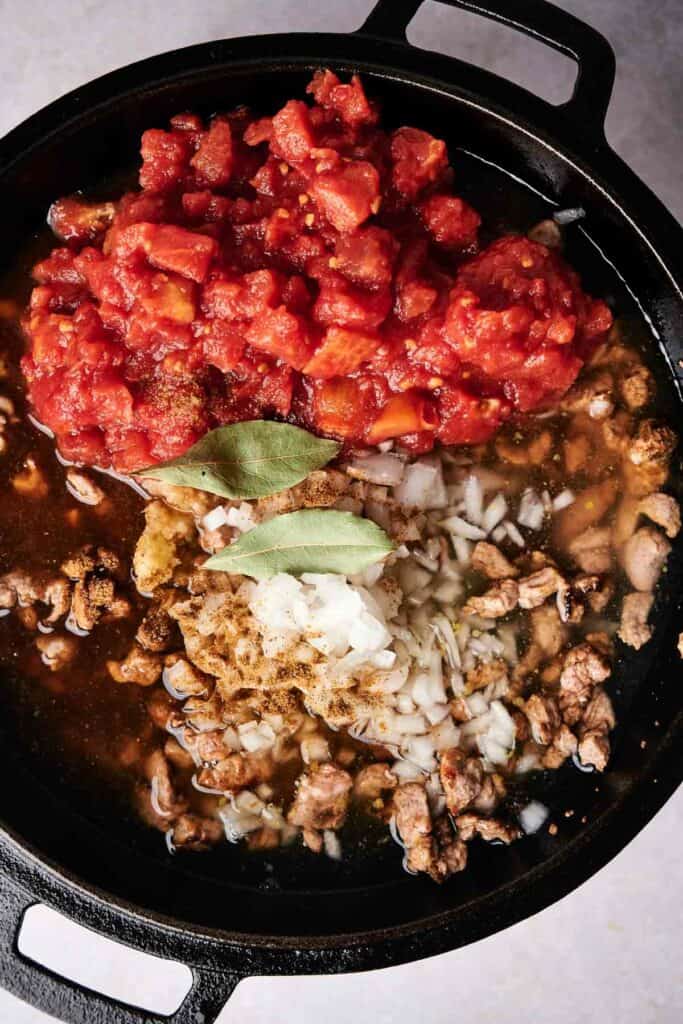
Add the onion, garlic, cumin, bay leaves, and black pepper, and cook about 5 minutes, until the onion softens. Stir in the canned tomatoes, cover, and simmer on medium-low for 20 minutes.
Cook the filling down until it’s thick rather than soupy, because a wet filling soaks into the masa and makes the tamales harder to close.
Mix the masa
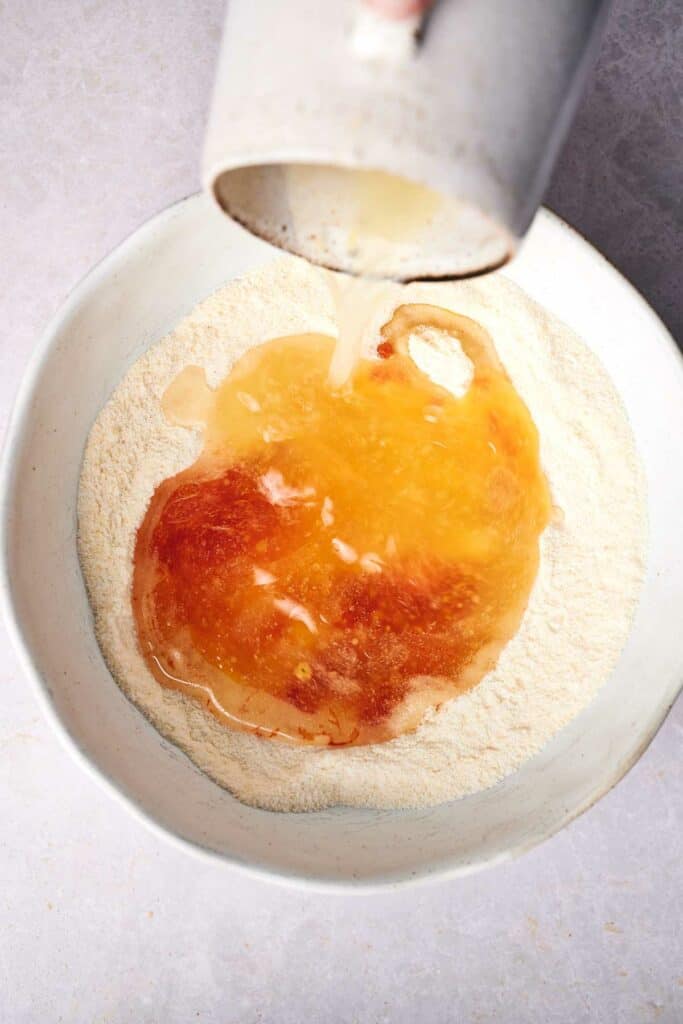
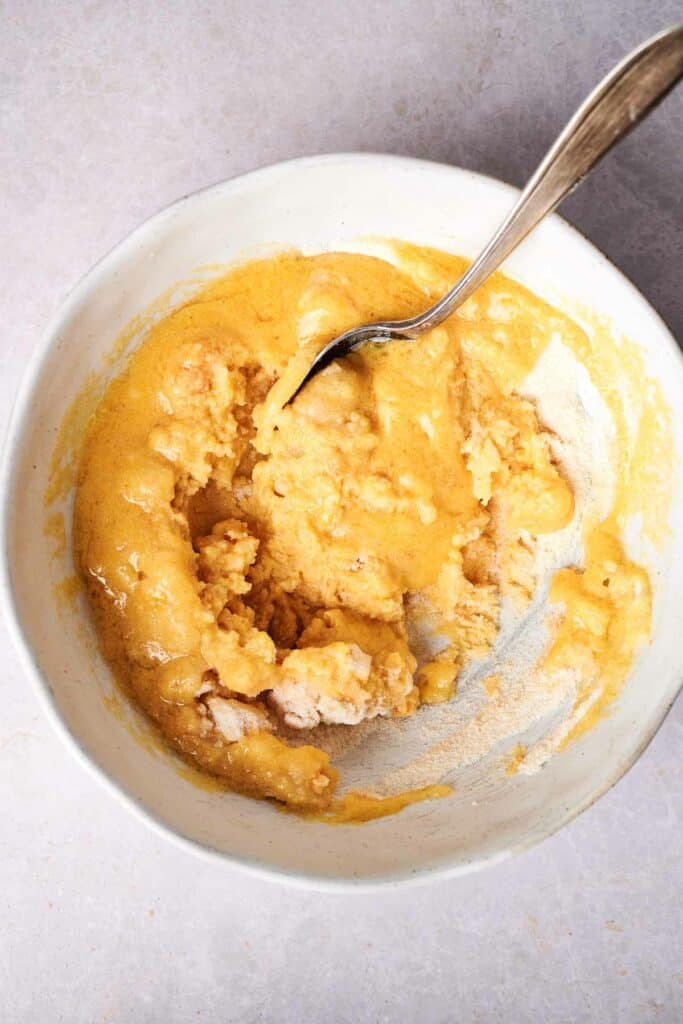
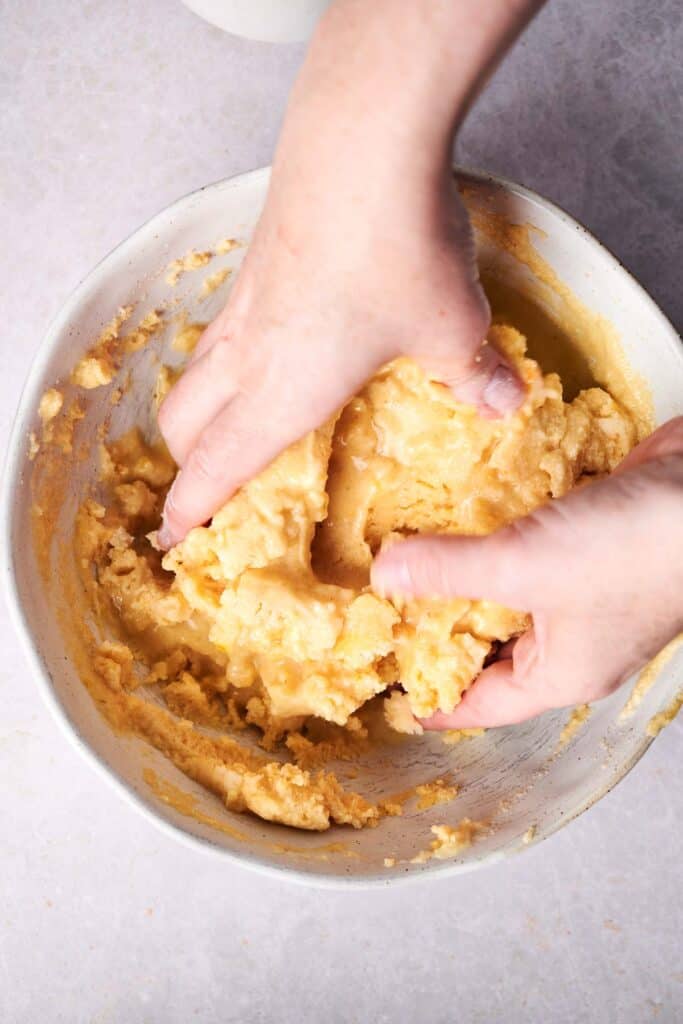
In a large bowl, combine the corn masa flour, vegetable oil, and salt. Work in the beef broth a few cups at a time, kneading by hand for 10 to 15 minutes, and stop when the dough is as soft as play dough.
Add more broth if it’s dry or more masa harina if it’s sticky. Salt it a little past what tastes right on its own, because steaming mutes the seasoning.
Assemble the tamales
Lay a soaked husk flat, rough side up, and spread about 2 tablespoons of masa across the bottom half.
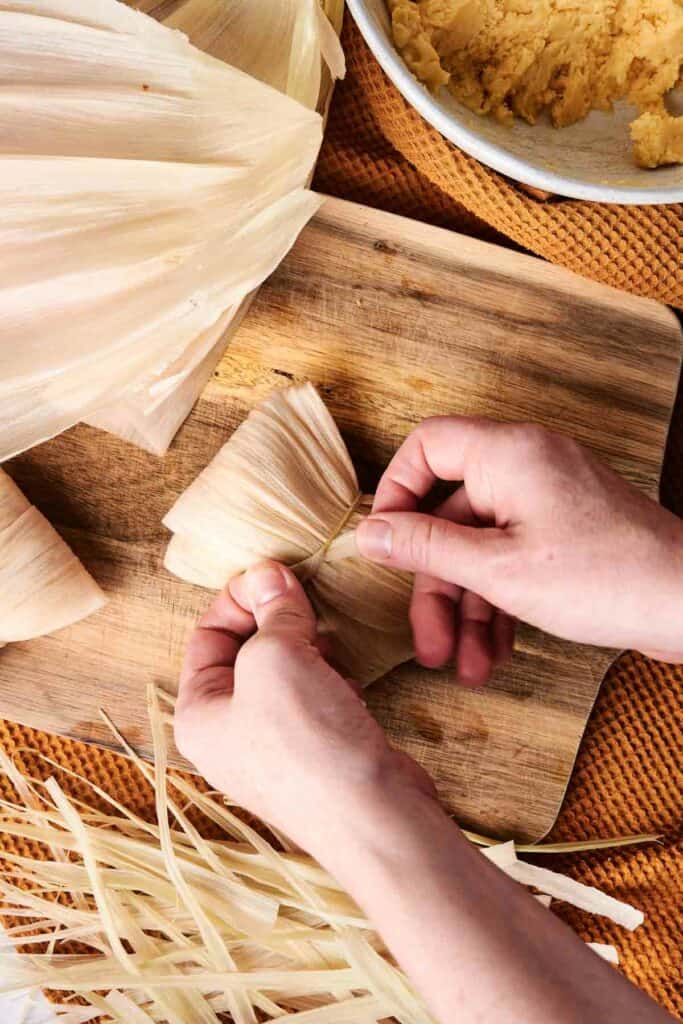
Place 1 to 2 tablespoons of the pork filling down the center, then fold the sides in and fold the bottom up. Wrap each one in a second husk and tie it with a torn strip of husk or a piece of kitchen twine.
Keep the rest of the husks under a damp towel while you work so they stay pliable.


Steam and rest
Stand the tamales in a steamer basket, cover them with a damp kitchen towel, and set the basket in a large pot with water below it, never touching the tamales. Cover and steam for about 1 hour, checking the water partway through so the pot doesn’t run dry.
The pork is browned and simmered before it goes in and then steamed a full hour, so it cooks well past the safe pork temperature of 145°F (63°C); the long steam is about the masa, not the meat.
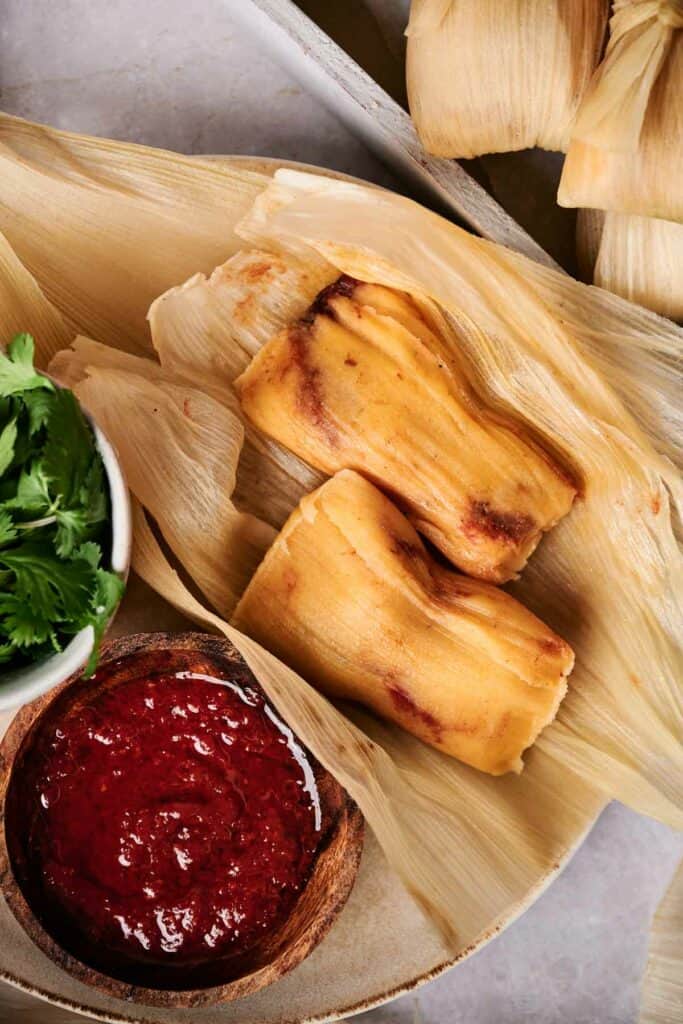
Let the tamales rest a few minutes off the heat before you open one, because a tamale that seems underdone straight from the pot is often just unrested.
Recipe Notes and Expert Tips
- Beat some air into the masa. Working the dough well, rather than barely mixing it, is what steams up light instead of dense. A teaspoon of masa dropped into cold water floats once it’s aerated enough.
- Go easy on the filling. One to two tablespoons is plenty; more than that and the tamale won’t fold closed.
- Keep the husks damp. Left in the open air they dry and crack, so hold them under a damp towel until each one is wrapped.
- Test one before you call them done. Pull a tamale, let it sit a couple of minutes, and peel the husk; if the masa releases cleanly it’s ready, and if it smears back it needs more time.
- Improvise the steamer if you need to. A metal colander or a rack set in a big lidded pot works, as long as the water stays below the tamales the whole time.
Recipe Variations
- When I want to spend less, I use pork shoulder in place of the tenderloin; chopped small, it turns tender through the long steam and costs less per pound. I make it this way often.
- Swap in chicken or beef for the pork if that’s what you keep on hand. I haven’t tested those two, so use the guiso method as your guide on timing.
- Leftover cooked meat or roasted vegetables can fill the masa instead of the guiso; I do this to use up what’s already in the fridge.
- For more heat, I stir a chopped chile or a spoonful of hot sauce into the filling as it simmers, adding it a little at a time.
How to Store Leftovers
Getting ahead and storing cooked ones are two different things, so keep them straight.
To get ahead, you can mix the masa and cook the guiso a day early, or wrap the tamales raw and freeze them, then steam them straight from frozen when you want them.
For cooked tamales, don’t leave them out to cool. Get them into the fridge within 2 hours, or within 1 hour if the kitchen is above 90°F (32°C), wrapped individually or packed in an airtight container.
Cooked tamales keep 3 to 4 days in the fridge, or freeze up to 3 months for the best quality.
Reheat by steaming for 15 to 20 minutes from the fridge or 30 to 35 minutes from frozen, until they’re hot all the way through to 165°F (74°C).
What to Serve With Homemade Tamales
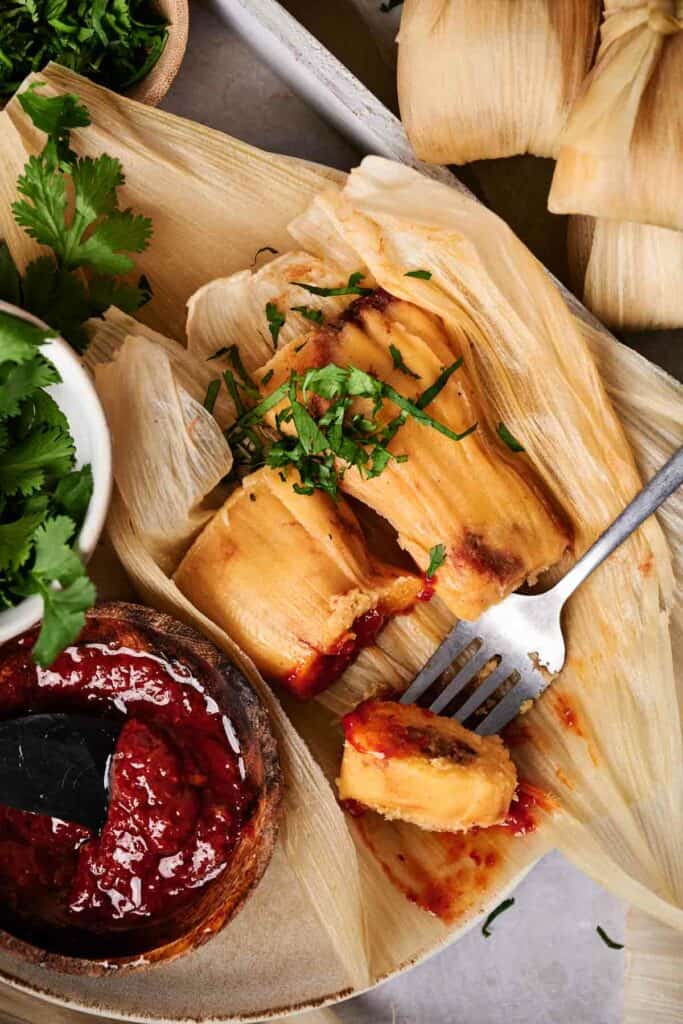
Tamales are rich, so I round out the plate with something bright and a little sharp. A scoop of Mexican rice stretches the meal to feed more people, and a bowl of black beans on the side makes it more filling.
For color and a fresh bite, set out a salsa or two, like a green salsa verde or a chunky pico de gallo, to spoon over the top.
A cold agua fresca or a simple margarita keeps a tamale night feeling like an occasion.
FAQs
Usually they needed more time or more rest. Masa that smears onto the husk in a gummy way is undercooked, so steam it longer; if the masa is cooked through but still clings, give the tamales a few minutes off the heat and try again. Not enough fat worked into the masa can also make it stick.
Yes. The guiso can be cooked a day ahead and kept in the fridge, and the masa can be mixed ahead too; if it firms up in the fridge, loosen it with a splash of broth before you spread it.
You can, as a last resort. Cut parchment into squares and wrap the tamales the same way. It holds them together for steaming, but it won’t give the faint corn flavor the husks add.
More Mexican Recipes to Try
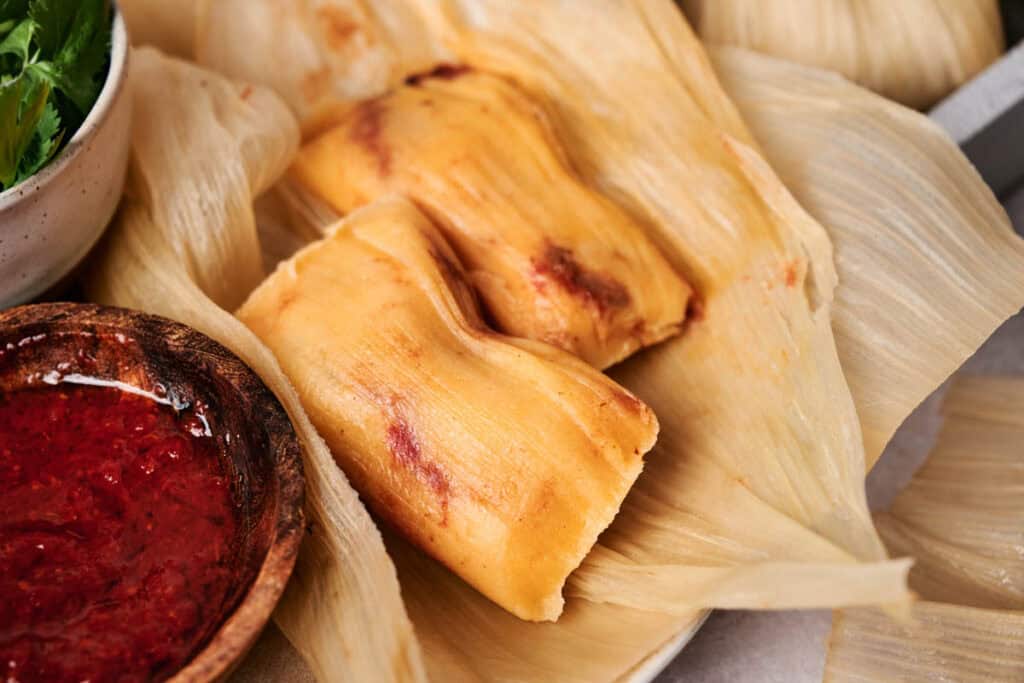
If tamales earn a place in your kitchen, here are a few more Mexican-inspired dinners from the site to work through next.
- Chicken Tamale Pie gives you that tamale flavor on a busy night, baked in one dish in about half the time.
- Taco Casserole is the one I make when I want taco night without building each plate by hand.
- Chipotle Grilled Chicken is smoky and quick, marinated in chipotle and lime for the grill.
- Cheese Quesadilla is my fallback lunch, ready in a few minutes when I want something meatless.
- Taco Salad Cups turn taco night into crisp edible bowls, a good one for getting the kids helping.

Ingredients
For the corn husks:
- 8 cups water
- 40 corn husks
For the guiso:
- 2 tablespoons olive oil
- 1 pound pork tenderloin very small chopped
- 1 cup white onion chopped
- 4 garlic cloves minced
- 2 cups diced canned tomatoes
- 1 teaspoon cumin
- 1 teaspoon ground black pepper
- 2 bay leaves
For the masa:
- 1 cup vegetable oil
- 1 tablespoon salt
- 4 cups corn masa flour
- 8 cups beef broth
- Hot sauce
- Cilantro to garnish
Instructions
- Bring 8 cups of water to a boil in a large pot over high heat. Once the water is boiling, remove it from heat.8 cups water
- Separate, wash, and clean the corn husks. Add them to the boiled water and push them down to soak. Cover the pot and let corn husks soak for 2 hours. Drain and reserve.40 corn husks
- In a cast iron, heat 2 tablespoons olive oil and brown the pork on medium-high heat until the sides of the meat have a caramel color.2 tablespoons olive oil, 1 pound pork tenderloin
- Add the onions, garlic, cumin, bay leaves, and black peppers. Sauté for 5 minutes or until the onions are translucent and softened. Add the canned tomatoes. Cover and cook on medium-low heat for 20 min.1 cup white onion, 4 garlic cloves, 2 cups diced canned tomatoes, 1 teaspoon cumin, 1 teaspoon ground black pepper, 2 bay leaves
Make the masa:
- Add corn masa flour, oil, salt, and 3 cups of beef broth and stir by hand to combine. Stir and knead by hand for 10-15 minutes, adding corn four, and broth as needed. If the masa is too wet, add more corn flour and if it’s too dry, add more broth. You should reach a soft and easy-to-work consistency, similar to play dough.1 cup vegetable oil, 4 cups corn masa flour, 8 cups beef broth, 1 tablespoon salt
Assemble Tamales
- Lay one corn husk, rough side up on a plate or in your hand and add about two tablespoons of masa to the bottom half.
- Spread it out smooth on one half only and add 1-2 tablespoons of the pork filling to the center of the masa.
- Fold the sides into the center of the tamale and fold it in half. Now wrap it again with a second corn husk and fold it like a pocket. Tear off a piece of a small corn husk and tie it around the center of the tamale to seal it. You can also tie them with baking twine.
- Place the tamales into a steamer basket until it is filled up.
- Put a damp kitchen towel over the tamales. Place in a large pot with water below the basket and cover with a lid. Steam for 1 hour.
- Remove and rest for a few minutes before serving with hot sauce and cilantro.Hot sauce, Cilantro
Notes
- Masa consistency: aim for a soft, spreadable dough about as firm as play dough. Too dry, add broth a spoonful at a time; too sticky, work in more masa harina.
- Work the masa well and, if you like, use the float test: a teaspoon of dough dropped in cold water floats once it is aerated enough for light tamales.
- Do not overfill: 1 to 2 tablespoons of filling per tamale, or they will not fold closed.
- Keep the corn husks under a damp towel as you work so they stay pliable and do not tear.
- Doneness test: pull one tamale, rest it a couple of minutes, and peel the husk. If the masa releases cleanly, it is done; if it smears, steam longer.
- Rest the finished tamales a few minutes off the heat before judging doneness, since many that seem underdone are just unrested.
- No steamer: improvise with a metal colander or rack in a large lidded pot, keeping the water below the tamales the whole time.
- Pork safety: pork is safe at an internal temperature of 145°F (63°C) with a short rest; between the simmer and a full hour of steaming, this filling cooks well past that.
- Refrigerate 3 to 4 days or freeze up to 3 months for best quality.
- Cool safely: do not leave tamales out to cool; refrigerate within 2 hours (1 hour above 90°F). Reheat by steaming to 165°F (74°C), 15 to 20 minutes from the fridge or 30 to 35 minutes from frozen.
- Nutrition: the nutrition figures are an estimate provided for guidance, not a guarantee.

would love to make it but not sure the amount of 450 Gram click the other but stayed at 450 grams
Hi, Jerry! 450 grams is equal to 1 pound – you can use either measurement, whichever is easier for you. Hope you enjoy making the recipe!