
Copycat Panda Express Chow Mein
 Add Preferred Source
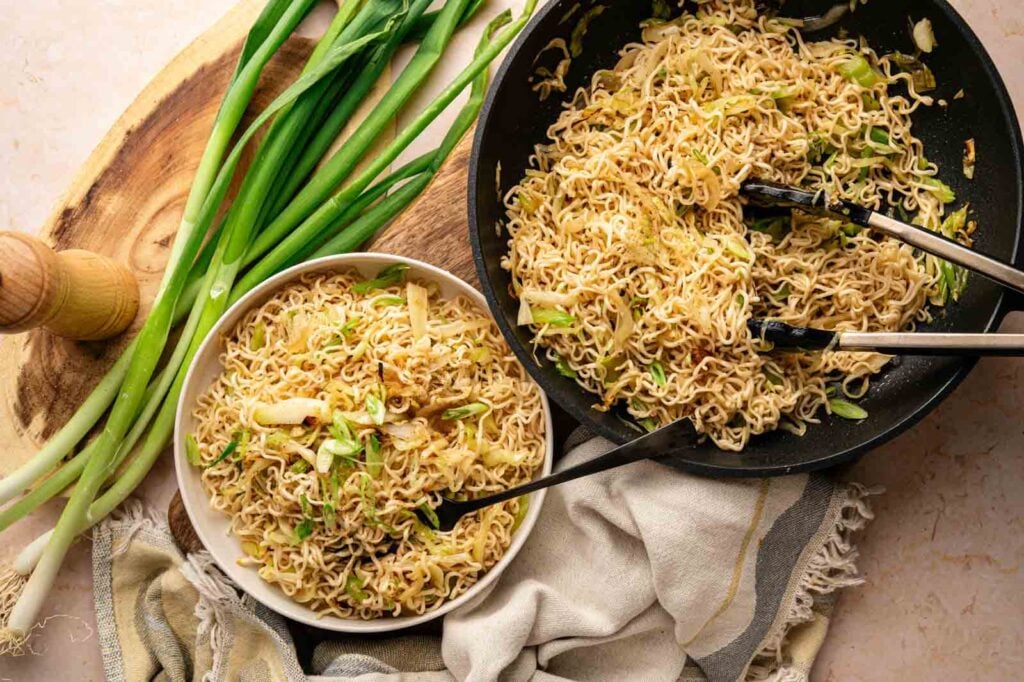
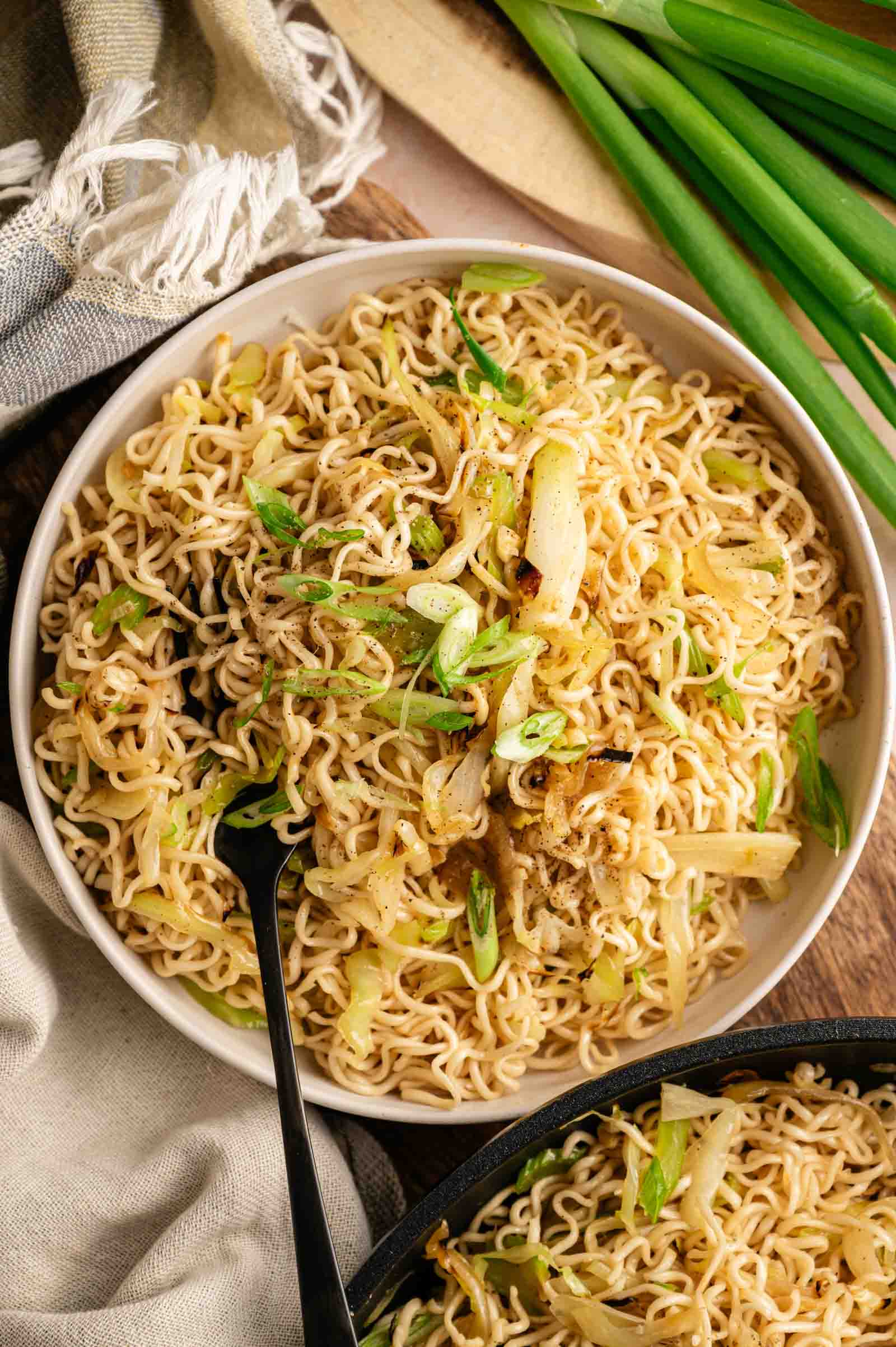
Copycat Panda Express Chow Mein brings the food-court noodle bowl home on the nights when a takeout run is the last thing you want to do. My trick: pull the noodles out of the boiling water after about 30 seconds, because that quick blanch keeps them springy instead of turning into a mushy tangle.
The dish works from cabbage, celery, and onion, three of the cheapest vegetables in the store, so you can rebuild a takeout regular at home without a special shopping trip. What gives it that glossy, clingy sauce is a spoonful of cornstarch stirred in at the very end, so the noodles come out coated rather than swimming.
This post contains affiliate links. As an Amazon Affiliate, if you purchase through those links, I earn a commission. Thank you!
Why You’ll Love This Recipe
- It comes together in about 25 minutes start to finish, faster than most delivery would arrive.
- Cabbage, celery, and onion do the heavy lifting, so the vegetable cost stays low and nothing needs a special trip to an Asian market.
- The noodles reheat well in a hot skillet, so one batch covers lunch the next day without turning gluey.
- It’s a copycat you can adjust, adding chicken, shrimp, or tofu when you want it to be a full main instead of a side.
- One pan does the stir-fry, so cleanup is a wok or skillet and the bowl you mixed the sauce in.
Ingredients You’ll Need
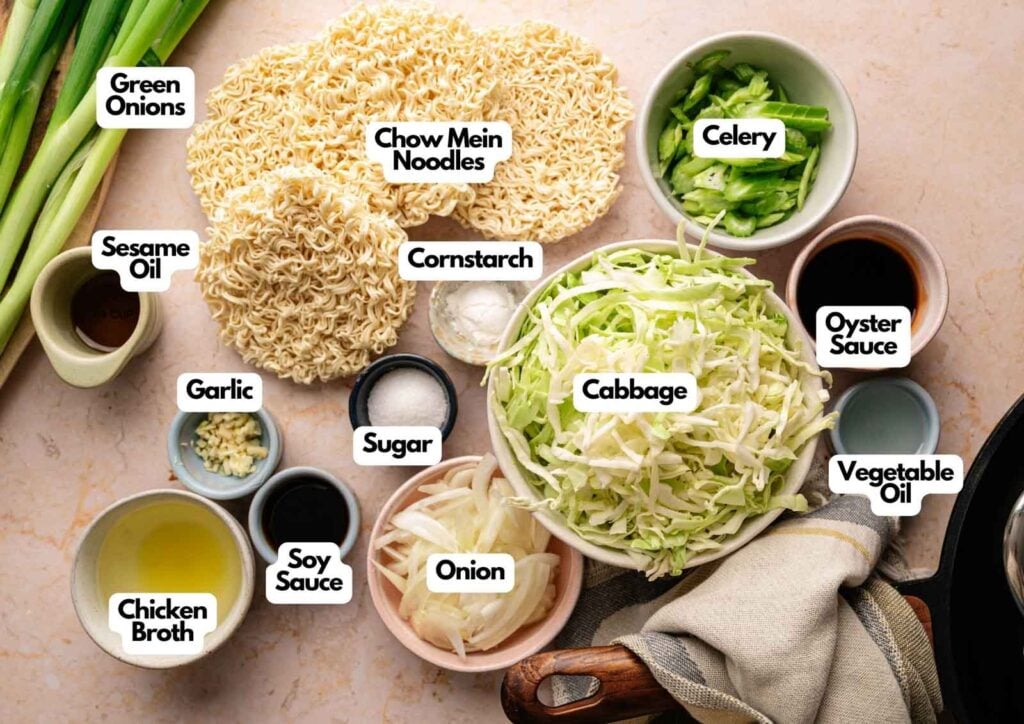
Here’s what’s worth a note before you start; the printable card below has the full list with quantities.
- Chow mein noodles: These are wheat-based noodles, and fresh yakisoba or unseasoned ramen both stand in well. Buy them from the refrigerated section and pull them from the water early, since they finish cooking in the pan.
- Cabbage, celery, and onion: The three vegetables that define this dish. They’re cheap year-round and give the bowl its crunch, so slice them thin and cook them only briefly.
- Oyster sauce: This is the savory backbone of the sauce. It also means this version isn’t vegetarian, though a vegetarian oyster-style sauce swaps in if you need it to be.
- Soy sauce: Regular works, but low-sodium lets you control the salt, and a splash of dark soy deepens the color if you have it.
- Sesame oil: A finishing oil more than a cooking one, added for its toasted aroma, so a little goes a long way.
- Chicken broth and cornstarch: These make the finishing slurry that gives the sauce its body and gloss. The broth is the other reason this version isn’t vegetarian; vegetable broth swaps in cleanly.
How to Make Panda Express Chow Mein
Scroll down for the full recipe card containing a full printable recipe and measurements in both US customary and metric units.
Mix the sauce
Stir the vegetable oil, soy sauce, oyster sauce, sesame oil, and sugar in a small bowl to make the sauce. Set it aside until the noodles and vegetables are ready.
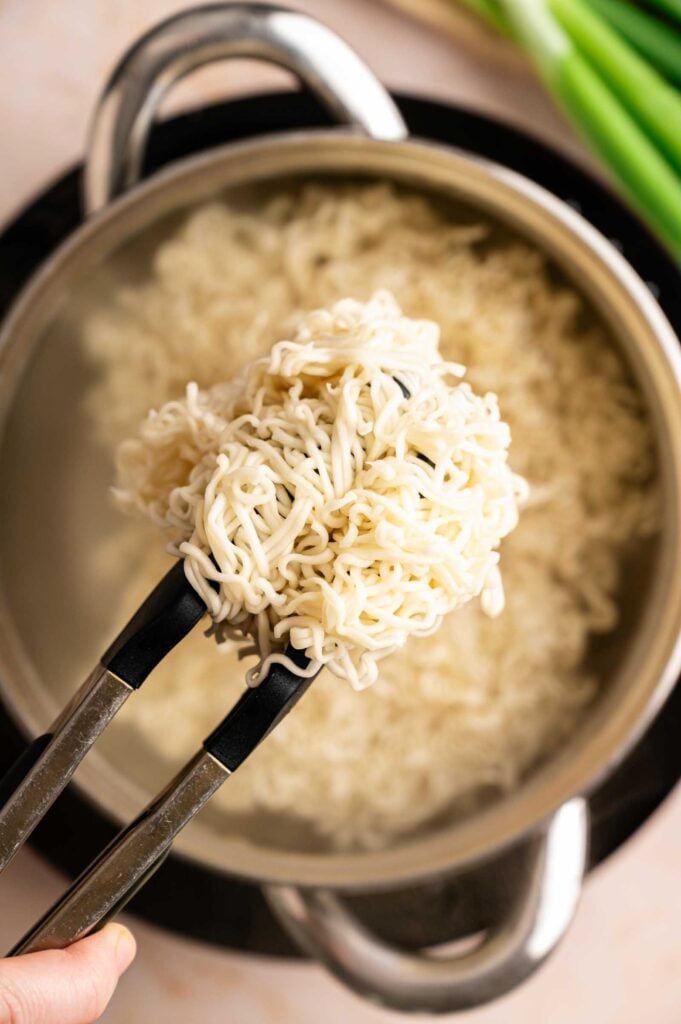
Blanch the noodles
Drop the noodles into boiling water for just 20 to 30 seconds, until they loosen, then drain them well. Toss them with a little oil right away so they don’t clump while you cook the vegetables.
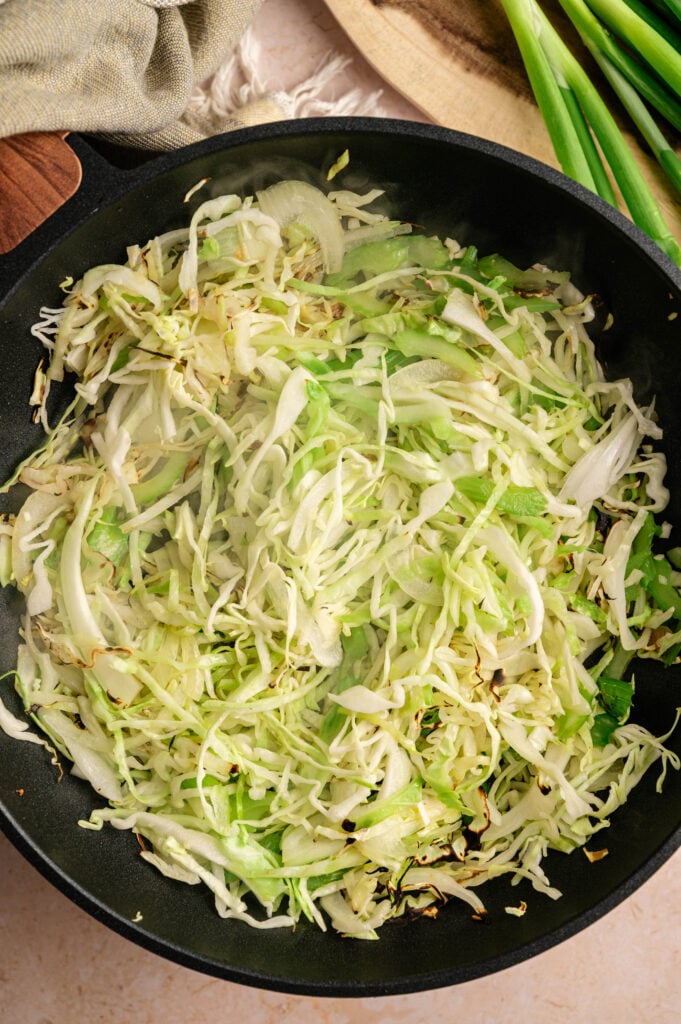
Stir-fry the vegetables
Heat a wok or large nonstick skillet over medium-high heat with a little neutral oil, then add the onion, cabbage, celery, and garlic. Cook for about one minute, just until they soften at the edges but keep their crunch.
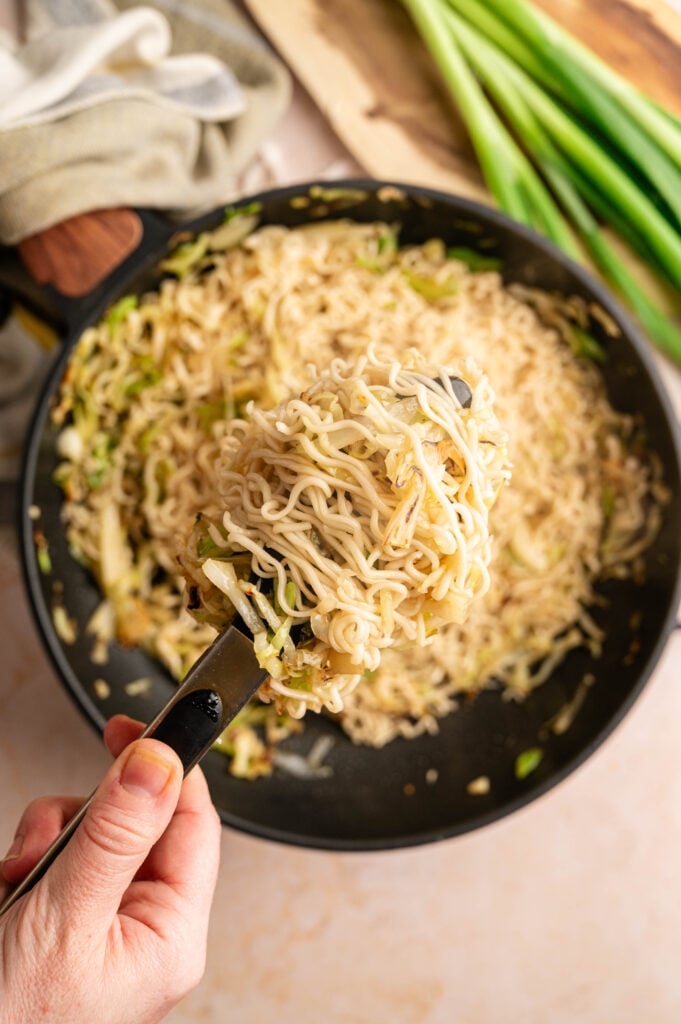
Add the noodles and sauce
Push the vegetables aside, add the drained noodles, and pour the sauce straight over them. Toss so every strand picks up the sauce before you add the eggs.
Thicken with the slurry
Whisk the chicken broth and cornstarch together, then pour it into the pan. Toss everything until the sauce thickens lightly and coats the noodles, which takes under a minute.
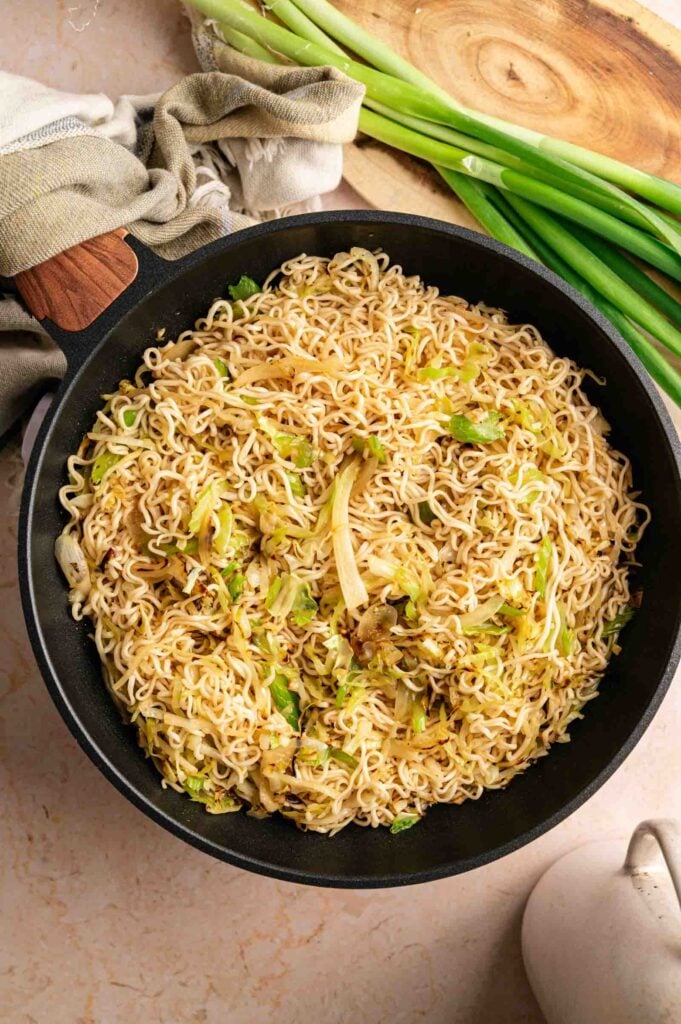
Garnish and serve
Scatter chopped green onions across the noodles and serve straight from the pan. Enjoy the Chow Mein hot while the noodles still have their spring.
Recipe Notes and Expert Tips
- Buy the noodles from the refrigerated section, not the dried pantry aisle. The two cook differently, and the wrong one can leave you with undercooked strands.
- Get the pan hot before the noodles go in. A cool or wet pan is what makes them stick and tear.
- Cook the vegetables over high heat. That is what gives the noodles and cabbage their light char, the part that reads as takeout rather than boiled noodles.
- Whisk the cornstarch slurry again right before it goes in. It settles fast, and a settled slurry thins the sauce instead of thickening it.
- Keep the vegetables moving and pull them at a minute. Cabbage and celery lose their crunch quickly, and soft vegetables are the main thing that separates a homemade batch from the counter version.
Recipe Variations
- Add a protein. Sliced chicken, shrimp, or cubed tofu all work stirred in after the vegetables, and it’s a supported addition as long as you cook the protein through before the noodles go in.
- Swap the noodles. Fresh yakisoba is the closest match and unseasoned ramen works too, both quick to soften; I’ve tested it with ramen and it holds up. Thin spaghetti can stand in, but boil it fully first, since it won’t soften in the quick blanch the other noodles need.
- Make it meatless. A vegetarian oyster-style sauce and vegetable broth in place of the chicken broth turn it vegetarian, a swap that’s well-supported and doesn’t change the timing.
- Add more vegetables. Bean sprouts, thin bell pepper, or snow peas fold in with the cabbage. I keep them to a handful so they don’t water down the pan, and it’s tested territory I come back to when the crisper needs clearing.
How to Store Leftovers
Refrigerate leftovers within 2 hours of cooking, sooner if the kitchen is warm, in an airtight container. They keep for up to 4 days.
Reheat in a hot skillet with a splash of water or broth to loosen the noodles, and bring them to 165°F before serving.
For longer storage, freeze portions in freezer bags for up to 2 months, then thaw in the fridge overnight before reheating as usual.
Make-ahead is easy too: slice the vegetables and mix the sauce a day early, then keep them separate until you cook.
What to Serve With Panda Express Chow Mein
Chow mein is a base, so it wants a protein next to it to make a full plate. I usually set it beside Copycat Panda Express Orange Chicken, the sweet-glazed piece most people picture with a Panda combo.
To keep the plate from leaning all noodles and meat, Copycat Panda Express Super Greens adds a quick vegetable side that brings some green to the tray.
FAQs
Chow mein noodles are cooked briefly and tossed in a hot pan, so they stay firmer, while lo mein noodles are boiled until soft and coated in sauce. This recipe is the chow mein style, with that lighter, springier bite.
Look for chow mein or fresh yakisoba noodles, usually in the refrigerated section near the produce or tofu. Unseasoned ramen is the easiest backup if you can’t find them.
Not as written, since it uses oyster sauce and chicken broth. The variations above show the two swaps that make it vegetarian if you need it to be.
More Copycat Takeout Favorites to Try at Home
If this one earns a place in the rotation, here are a few more Panda Express copycats worth cooking:
- Copycat Panda Express Beijing Beef: when you want something crispy and tangy instead of noodles, this is the one I make next.
- Copycat Panda Express Teriyaki Chicken: a less sweet chicken option for nights the orange glaze feels like too much.
- Copycat Panda Express String Bean Chicken Breast: lighter and more vegetable-forward, good when you want protein without a heavy sauce.
- Copycat Panda Express Honey Walnut Shrimp: the splurge of the group, worth it on a night you want the seafood plate.
Ingredients
Chow Mein:
- 8 ounces chow mein noodles
- 2 cups cabbage thinly sliced
- 1 cup celery sliced
- ½ cup onion sliced
- 2 garlic cloves minced
Sauce:
- 2 tablespoons vegetable oil
- 2 tablespoons soy sauce
- 2 tablespoons oyster sauce
- 1 tablespoon sesame oil
- 1 teaspoon sugar
Finishing:
- ¼ cup chicken broth
- ½ tablespoon cornstarch
- Green onions for garnish
Instructions
- In a small bowl, whisk together the vegetable oil, soy sauce, oyster sauce, sesame oil, and sugar. Set aside.2 tablespoons vegetable oil, 2 tablespoons soy sauce, 2 tablespoons oyster sauce, 1 tablespoon sesame oil, 1 teaspoon sugar
- Bring a pot of water to a boil. Add the noodles and cook for 20–30 seconds, just until loosened. Drain well and toss with a little oil to prevent sticking.8 ounces chow mein noodles
- Heat a large skillet or wok over high heat. Add a bit of oil, then stir-fry the onion, cabbage, celery, and garlic for about 1 minute, until slightly softened but still crisp.2 cups cabbage, 1 cup celery, ½ cup onion, 2 garlic cloves
- Push the vegetables to one side of the pan. Add the noodles and pour in the prepared sauce.
- In a small bowl, mix the chicken broth and cornstarch, then add it to the pan.¼ cup chicken broth, ½ tablespoon cornstarch
- Toss everything together until well coated and heated through. The sauce should lightly thicken and coat the noodles.
- Garnish with chopped green onions and serve immediately.Green onions
Notes
- Refrigerate leftovers within 2 hours of cooking, sooner if the kitchen is warm, in an airtight container.
- Pull the noodles after 20 to 30 seconds and toss them with oil right away so they don’t clump.
- Get the pan hot before the noodles go in, or they’ll stick and tear.
- Whisk the cornstarch slurry again right before it goes in, since it settles and then thins the sauce instead of thickening it.
