
Oven Baked Ribs Recipe (Fall-Off-The-Bone Tender)
 Add Preferred Source
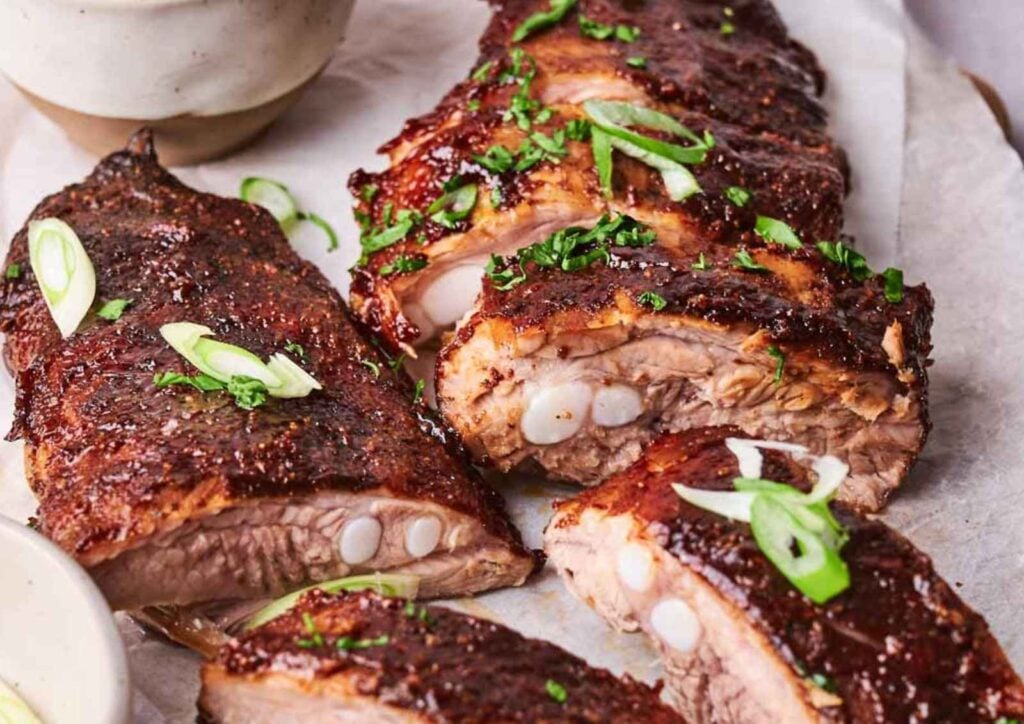
Oven baked ribs are the ones I make most often, because they ask so little of me. There’s no grill to babysit and no smoker to tend. I coat the rack with a homemade dry rub of just two spices, wrap it tightly in aluminum foil, and let a low oven do the slow work while I get on with everything else.
The other reason I keep coming back to these oven baked ribs is the sauce. My homemade BBQ sauce is stirred together from pantry staples, ketchup, brown sugar, Worcestershire, a little cider vinegar and garlic powder, so there’s no bottle of barbecue sauce to buy. Between the spice rub and that quick homemade sauce, the whole thing leans on staples rather than a special shopping trip.
Why You Will Love Making Oven Baked Ribs
Making oven-baked ribs at home is so much better than eating out! Here’s why you’ll fall in love with this recipe:
- Fall-apart tender, with almost no work. The long, low bake under foil breaks the meat down, so it falls off the bone by the time it’s done.
- The sauce comes from the pantry. Ketchup, brown sugar, Worcestershire, cider vinegar and garlic powder stirred together in one bowl stand in for a store-bought barbecue sauce.
- Just two spices in the rub. Cumin and smoked paprika carry the flavor, with salt and pepper. Nothing you’ll buy once and forget at the back of a shelf.
- No grill or smoker, and one tray to wash. These come together the same in January as they do in July, start to finish in a single roasting tray.
- Good the next day. Leftovers reheat well and pull off the bone for sandwiches or a rice bowl.
- Make-ahead friendly. Season the rack the night before and keep it covered in the fridge, then bake when you’re ready.
What You’ll Need
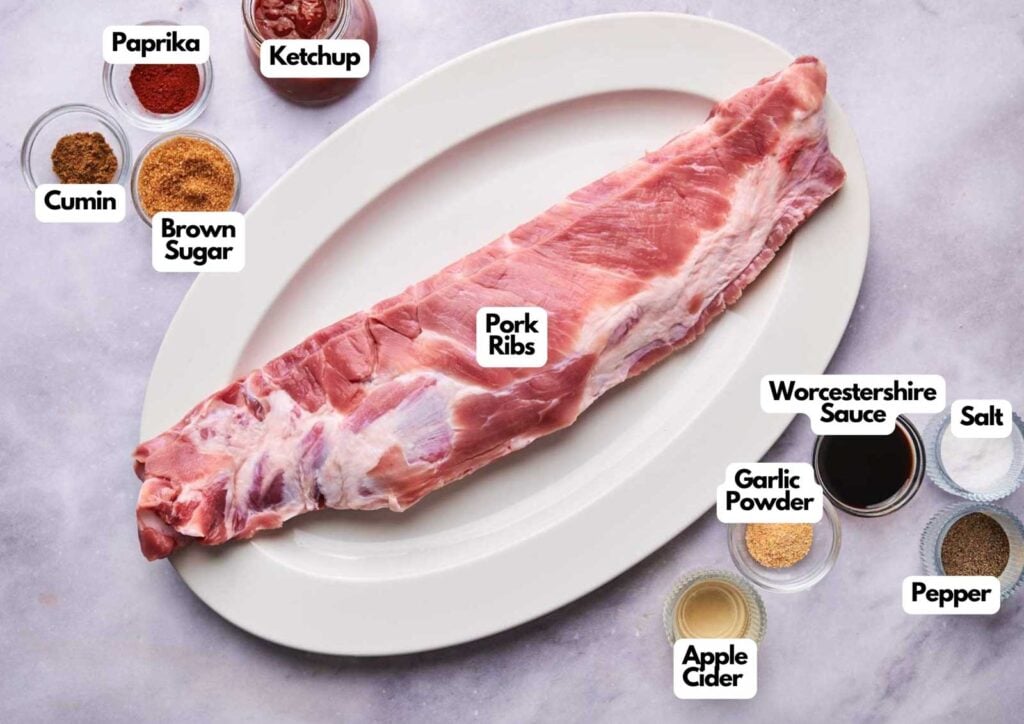
You’ll need all the ingredients in the photograph below.
The rack is baby back pork ribs. Baby backs come from where the rib meets the spine, which makes them leaner and more curved than the bigger spare ribs or St. Louis-style ribs, and they’re forgiving in the oven because the low heat and the covered tray keep them from drying out.
For the rub, it’s cumin, smoked paprika, salt and black pepper. The smoked paprika is doing the heavy lifting on flavor, lending that hint of barbecue-pit character without a grill involved.
The sauce is where the pantry does its work: ketchup for the base, light brown sugar for body and a little caramel sweetness, Worcestershire and apple cider vinegar for tang, and garlic powder. Dark brown sugar works too if that’s what you have, for a deeper molasses note. You’ll also want a roasting tray or a large rimmed baking sheet, deep enough to hold a little water without it running off.
How to Make Oven-Baked Ribs
A complete printable recipe and the measurements in both US customary and metric are available in the recipe card below.
Heat the oven and mix the rub.
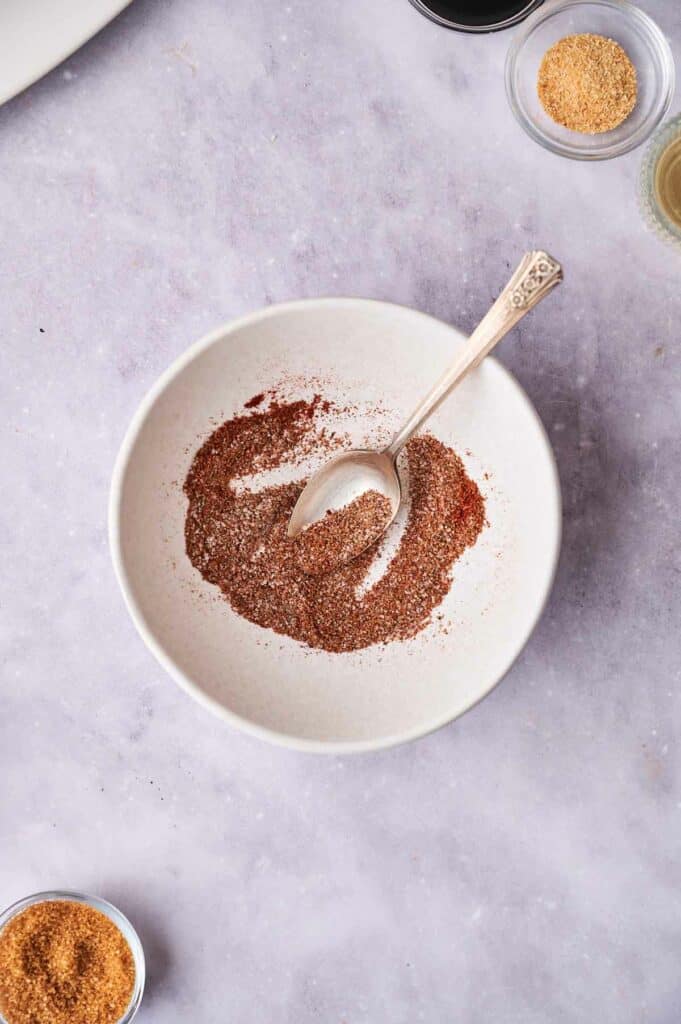
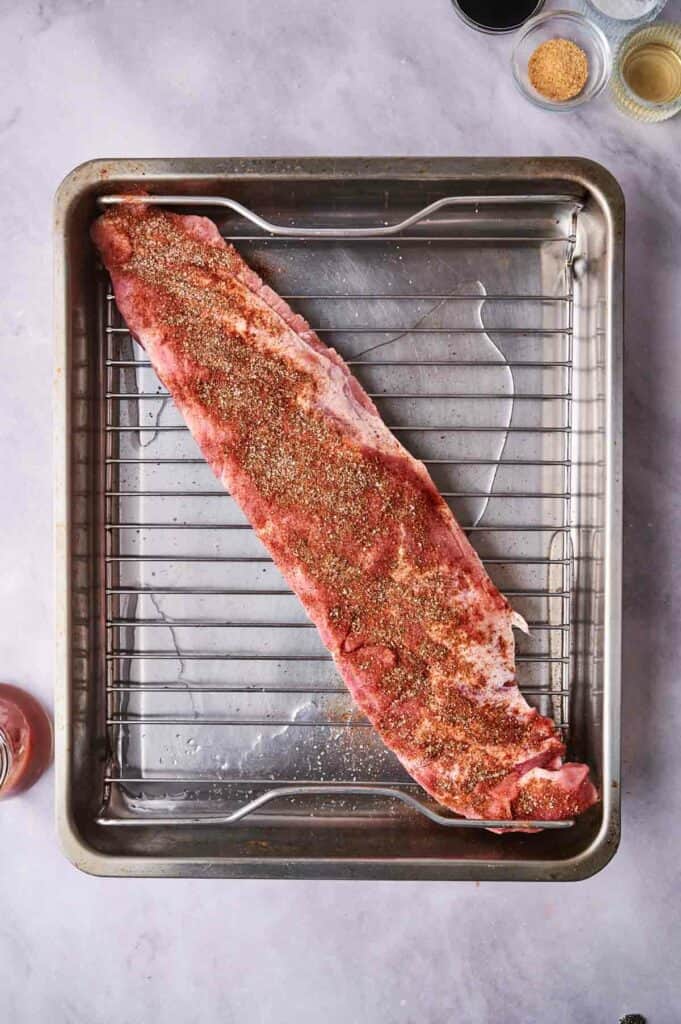
Set the oven to 320°F (160°C). Low and slow is the whole point with oven ribs, so resist the urge to rush it hotter. Stir the cumin, smoked paprika, salt, and black pepper together in a small bowl to make the spice mix.
Prep the rack.
Turn the rack bone side up. Slide a knife under the thin membrane on the bone side of the ribs and, using a paper towel for grip, peel that thin layer away, then trim any loose fat. More on why you remove the membrane in the tips below. Rub the homemade rub over the whole rack so every side is coated, then set the ribs in the roasting tray or rimmed baking sheet with ½ cup of water.
Cover and bake.
Cover the tray tightly with aluminum foil, sealing the rack tightly so no steam escapes, and bake for 3 hours. The foil traps steam and the splash of water keeps the wrapped ribs moist through the long cook. There’s nothing to do while the ribs cook, which is the whole appeal.
Make the sauce.
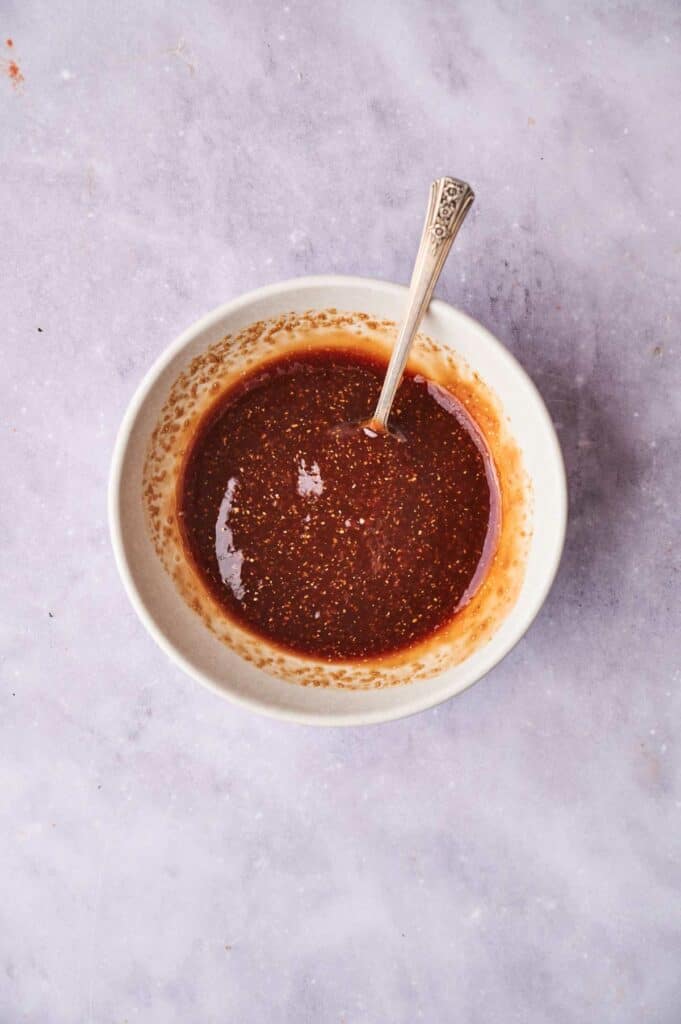
While the ribs bake, stir the ketchup, brown sugar, Worcestershire, apple cider vinegar, and garlic powder together in a bowl until smooth. That’s your homemade BBQ sauce, and you can use it in place of any favorite BBQ sauce from a bottle.
Sauce and finish.
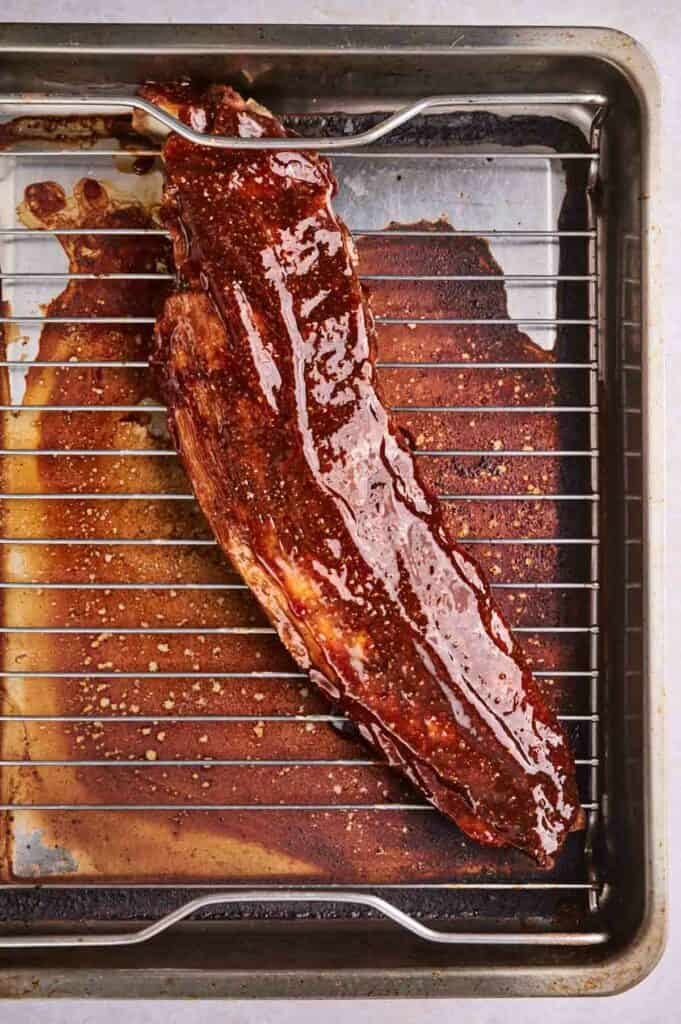
After the 3 hours, take the ribs out and bring the oven temp up to 425°F (220°C). Brush the ribs generously with the sauce, then bake them uncovered for 12 to 15 minutes, until the sauce is set and the edges are golden and caramelized. The smoked paprika and the caramelized sauce give these a real smoky flavor. Keep an eye on them here, because the sugar in the sauce can go from caramelized to burnt quickly.
Rest, then serve.
Let the ribs rest for a few minutes before you cut them. That covers the short rest the pork needs after it reaches its safe temperature (there’s more on that in the tips below), and by then the ribs pull apart with a fork.
Tips
- Take the membrane off. That thin membrane on the bone side doesn’t soften the way the meat does. Cooked low and slow, that thin layer turns rubbery, so peeling it off gives you a cleaner bite. Grip it with a paper towel and it comes away in one piece.
- The water in the tray matters. That ½ cup in the base steams gently under the foil and keeps the rack from drying out over the few hours it bakes.
- Know when they’re done. Per USDA, fresh pork is safe at an internal temperature of 145°F (63°C) checked with a thermometer, followed by a three-minute rest. At that point the meat should also give easily when you pull at it with a fork.
- Watch the final bake. That high-heat, uncovered stint is what sets the sauce and builds the smoky flavor. Because it’s a sugary sauce, it can catch and burn fast, so stay close.
- Let the ribs rest. A few minutes out of the oven before cutting lets everything settle so you’re not fighting a slippery rack straight off the heat.
- Make the rub your own. The cumin-and-paprika base takes well to extras. A little onion powder, more garlic powder, extra black pepper, or a pinch of cayenne pepper for heat all work.
- Play with the sauce. A few drops of liquid smoke lean it smoky, a spoon of honey takes it sweeter, chili powder adds heat, and a splash of bourbon deepens it. Any of these turns the base into your own favorite barbecue sauce.
- Season ahead. Rub the rack and keep it covered in the fridge overnight. The spices have longer to settle into the meat, and it’s one less job on the day.
Using Beef Ribs Instead of Pork
You can, but treat it as a different cook rather than a straight swap. Beef ribs differ from baby back pork ribs in thickness and fat, so the timing won’t line up with the recipe as written. USDA gives whole cuts of beef the same safe minimum as pork, 145°F with a three-minute rest, but rib cuts are usually taken well past that so the connective tissue has time to soften. Judge them by feel and a thermometer rather than the clock.

Ingredients
- 1 pound baby back pork ribs
- 1 tablespoon cumin
- 1 tablespoon smoked paprika
- Salt and pepper
- 4 tablespoons ketchup
- 2 tablespoons light brown soft sugar
- 2 tablespoons Worcestershire sauce
- 1 tablespoon apple cider vinegar
- 1 teaspoon garlic powder
Instructions
- Preheat the oven to 160ºC (320ºF).
- In a small bowl, combine cumin, paprika, salt and pepper.1 tablespoon cumin, 1 tablespoon smoked paprika, Salt and pepper
- Remove the membrane from the lower part of the ribs and trim any excess fat. Rub the spices all over the ribs and place in a roasting tray with ½ cup of water.1 pound baby back pork ribs
- Cover with foil and bake for 3 hours.
- In a bowl, combine ketchup, brown sugar, Worcestershire, apple cider vinegar, and garlic powder and mix well.4 tablespoons ketchup, 2 tablespoons light brown soft sugar, 2 tablespoons Worcestershire sauce, 1 tablespoon apple cider vinegar, 1 teaspoon garlic powder
- Remove the ribs from the oven and brush them with the sauce. Bring the oven temperature to 220ºC (425ºF) and bake for 12-15 minutes or until golden brown.
Notes
- Take the membrane off. That thin membrane on the bone side doesn’t soften the way the meat does. Cooked low and slow, that thin layer turns rubbery, so peeling it off gives you a cleaner bite. Grip it with a paper towel, and it comes away in one piece.
- The water in the tray matters. That ½ cup in the base steams gently under the foil and keeps the rack from drying out over the few hours it bakes.
- Know when they’re done. Per USDA, fresh pork is safe at an internal temperature of 145°F (63°C) checked with a thermometer, followed by a three-minute rest. At that point the meat should also give easily when you pull at it with a fork.
- Watch the final bake. That high-heat, uncovered stint is what sets the sauce and builds the smoky flavor. Because it’s a sugary sauce, it can catch and burn fast, so stay close.
- Let the ribs rest. A few minutes out of the oven before cutting lets everything settle so you’re not fighting a slippery rack straight off the heat.
- Make the rub your own. The cumin-and-paprika base takes well to extras. A little onion powder, more garlic powder, extra black pepper, or a pinch of cayenne pepper for heat all work.
- Play with the sauce. A few drops of liquid smoke lean it smoky, a spoon of honey takes it sweeter, chili powder adds heat, and a splash of bourbon deepens it. Any of these turns the base into your own favorite barbecue sauce.
- Season ahead. Rub the rack and keep it covered in the fridge overnight. The spices have longer to settle into the meat, and it’s one less job on the day.
Nutrition
What to Serve with Oven Baked Ribs
Ribs want sides that cut through the richness, so I lean on something crisp and something starchy. A vinegary slaw is my usual first pick for the fresh, sharp contrast, and either cornbread or garlic mashed potatoes rounds the plate out on the comforting side.
If you’re building the whole spread, I pulled together the sides I actually reach for in 13 BBQ Sides That Got My Partner to Pack Leftovers Before We Left the Cookout, where you’ll find a red cabbage coleslaw, baked beans, Mexican street corn, and a macaroni salad. That covers most of what I’d put next to a rack of ribs. When ribs are the centerpiece of a bigger backyard meal, 23 Cookout Recipes to Fill Backyard Plates and Trays is where I go for the rest of the table.
Storage and Reheating
- Cool and store. Let the ribs come down to room temperature, then keep them in an airtight container or wrap the ribs tightly in aluminum foil.
- Refrigerate or freeze. Cooked ribs keep in the fridge for 3 to 4 days. To hold them longer, freeze for up to 3 months and thaw in the fridge before reheating.
- Reheat gently. Warm them through covered with foil in a low oven so they don’t dry out, and brush on a little extra sauce as they heat to bring back some moisture.
- Serving these outside? Ribs are a natural for a cookout or a game-day spread, but cooked food shouldn’t sit out at room temperature for more than 2 hours, and no more than 1 hour if it’s a hot day above 90°F. Keep the tray covered and get leftovers back in the fridge within that window.
Make It Go Further
- Buy the ribs in a larger pack. When racks come in a multi-pack, cook what you need now and freeze the rest for next time.
- Pair with pantry-friendly sides. Slaw, cornbread, baked beans and corn all come from everyday ingredients and stretch a modest amount of meat into a full plate.
- Use the leftovers. Pull any leftover meat off the bone for sandwiches, to top a salad, or over rice the next day.
More Pork Recipes
If these ribs in the oven got you in a low-and-slow mood, 19 Pork Recipes That Stretch Your Grocery Money is my roundup of more pork recipes built around the same idea, making a cut of meat carry a whole meal without a long ingredient list.

something is off here – 500 grams is about one pound. One pound of ribs will not make 6 servings
You’re absolutely correct, Burtbo, and I apologize for the error in the recipe. We’ve updated it with the correct serving size. Thank you for pointing this out – we always aim for accuracy in our recipes and appreciate when our readers help us maintain that standard.
500 grams of ribs = 1.1 pounds? That hardly seems like enough for 2 people, considering the weight of the bones, never mind the 6 people the recipe says it serves.
You’re absolutely right Cheryll, and I apologize for the error in the recipe. We’ve updated it with the correct serving size. Thank you for bringing this to our attention.