
Classic Beef Stew Recipe
 Add Preferred Source
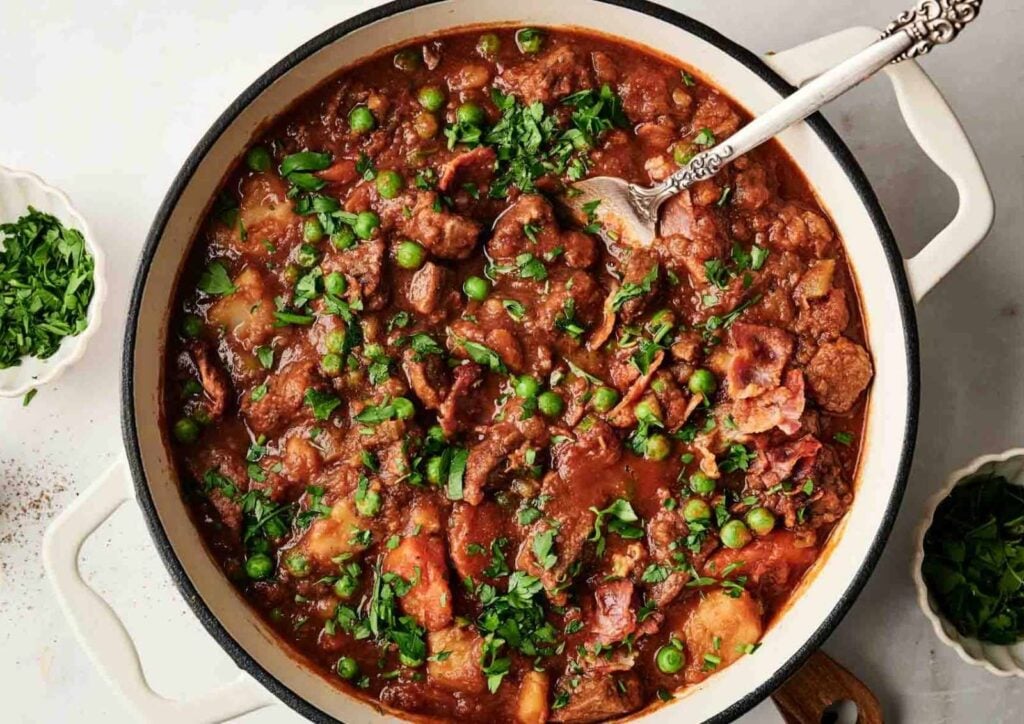
Classic Beef Stew is what I make when I want a real beef dinner without paying the price a good cut usually costs. The trick is the meat: chuck is one of the least expensive pieces at the counter, and a long, slow simmer is exactly what turns it fork-tender.
You brown the beef and bacon first, build a base with tomato paste and a splash of wine, then let it all cook down until the meat pulls apart with a spoon. Three pounds of chuck stretches across eight bowls once the potatoes, carrots, and peas go in, and to my taste, it’s even better reheated the next day.
This post contains affiliate links. As an Amazon Affiliate, if you purchase through those links, I earn a commission. Thank you!
Why You’ll Love This Recipe
- One inexpensive cut does the work: chuck starts out tough and cheap, and the 90-minute simmer is what turns it fork-tender, so you get a filling beef dinner without steak prices.
- It stretches: three pounds of beef feeds eight once the potatoes, carrots, and celery bulk out the pot, so the meat isn’t carrying the whole meal on its own.
- Bacon and browning build the flavor: you render the bacon first and brown the beef in its fat, so the base tastes deep without any special ingredients.
- Leftovers hold well: it keeps three to four days and reheats cleanly, so one afternoon at the stove covers a couple of dinners.
- It’s mostly hands-off: after the first stretch of browning, the pot simmers on its own while you get on with something else.
Ingredients You’ll Need
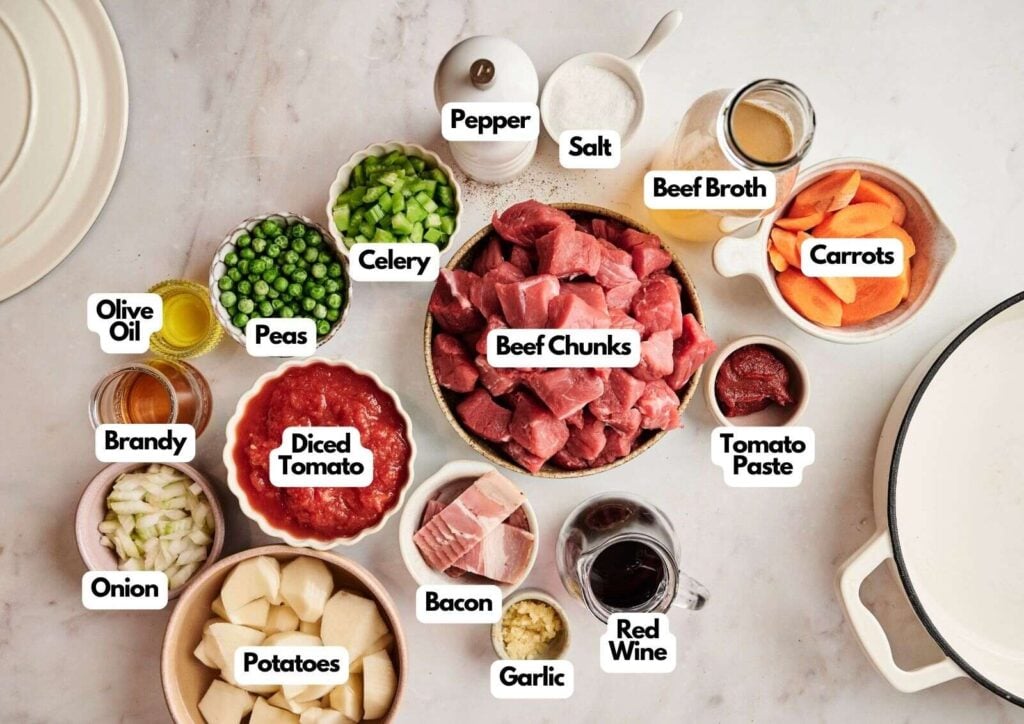
You’ll need all the ingredients shown in the photograph below.
Beef chuck. This is the whole point of the dish. Use 3 pounds, cut into 1 1/2-inch chunks, and if you can, buy a chuck roast and cube it yourself rather than reaching for a pack labeled “stew meat,” which is often trim from several different cuts and cooks unevenly. Chuck has the connective tissue and marbling that break down over a long simmer into tender beef and a rich broth, so it’s the best beef for stew and one case where the cheaper cut is the right one.
Bacon. Four strips, chopped and rendered first. It isn’t just extra meat; the fat it leaves behind is what you brown the beef in, and it seasons the whole pot from the start.
Brandy and red wine. A 1/4 cup of brandy and 1/2 cup of a hearty red deglaze the pot and add depth to the broth. Both cook off their alcohol during the long simmer. If you’d rather not cook with either, there’s a swap in the Variations below.
Yukon Gold potatoes. Two cups, peeled and cut into 1-inch pieces. Yukon Golds hold their shape through a long simmer instead of dissolving into the broth, and the 1-inch cut is big enough that they cook through in the final stretch without falling apart.
Tomato paste. Two tablespoons, cooked with the vegetables until it darkens. That brief cook is where a lot of the broth’s color and low, savory note come from.
Frozen peas. A cup, added in the last five minutes so they stay bright green and don’t turn to mush.
How to Make Beef Stew
Scroll down for the full recipe card containing a full printable recipe and measurements in both US customary and metric units.
Once everything’s chopped, this comes together in four stages, and most of the clock is the hands-off simmer at the end.
Brown the Bacon and Beef
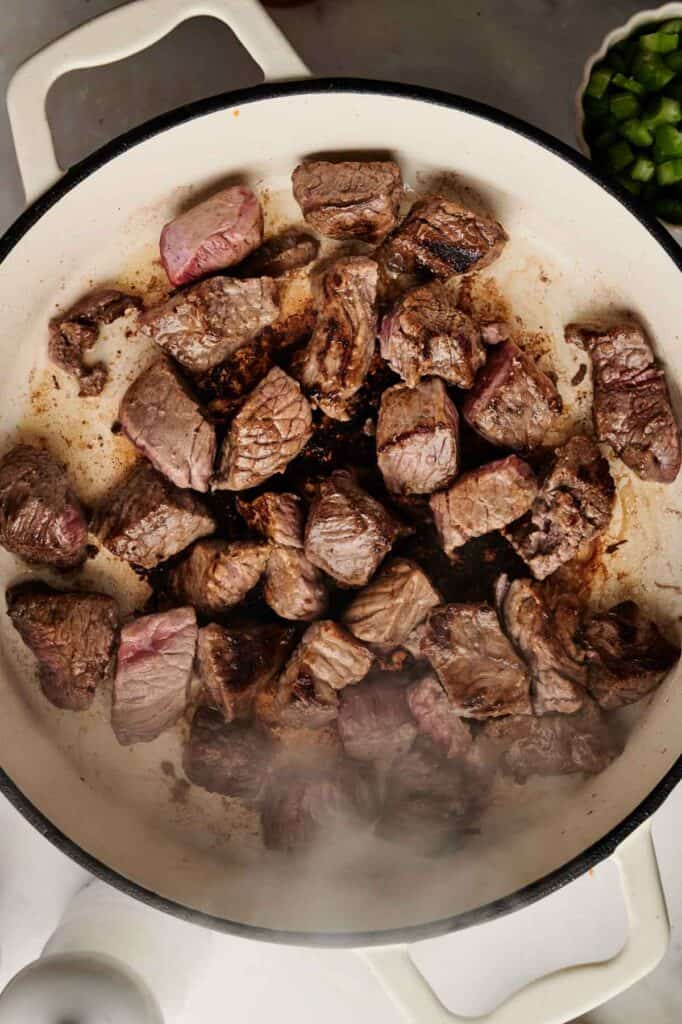
Season the beef with salt and pepper. Render the chopped bacon in the pot until it’s crisp, 4 to 5 minutes, then lift it out onto paper towels and leave the fat behind. Add 2 tablespoons of olive oil and brown the beef in batches, 3 to 4 minutes a batch, until the pieces are golden. Give them room and work in batches even though it’s slower, because a crowded pot steams the beef gray instead of searing it, and you lose the browning that flavors the whole stew. Set the beef aside with the bacon.
Soften the Vegetables
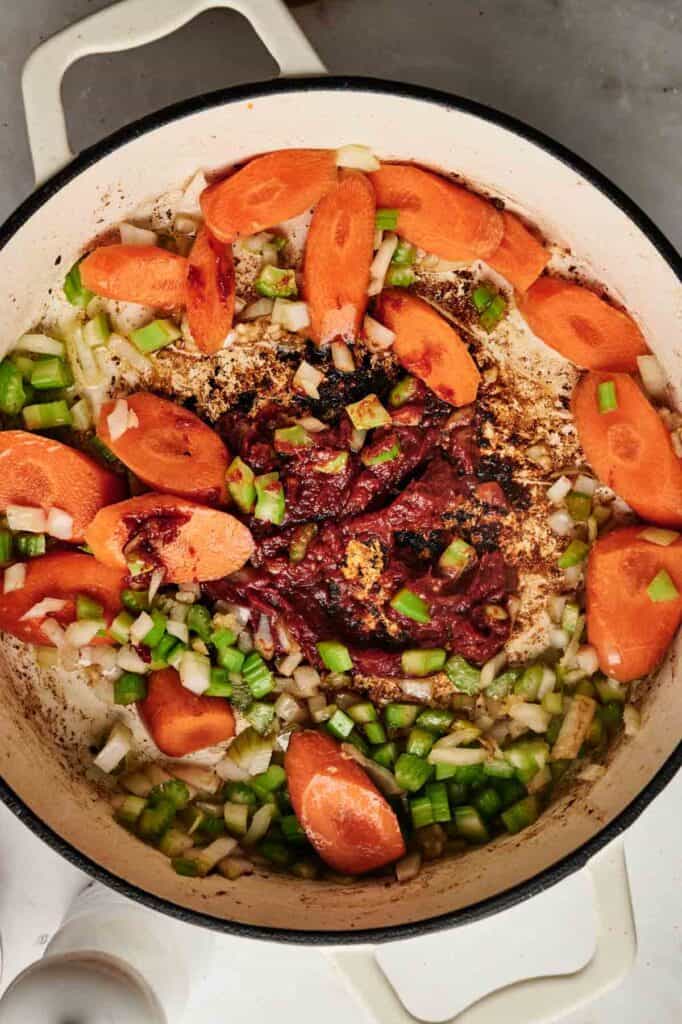
Add a little more oil if the pot looks dry, then cook the onion, celery, carrots, and garlic for about 7 minutes, until they’ve softened. Stir in the tomato paste and let it cook 3 to 4 minutes until it darkens; don’t rush this, since it’s where a lot of the depth comes from.
Deglaze and Build the Base
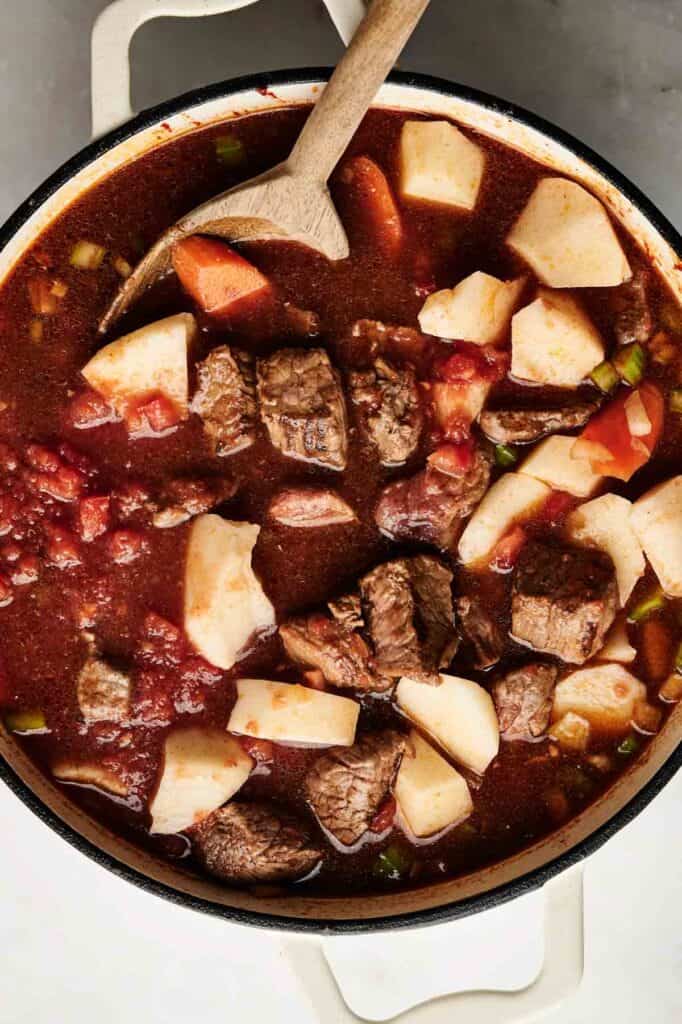
Pour in the brandy and red wine and scrape the browned bits off the bottom of the pot, then let it simmer 2 minutes. Return the beef and bacon to the pot and add the diced tomatoes with their juices, the beef broth, and the potatoes.
Simmer and Finish
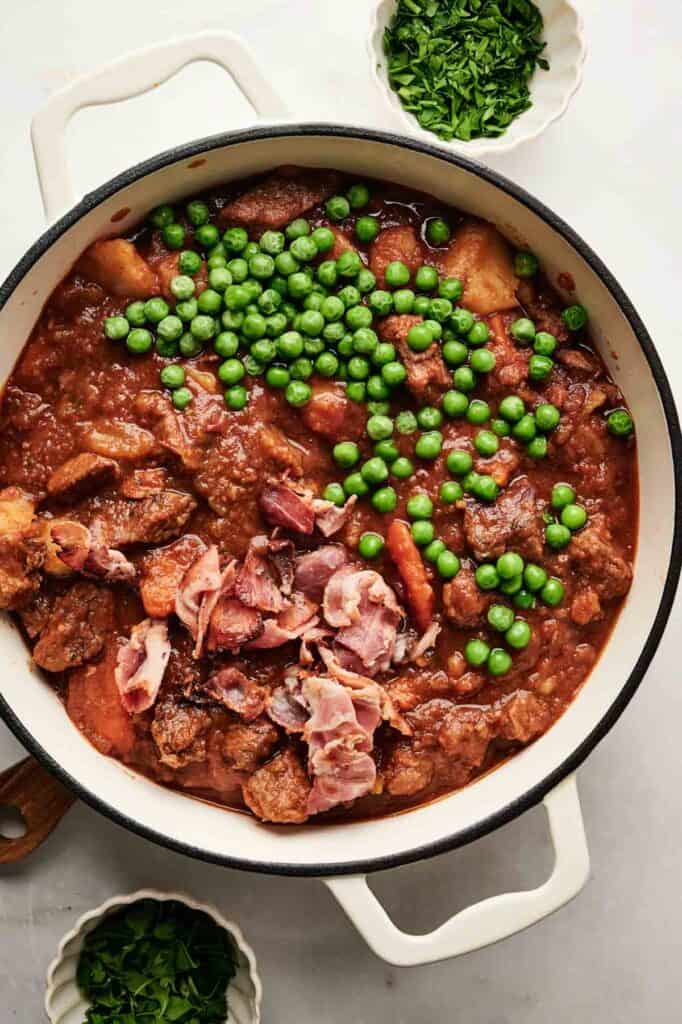
Cover and simmer for about 1 1/2 hours, until the beef pulls apart easily. That long simmer takes the meat well past the 145°F USDA safe minimum for beef; what you’re waiting on is fork-tender, which takes longer than doneness alone. Stir in the peas for the last 5 minutes, taste and adjust the salt and pepper, and finish with fresh parsley before serving.
Recipe Notes and Expert Tips
Don’t skip browning the beef or rendering the bacon. The browned bits on the bottom of the pot are the backbone of the broth, and there’s no way to add that flavor back in later.
Brown in real batches with space between the pieces. If the beef is crowded it steams and stays gray, and you lose the sear that makes the broth taste like it cooked all day.
If the broth is thinner than you like, pull the lid for the last twenty minutes so it reduces, or mash a few of the potato pieces against the side of the pot to thicken it without any flour.
Season at the end rather than at the start. The broth concentrates as it reduces, so salting early can leave it too salty by the time the stew is done.
Recipe Variations
- To leave out the alcohol, skip the brandy and wine and deglaze with an extra 1/2 cup of beef broth plus a splash of red wine vinegar for brightness. It shifts the flavor a little but the timing stays the same. I haven’t tested this exact swap in this pot, so treat it as a reliable substitution rather than a promise.
- For a slow-cooker version, brown the beef and bacon on the stovetop first, then move everything to a slow cooker on low for roughly 7 to 8 hours, adding the peas near the end. That’s a method change I haven’t run here, so the times are a starting point rather than a tested result.
- Parsnips or turnips can stand in for some of the potatoes and hold their shape the same way, with parsnips leaning a little sweet. That one’s backed by how those roots behave in a braise rather than tested in this recipe, and it won’t change the cooking time.
How to Store Leftovers
Refrigerate leftover beef stew within two hours of cooking, in an airtight container, and it keeps three to four days. Don’t leave the pot out to cool completely first; get it into the fridge while it’s still warm. To freeze, portion it into containers and it holds up to three months; the potatoes soften a little on thawing, but the stew still reheats well. Thaw overnight in the fridge and warm it on the stovetop or in the microwave until it reaches 165°F, adding a splash of broth if it’s thickened up.
Making it ahead is a little different from saving leftovers. You can cook the whole stew a day early, cool and refrigerate it within two hours, then reheat to 165°F before serving; to my taste, it’s rounder the second day, once the flavors settle.
What to Serve with Beef Stew
Beef stew is a full bowl on its own, so I keep the sides simple and built for soaking up the broth. Crusty bread or soft dinner rolls do most of the work and cost almost nothing to add. A sharp green salad or a plate of green beans cuts the richness, and if you want it more filling, spoon the stew over mashed potatoes or wide egg noodles.
FAQs
Chuck roast, cut into 1 1/2-inch pieces. Its marbling and connective tissue are exactly what a long braise needs, melting down into tender meat instead of staying firm the way leaner, pricier cuts like sirloin do. Those leaner cuts also turn dry in a stew, so they aren’t worth the extra money here. If you buy a pack labeled “stew meat,” it’s often chuck anyway, just cut for you.
Almost always, it needs more time, not less. Chuck goes through a tough, chewy stage before the connective tissue breaks down, so if it’s still firm at the 90-minute mark, keep it simmering and check every fifteen minutes until it pulls apart. Rushing the simmer or using a lean cut are the usual reasons stew beef stays tough.
More Slow-Simmered Beef Dinners to Try at Home
If this one earns a spot in your rotation, here are a few more that treat a cheaper cut to a long, slow cook.
- Goulash is the same chuck-and-potatoes idea built on smoky paprika, simmered low and finished with a spoonful of sour cream for a tangy edge.
- Beef and Guinness Stew braises the same beef chuck in Guinness until the gravy turns thick enough to coat the spoon, with mushrooms and carrots alongside.
- Slow Cooker Pot Roast takes an economical chuck roast and lets the slow cooker do the work, turning it out with root vegetables so tender it falls apart with a fork.
- Lamb Stew is the one-pot answer for a lamb night, with cubed lamb shoulder, fire-roasted tomatoes, and fresh herbs.
- Beef Stroganoff is the quicker option, tender beef and mushrooms in a sour cream sauce over egg noodles in about forty minutes.
Ingredients
- 3 pounds beef cut in 1 ½-inch chunks
- Salt and pepper
- 4 strips of bacon chopped
- 3-4 tablespoons olive oil
- 1 cup yellow onion chopped
- 2 cups celery chopped
- 2 cups carrots peeled and cut ½ inch thick diagonally
- 2 tablespoons minced garlic
- 2 tablespoons tomato paste
- ¼ cup brandy
- ½ cup hearty red wine
- 1 can diced tomatoes including the juices
- 2 cups beef broth
- 2 cups Yukon Gold potatoes peeled, 1-inch diced
- 1 cup frozen peas
- 2 tablespoons fresh parsley to serve

Video
Instructions
- Season the beef chunks generously with salt and pepper. In a large Dutch oven or heavy skillet, cook the chopped bacon over medium heat until crispy, about 4 to 5 minutes. Remove the bacon with a slotted spoon and set it aside on a plate lined with paper towels, keeping the rendered fat in the pot for added flavor.3 pounds beef, 4 strips of bacon, Salt and pepper
- In the same pot, add 2 tablespoons of olive oil. Working in batches, sear the beef until browned on all sides, ensuring the pieces are not overcrowded. This process takes about 3–4 minutes per batch. Once browned, transfer the beef to a plate and set it aside.3-4 tablespoons olive oil
- Add another tablespoon of olive oil to the pot if needed, then stir in the onions, celery, carrots, and garlic. Cook for about 7 minutes, stirring occasionally, until the vegetables soften and become fragrant.1 cup yellow onion, 2 cups celery, 2 cups carrots, 2 tablespoons minced garlic
- Stir in the tomato paste and cook for another 3–4 minutes, allowing it to deepen in color and add richness to the dish.2 tablespoons tomato paste
- Pour in the brandy and red wine, using a wooden spoon to scrape up any browned bits stuck to the bottom of the pot. Let the liquid simmer for about 2 minutes to allow the alcohol to evaporate. Return the browned beef and bacon to the pot, then stir in the diced tomatoes (with their juices), beef broth, and diced potatoes. Bring the mixture to a gentle simmer, cover the pot, and reduce the heat to low. Let the stew cook for about 1 ½ hours, stirring occasionally, until the beef is tender and the flavors are well combined.¼ cup brandy, ½ cup hearty red wine, 1 can diced tomatoes, 2 cups beef broth, 2 cups Yukon Gold potatoes
- Stir in the frozen peas during the final 5 minutes of cooking, allowing them to heat through. Taste the stew and adjust the seasoning with additional salt and pepper as needed. Serve hot, garnished with freshly chopped parsley.1 cup frozen peas, 2 tablespoons fresh parsley
Notes
- Brown the beef in batches with space between the pieces; a crowded pot steams it gray instead of searing, and you lose the browning that flavors the broth.
- Cut the potatoes no smaller than 1 inch, so they hold their shape through the long simmer.
- For a thicker broth, uncover for the last twenty minutes or mash a few potato pieces against the side of the pot.
- Season at the end rather than the start, since the broth concentrates as it reduces.
- Refrigerate leftover beef stew within two hours of cooking, in an airtight container, and it keeps three to four days.
