
Basque Cheesecake
 Add Preferred Source
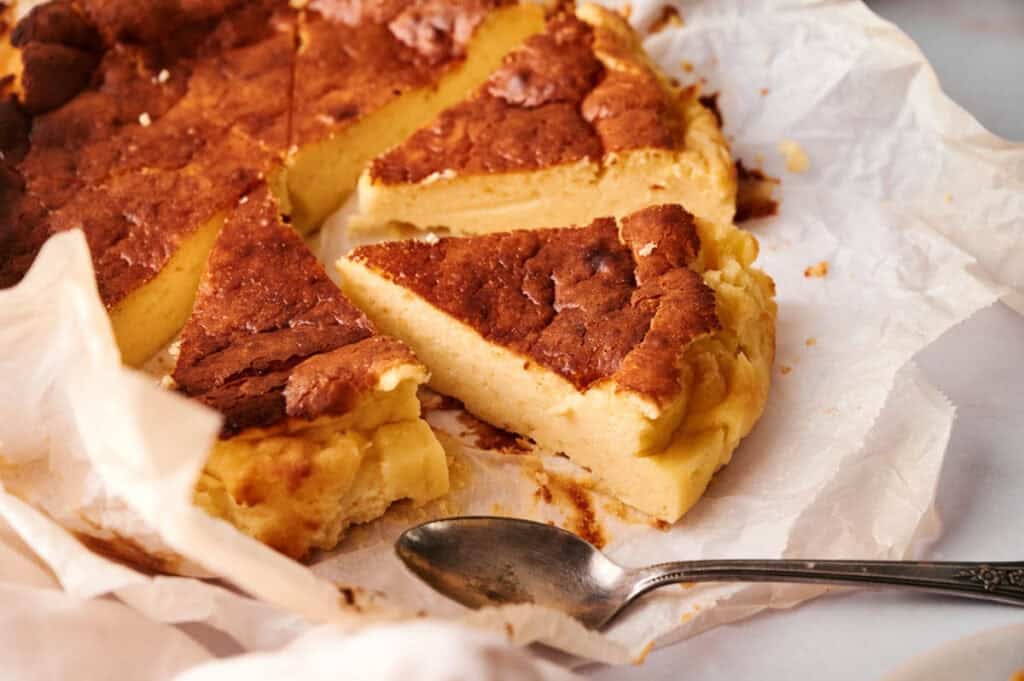
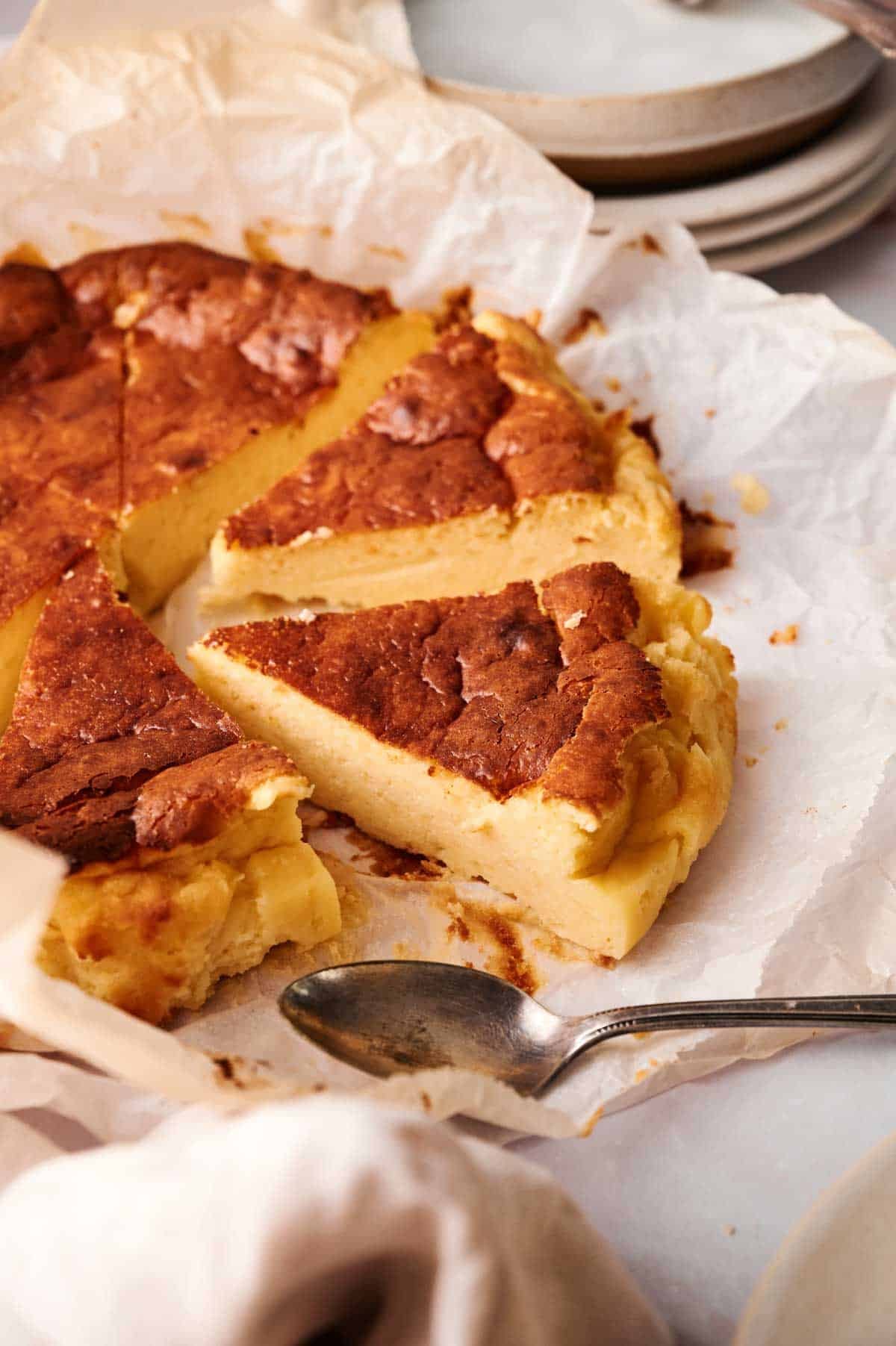
This Basque Cheesecake has a rich, creamy center and a deeply caramelized top that sets it apart from traditional cheesecake. It’s crustless, bold in flavor, and surprisingly simple to make right at home. One bite, and you’ll see why this burnt-top beauty from the Basque region of Spain has taken over dessert menus everywhere.
This post contains affiliate links. As an Amazon Affiliate, if you purchase through those links, I earn a small commission. Thank you!
The first time I tried making this Basque Cheesecake (or “tarta de queso”), I couldn’t believe how easy it was and how fancy it looked with it’s slightly burnt top! The texture is smooth and custardy with just the right jiggle in the middle. It’s perfect for dessert, but honestly, I’ve also had it for breakfast with a spoonful of strawberries and honey.
Ingredients You’ll Need
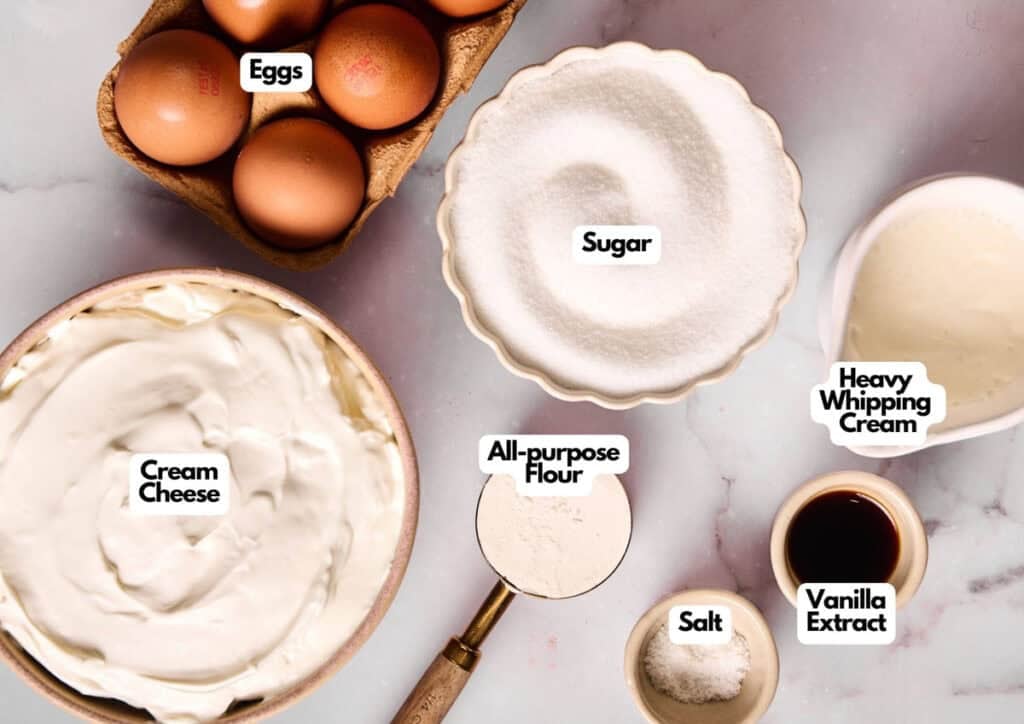
You’ll need all the ingredients shown in the photograph below.
How to Make Basque Cheesecake
Scroll down for the full recipe card containing a full printable recipe and measurements in both US customary and metric units.
This Basque Burnt Cheesecake is so easy to throw together. No crust, no water bath, just mix, pour, and bake! Here’s exactly how I make it:
Prep the pan and oven
Start by preheating your oven to 410°F (210°C). Line a 9-inch springform pan with two large sheets of parchment paper, letting them hang over the sides. This helps lift the cake out easily and gives it those signature rustic creases.
Mix the cream cheese base
In the bowl of a stand mixer fitted with the paddle attachment, beat the softened cream cheese with the sugar, salt, and vanilla extract. Mix on medium-low speed until it’s completely smooth and creamy.
Add the eggs
Crack in the eggs one at a time, making sure each one is fully mixed before adding the next. Scrape down the sides of bowl as needed so everything stays silky and even.
Pour in the cream
Now pour in the heavy cream and continue mixing until smooth. It should look pourable, not stiff.
Fold in the flour
Sift in the all-purpose flour and gently fold it into the batter. You want to keep that creamy texture intact.
Pour and bake
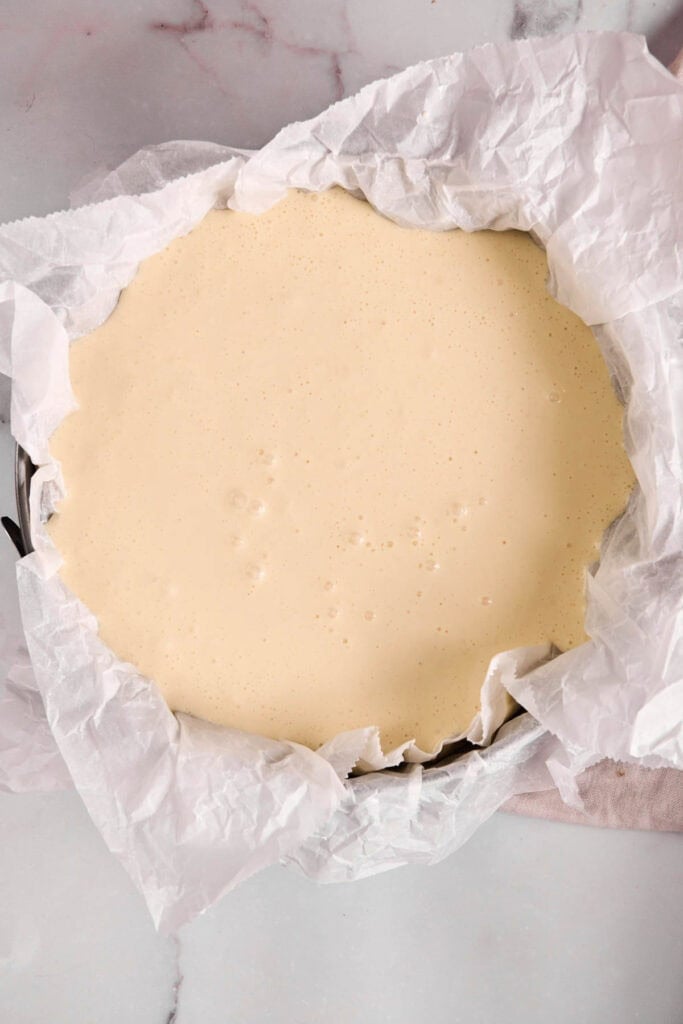
Pour batter into your prepared pan. Bake for 60 to 65 minutes, until the top is a deep golden brown and the center still has a little wobble. It might puff up and crack a bit—that’s totally normal.
Cool it down
Let the cheesecake cool in the pan on a wire rack. It will sink a bit in the center as it cools, creating that soft crater. Serve it warm, at room temp, or chilled—whatever is your favorite.
Ingredients
- 32 ounces cream cheese softened to room temperature
- 1 ½ cups granulated sugar
- ½ teaspoon salt
- 1 tablespoon pure vanilla extract
- 5 large eggs at room temperature
- 1 ½ cups heavy whipping cream
- ¼ cup all-purpose flour sifted
Instructions
- Preheat the oven to 410°F (210°C). Line a 9-inch springform pan with two sheets of parchment paper, allowing the paper to hang over the sides for easy removal.
- In a large bowl, beat the softened cream cheese, sugar, salt, and vanilla extract until completely smooth and creamy.32 ounces cream cheese, 1 ½ cups granulated sugar, ½ teaspoon salt, 1 tablespoon pure vanilla extract
- Beat in the eggs one at a time, mixing well after each addition. Pour in the heavy cream and mix until smooth. Gently sift in the flour and fold until fully incorporated with no lumps.5 large eggs, 1 ½ cups heavy whipping cream, ¼ cup all-purpose flour
- Pour the batter into the prepared pan. Bake for 60 to 65 minutes, or until the top is deeply browned and the center still jiggles slightly when moved. The internal temperature should reach about 185°F (85°C).
- Let the cheesecake cool in the pan on a wire rack. It will deflate slightly as it cools.
- Serve warm, at room temperature, or chilled—depending on your preference.
Notes
- Use room temperature ingredients: Cream cheese, eggs, and heavy cream mix better when they aren’t cold.
- Don’t skimp on the parchment paper: Use two large overlapping sheets so the batter doesn’t leak and you get those rustic, crinkled edges.
- Avoid overmixing the flour: Fold gently to keep the batter smooth and prevent a dense texture.
- Check for the jiggle: The center should still wobble slightly when you give the pan a gentle shake.
- No springform pan: You can use a deep round cake pan lined generously with parchment.
- Keep a close eye on the top: It should look dark brown—almost burnt—but not black. A broiler is not needed; the high heat will naturally do the job.
- Cool fully before slicing: It sets more as it cools, so be patient if you want cleaner slices.
- Use a sharp knife: Wipe between cuts for smooth slices.
Storage Instructions
- Fridge: Just let it cool completely, then cover it tightly with plastic wrap or store it in an airtight container. Pop it in the fridge and it’ll stay fresh for up to 4–5 days.
- Freezer: To freeze, slice it first, wrap tightly, and freeze for up to a month. Thaw in the fridge before serving.
- Serving: You can enjoy it cold straight from the fridge or let it sit out for a bit to come back to room temperature. Either way, that rich, creamy texture holds up beautifully.
Nutrition
Recipe Notes and Tips
I’ve made this Basque cheesecake plenty of times, so here are a few of my go-to tips to make it turn out just right:
- Use room temperature ingredients: Cream cheese, eggs, and heavy cream mix better when they aren’t cold.
- Don’t skimp on the parchment paper: Use two large overlapping sheets so the batter doesn’t leak and you get those rustic, crinkled edges.
- Avoid overmixing the flour: Fold gently to keep the batter smooth and prevent a dense texture.
- Check for the jiggle: The center should still wobble slightly when you give the pan a gentle shake.
- No springform pan: You can use a deep round cake pan lined generously with parchment.
- Keep a close eye on the top: It should look dark brown—almost burnt—but not black. A broiler is not needed; the high heat will naturally do the job.
- Cool fully before slicing: It sets more as it cools, so be patient if you want cleaner slices.
- Use a sharp knife: Wipe between cuts for smooth slices.
How to Store Leftover Basque Cheesecake
This crustless cheesecake keeps really well if you manage to have leftovers! Just let it cool completely, then cover it tightly with plastic wrap or store it in an airtight container. Pop it in the fridge and it’ll stay fresh for up to 4–5 days.
To freeze, slice it first, wrap tightly, and freeze for up to a month. Thaw in the fridge before serving. You can enjoy it cold straight from the fridge or let it sit out for a bit to come back to room temperature. Either way, that rich, creamy texture holds up beautifully.
Our Top 3 Money Saving Tips for This Recipe
Here are my favorite budget-friendly tricks to make this basque cheesecake recipe without breaking the bank:
- Cream Cheese: Use store-brand cream cheese—it’s just as creamy and way cheaper. You can also buy cream cheese in bulk at warehouse stores and freeze extras.
- Sugar Swap: Use granulated sugar from value brands—no need for anything fancy.
- Egg Packs: Grab eggs in a large pack—they’re usually cheaper per egg.
More Dessert Recipes You Will Love
If you’re into creamy, cozy desserts, here are a few more recipes I think you’ll enjoy:
