Kung Pao Chicken Recipe
 Add Preferred Source
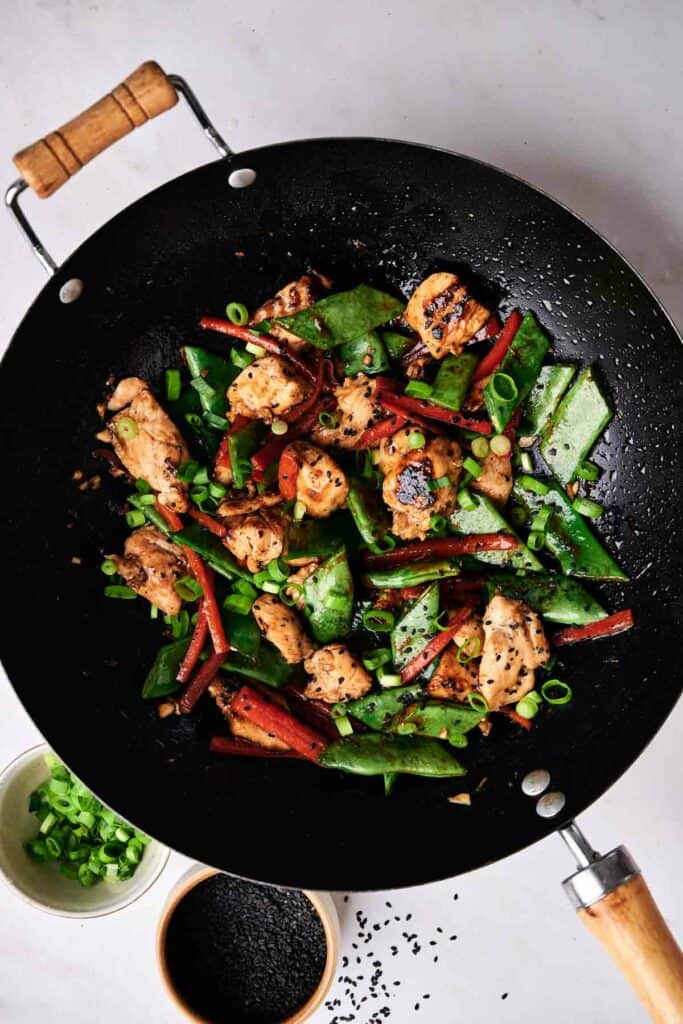
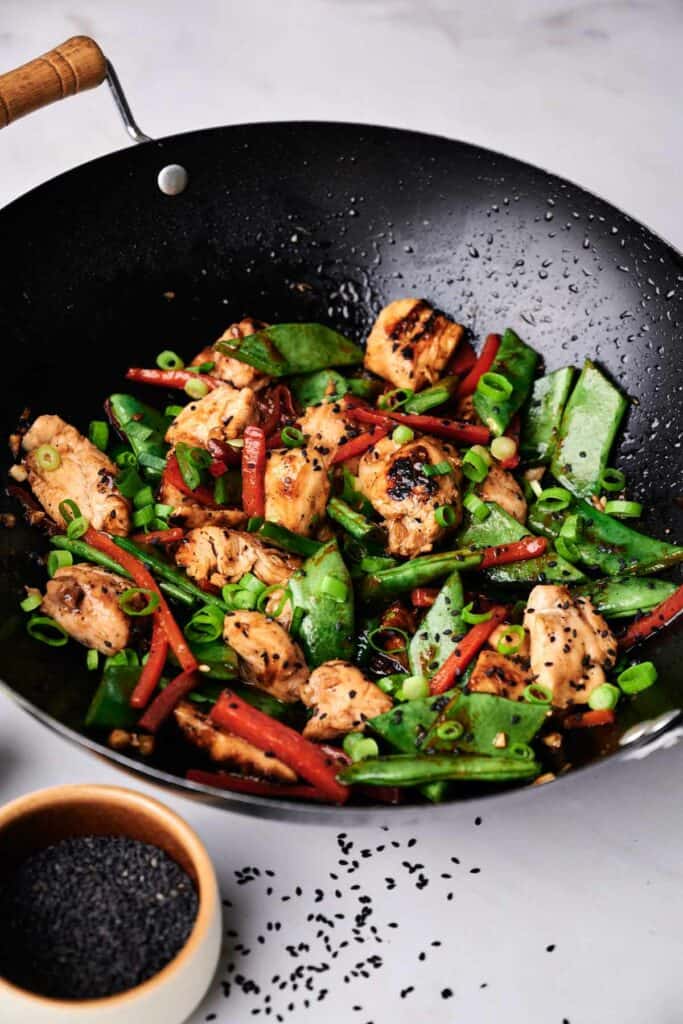
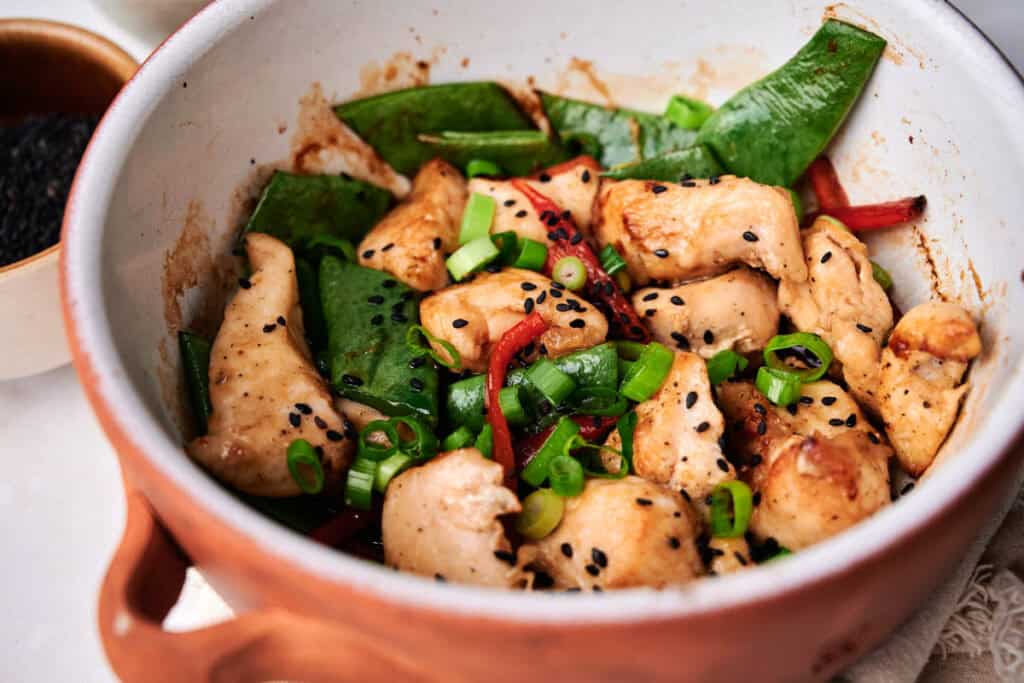
This easy Kung Pao Chicken recipe features tender chunks of chicken, and vibrant veggies, all tossed in a spicy, savory sauce. This Guizhou-style recipe brings the authentic taste of Chinese cuisine right to your kitchen, making it a perfect choice for a weeknight dinner with a kick. Perfect for meal prep!

Why you will love making this Kung Pao Chicken
If you’re a fan of dishes that pack a punch and come together quickly, you’re going to enjoy making Kung Pao Chicken. Here’s why:
- Quick and Easy: From start to finish, you can have this dish on the table in about 30 minutes.
- Flavorful: Every bite combines the heat of dried chilies and the tang of a deep, garlicky sauce.
- A Little Different: This version is made Guizhou-style which means we’ll skip the peanuts that you tend to find in Sichuan and Westernized versions.
- Versatile: Feel free to swap in different veggies or nuts to make this dish your own.
- Better than Takeout: Making Kung Pao Chicken at home lets you control the ingredients and the level of spiciness to suit your taste. Plus it’s cheaper to make it yourself!
- Healthy Option: Packed with protein and vibrant vegetables, it’s a nutritious alternative to ordering out.
Ingredients You’ll Need
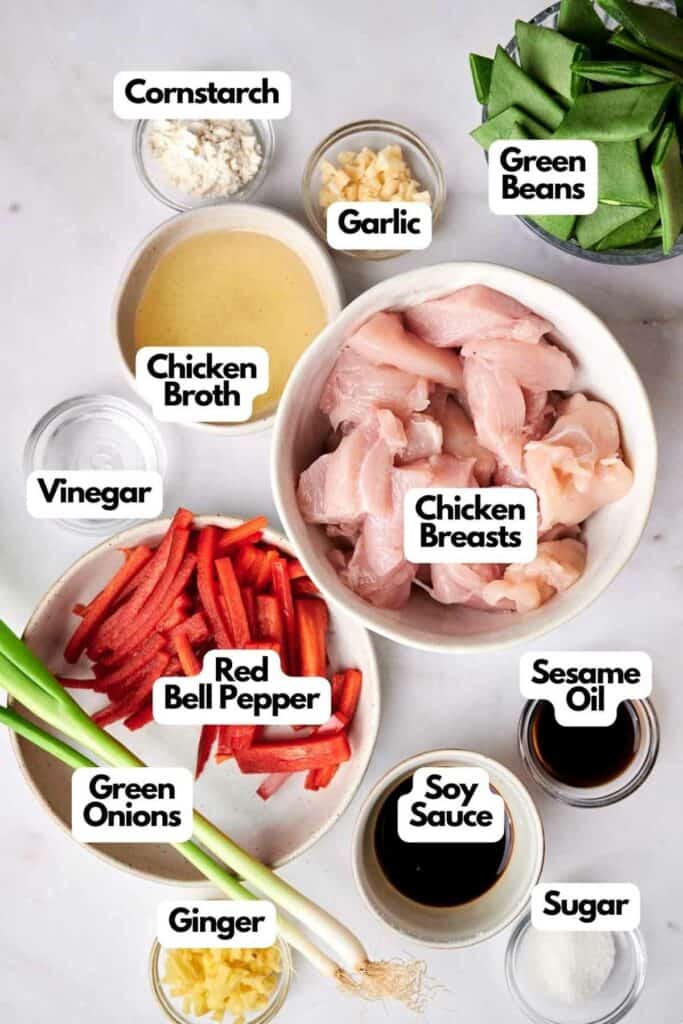
You’ll need all the ingredients in the photograph below.
How to make Kung Pao Chicken with Step-By-Step Instructions
A complete printable recipe and the measurements in both US customary and metric are available in the recipe card below.
Creating Kung Pao Chicken at home is so simple. Here’s how to bring this iconic dish to life in your kitchen:
Marinate the Chicken
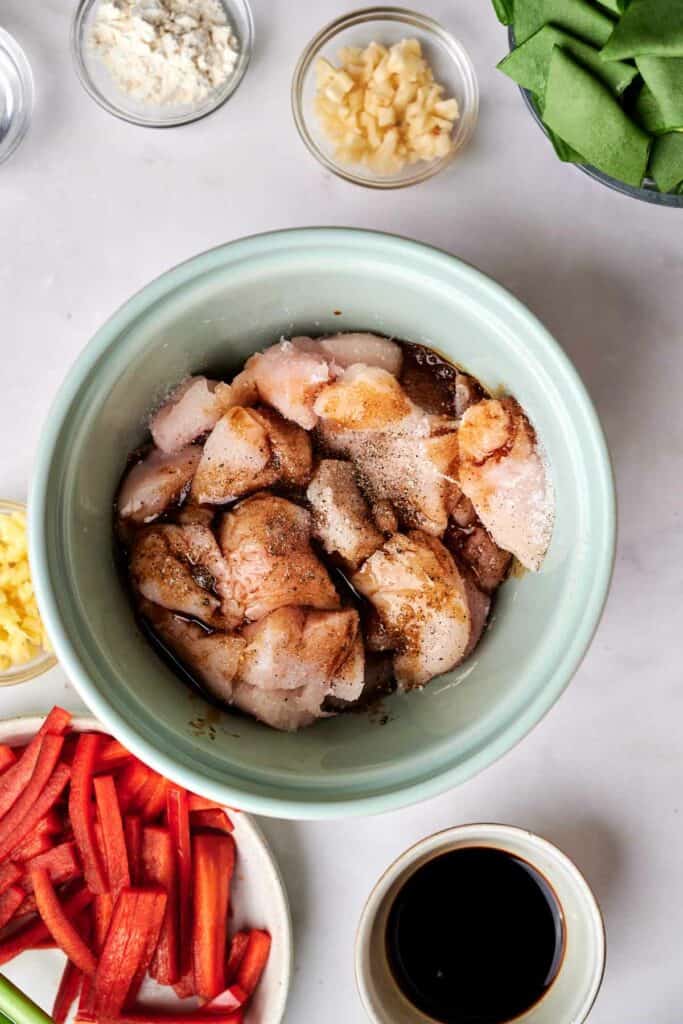
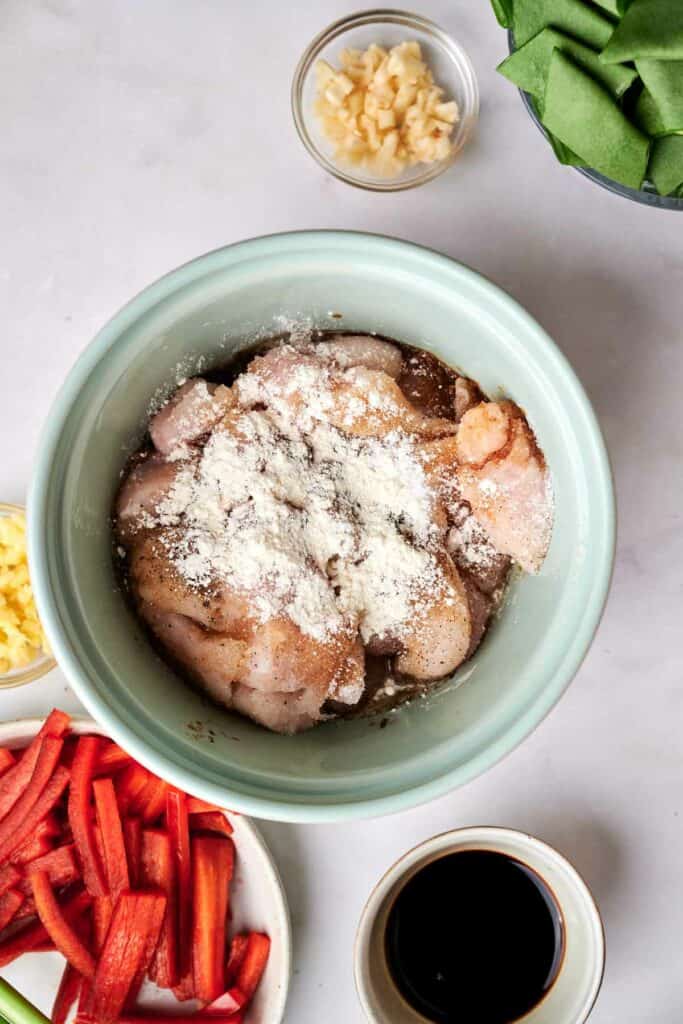
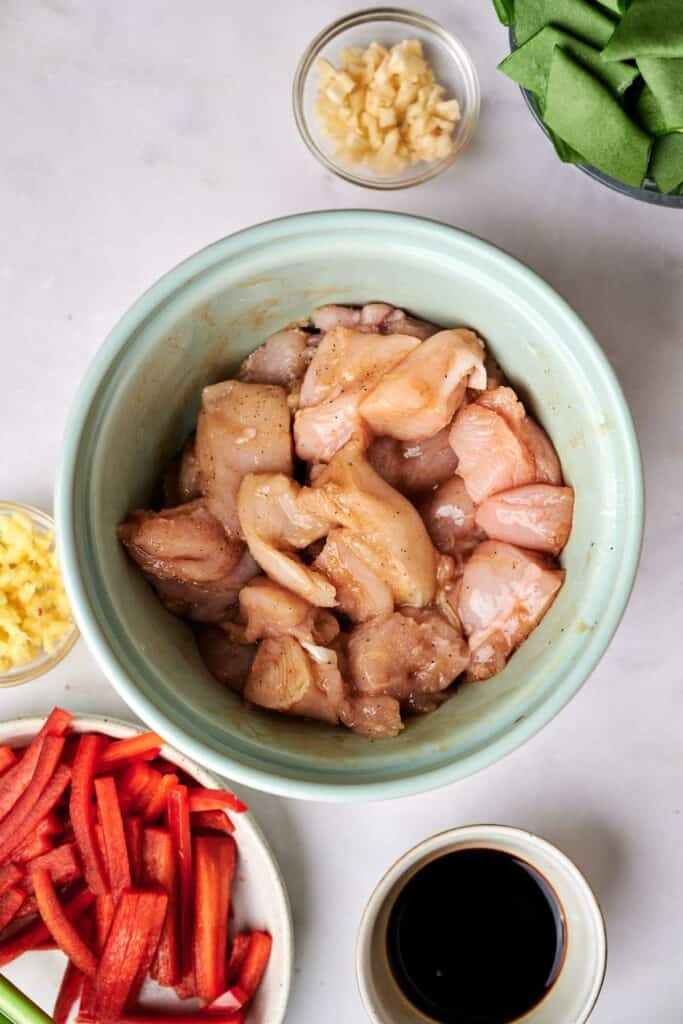
In a large mixing bowl, combine the chicken with a little salt, pepper, soy sauce, vinegar, sugar, and cornstarch. Toss everything together to ensure the chicken is well-coated in the marinade, then set it aside to marinate for a few minutes. This step helps to tenderize the chicken and infuse it with flavors.
Prepare the Kung Pao Sauce
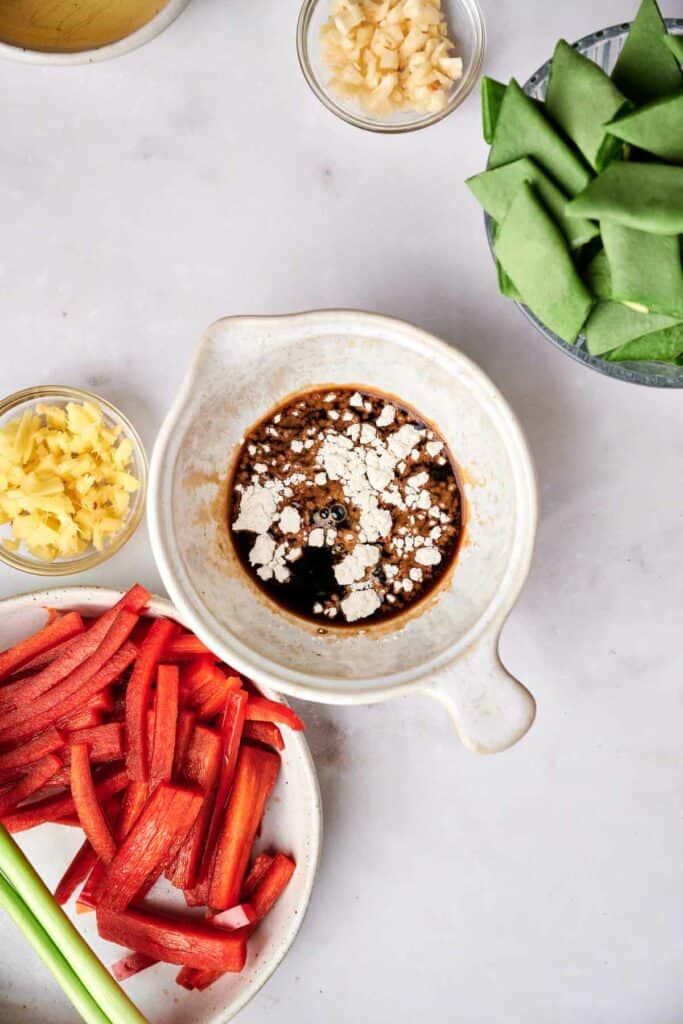
In a medium bowl, whisk together soy sauce, vinegar, chicken broth, sugar, and cornstarch. This will be your sauce base, which will later add a rich, silky texture to the dish.
Cook the Chicken
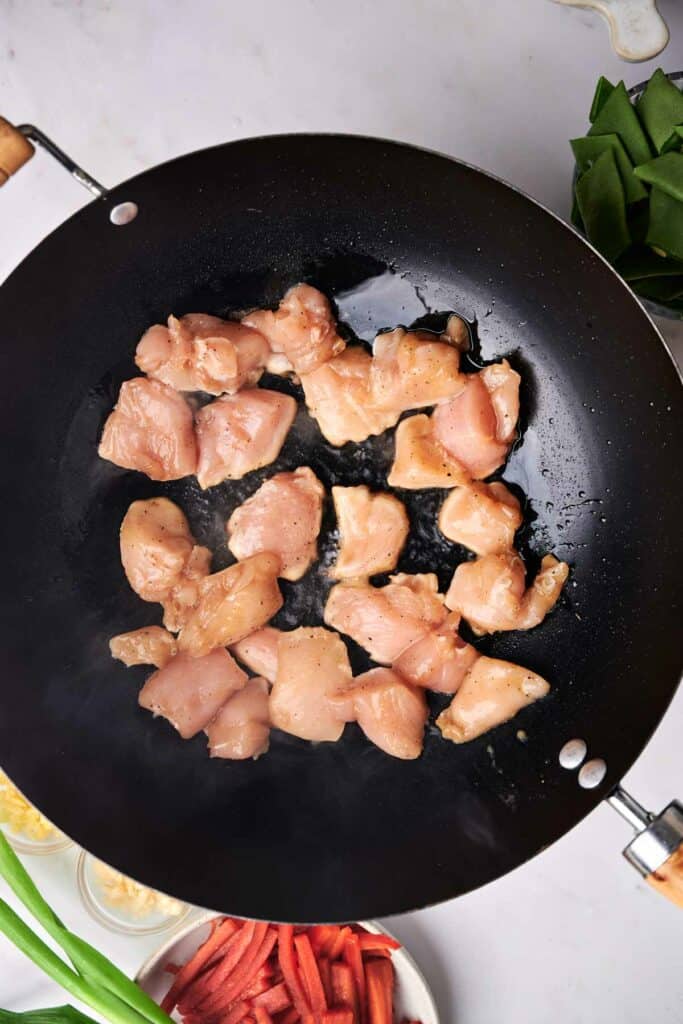
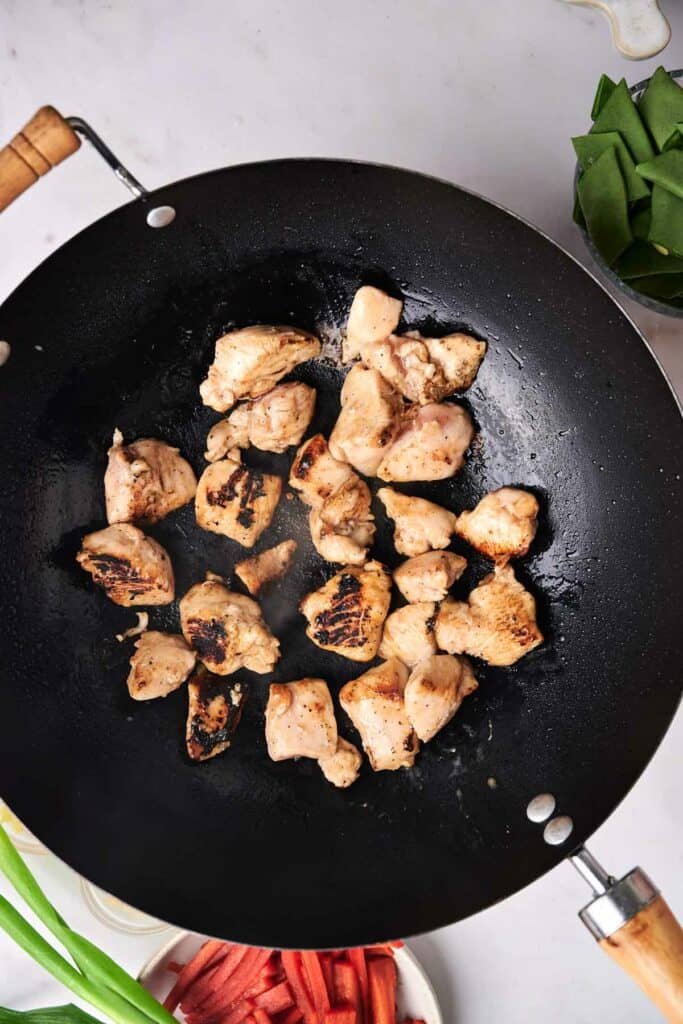
Heat a tablespoon of vegetable oil in a wok or large pan over medium-high heat. Once hot, add the marinated chicken in a single layer. Let it cook undisturbed for a few minutes to get a good sear, then stir until the chicken is cooked through. Remove it from the pan and set it aside.
Stir Fry the Vegetables
In the same pan, add a bit more oil and crank up the heat. Sauté the garlic and ginger stirring quickly to prevent burning. Then throw in the bell peppers and snap peas and stir-fry them for a few minutes until they’re just tender but still crisp.
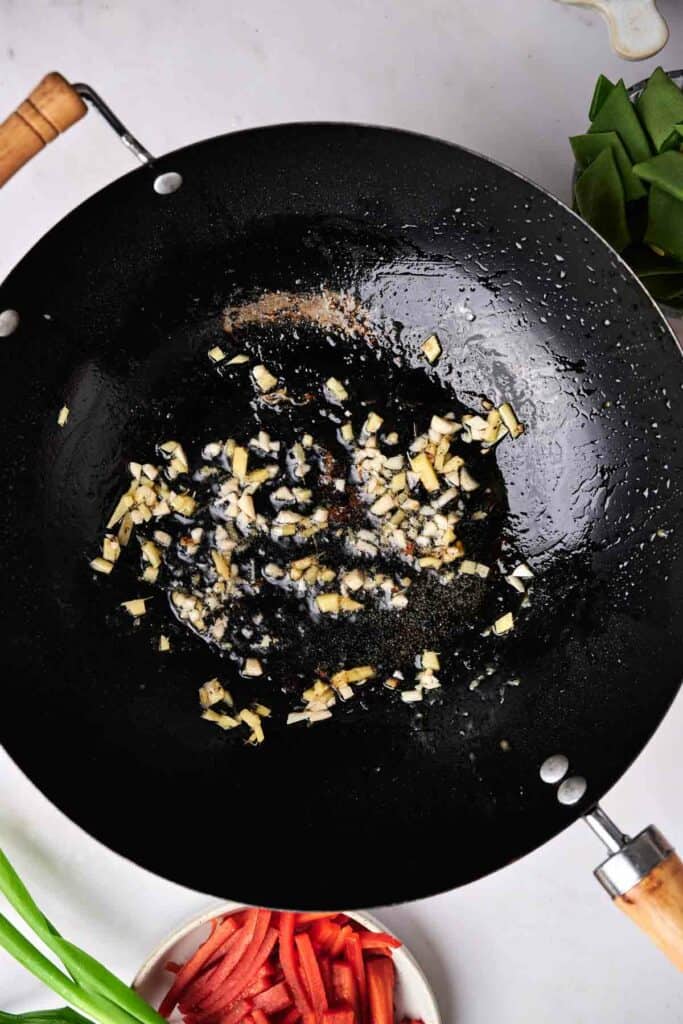
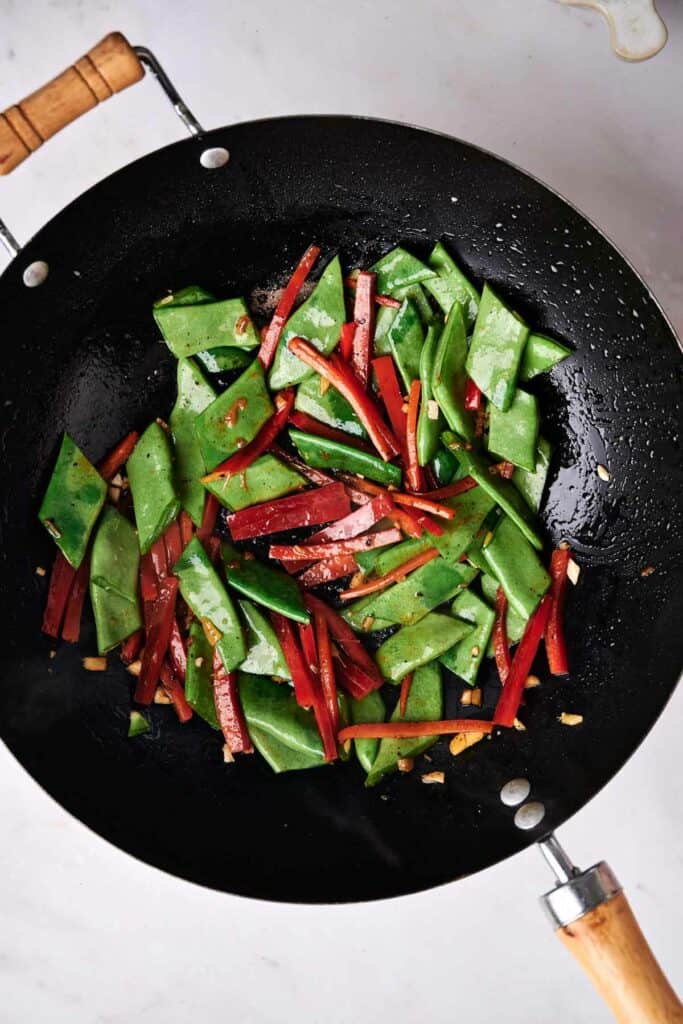
Bring It All Together
Return the chicken to the pan, pour over the prepared sauce, and toss everything together. Continue to cook for another minute or two until the sauce thickens and glazes the ingredients.
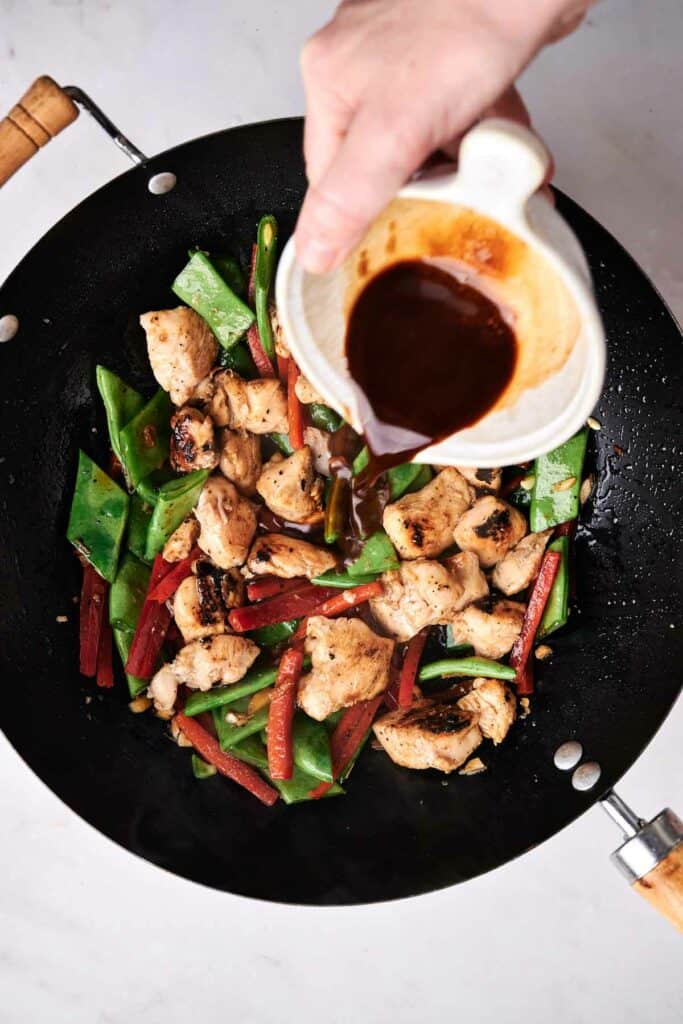
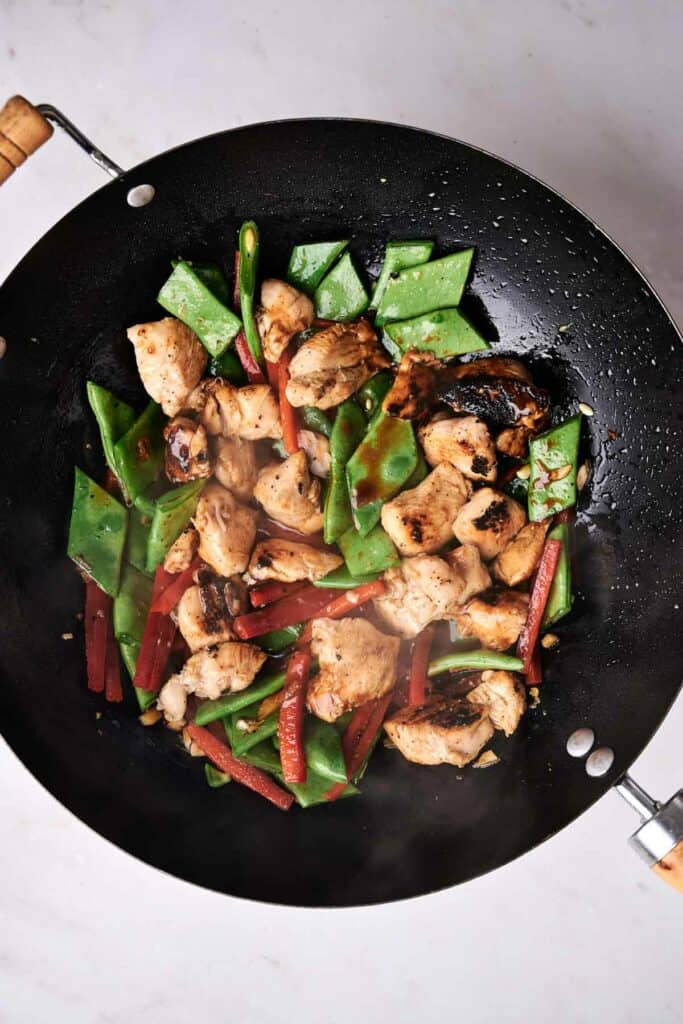
Final Touches
Take the pan off the heat, drizzle with a bit of sesame oil, and garnish with sliced green onions and a sprinkle of red pepper flakes if you like a bit more heat. Serve your Kung Pao Chicken hot and enjoy the burst of flavors!
Recipe Notes and Expert Tips
To make your Kung Pao Chicken even better, check out these tips and tweaks:
- Marinate: For even more flavorful chicken, let it marinate for up to an hour if you have time.
- Heat: Adjust the amount of dried chilies and red pepper flakes to suit your spice tolerance.
- Ginger: While fresh ginger adds a sharp, tangy taste, powdered ginger is more subtle and blends differently with the sauce. Stick with fresh for this recipe if you can, but ginger powder can be used in a pinch.
- Vegetables: Swap sugar snap peas for broccoli, green beans, or even zucchini depending on what’s available or your preference.
- Chicken: You can substitute chicken thighs if desired. Beef or shrimp make great alternatives in this dish too, and tofu or tempeh are great veggie options. Just adjust the cooking time accordingly to ensure they’re cooked properly.
- Soy Sauce: I used low-sodium soy sauce, but dark soy sauce or light soy sauce can be used as well. Just add a little less and adjust the amount to taste. Tamari is a great gluten-free alternative too.
- Peanuts: This version of Kung Pao Chicken is Guizhou-style, which means it doesn’t add peanuts. However, you can add crushed unsalted peanuts or cashews as a garnish if desired.
How to Store Leftover Kung Pao Chicken
Storing this dish properly means you can enjoy this delicious dish for a couple more days. Here’s how to keep it fresh:
- Cool and Airtight: Let the Kung Pao Chicken cool to room temperature before you pack it away. Use airtight containers to store the leftovers in the refrigerator.
- Refrigerate: Keep the leftovers in the fridge and, for the best quality, try to eat the leftovers within three days.
- Freeze: Freeze leftovers in freezer-safe containers or zip lock bags for up to three months. Thaw before reheating.
- Reheat: When ready to eat, reheat the Kung Pao Chicken gently over medium heat on the stove or zap it for a couple of minutes in the microwave until piping hot. Add a splash of water if the sauce has thickened too much in the fridge.
Our Top 3 Money-Saving Tips for This Recipe
Here are my top tips to keep your wallet happy:
- Protein Swap: Chicken thighs are usually cheaper and more flavorful than breast meat; they also stay juicier when cooked. You can also substitute cheaper protein options like tofu or tempeh for a vegetarian twist that saves on cost.
- Use Frozen Veggies: Frozen vegetables like bell peppers or snap peas can be cheaper than fresh, especially out of season, and work just fine in stir-fries.
- Bulk Buy Soy Sauce: Soy sauce can be bought in bulk (large jugs) from wholesale stores, online, or ethnic markets, which is often cheaper than supermarket prices. Keep your old soy sauce bottle and refill it when it runs out.
What to Serve with Kung Pao Chicken
Pairing the right sides with Kung Pao Chicken can turn this fabulous dish into a well-rounded meal. Here are some great options:
Steamed or Fried Rice
Rice is the classic companion to Kung Pao Chicken. Whether you prefer fluffy steamed white rice or flavorful fried rice, it’s the perfect base to soak up the delicious sauce. If you’re looking for a healthier option, brown rice or quinoa also work wonderfully.
Noodles
For a twist on the traditional, try serving your Kung Pao Chicken over a bed of noodles. Egg noodles or soba noodles provide a tasty texture contrast and will help extend the dish if you’re serving more people.
Steamed or Air Fried Broccoli
A simple side of steamed broccoli or air fryer broccoli can add a fresh element to balance the spiciness of Kung Pao Chicken. Add a splash of soy sauce or a sprinkle of sesame seeds for extra flavor.
And if you love experimenting with flavors, why not try Gobi Manchurian and this lo mein noodles recipe, they’re so good!
More Take-Out Recipes You Will Love
- Asian Style Pork Chops
- Elevated Ramen Noodles
- Panda Express Teriyaki Chicken Recipe
- Ground Beef Tacos Recipe
- Chick-fil-A Chicken Nuggets Recipe

Ingredients
- 1 pound boneless skinless chicken breasts cut into ¾ inch cubes
- Salt and pepper
- 1 teaspoon low-sodium soy sauce
- 1 teaspoon rice wine
- ½ teaspoon granulated sugar
- ½ teaspoon corn starch
For the Stir Fry:
- 1 tablespoon low-sodium soy sauce
- 1 tablespoon white vinegar
- ½ cup low-sodium chicken broth
- 1 tablespoon granulated sugar
- 2 teaspoons cornstarch
- 3 tablespoons vegetable oil divided
- 1 red bell pepper cut into thin strips
- 2 cups sugar snap peas
- 3 cloves garlic minced
- 2 tablespoons minced fresh ginger
- 1 tablespoon sesame oil for garnish
- Green onions for garnish
Instructions
- In a large mixing bowl, combine chicken, salt, pepper, soy sauce, vinegar, sugar, and cornstarch; toss to combine. Reserve.1 pound boneless skinless chicken breasts, Salt and pepper, 1 teaspoon low-sodium soy sauce, 1 teaspoon rice wine, ½ teaspoon granulated sugar, ½ teaspoon corn starch
- In a separate mixing bowl, whisk together the soy sauce, vinegar, chicken broth, sugar, and cornstarch. Reserve.1 tablespoon low-sodium soy sauce, 1 tablespoon white vinegar, ½ cup low-sodium chicken broth, 1 tablespoon granulated sugar, 2 teaspoons cornstarch
- Heat 1 tablespoon vegetable oil in a wok over medium-high heat.3 tablespoons vegetable oil
- Add the chicken to the hot oil in one single layer; cook on all sides until done, about 4 to 5 minutes. Remove the chicken from the pan and return the pan to the burner.
- Add the remaining vegetable oil to the pan and heat over high heat.
- Stir in peppers and snap peas; cook for 2 to 3 minutes or until just tender. Stir in the minced garlic and ginger; cook for 20 seconds.1 red bell pepper, 2 cups sugar snap peas, 3 cloves garlic, 2 tablespoons minced fresh ginger
- Add the chicken back into the pan and toss to combine.
- Stir previously prepared sauce and then pour it over the chicken; toss to coat all the ingredients. Cook and toss for another minute or two or until the sauce thickens. Remove from heat.
- Drizzle with sesame oil, garnish with green onions and red pepper flakes if you like, and serve.1 tablespoon sesame oil, Green onions
Notes
- Marinate: For even more flavorful chicken, let it marinate for up to an hour if you have time.
- Heat: Adjust the amount of dried chilies and red pepper flakes to suit your spice tolerance.
- Ginger: While fresh ginger adds a sharp, tangy taste, powdered ginger is more subtle and blends differently with the sauce. Stick with fresh for this recipe if you can, but ginger powder can be used in a pinch.
- Vegetables: Swap sugar snap peas for broccoli, green beans, or even zucchini depending on what’s available or your preference.
- Chicken: You can substitute chicken thighs if desired. Beef or shrimp make great alternatives in this dish too, and tofu or tempeh are great veggie options. Just adjust the cooking time accordingly to ensure they’re cooked properly.
- Soy Sauce: I used low-sodium soy sauce, but dark soy sauce or light soy sauce can be used as well. Just add a little less and adjust the amount to taste. Tamari is a great gluten-free alternative too.
- Peanuts: This version of Kung Pao Chicken is Guizhou-style, which means it doesn’t add peanuts. However, you can add crushed unsalted peanuts or cashews as a garnish if desired.
Storage and Reheating Instructions
- Cool and Airtight: Let the Kung Pao Chicken cool to room temperature before you pack it away. Use airtight containers to store the leftovers in the refrigerator.
- Refrigerate: Keep the leftovers in the fridge and, for the best quality, try to eat the leftovers within three days.
- Freeze: Freeze leftovers in freezer-safe containers or zip lock bags for up to three months. Thaw before reheating.
- Reheat: When ready to eat, reheat the Kung Pao Chicken gently over medium heat on the stove or zap it for a couple of minutes in the microwave until piping hot. Add a splash of water if the sauce has thickened too much in the fridge.