
Chow Mein Recipe (Better Than Takeout!)
 Add Preferred Source
This easy Chow Mein recipe brings a classic takeout favorite to your own table—no delivery needed. Combining noodles with crisp vegetables and a rich, savory sauce, it’s quick to prepare and perfect for a busy weeknight meal. With just a few simple steps, this tasty dish is both satisfying and packed full of flavor.

Why you will love making Chow Mein
Making Chow Mein at home is a total game-changer for any noodle lover. Here’s why you’ll find it irresistible:
- Quick and Easy: From start to finish, you’re looking at about 20 minutes. It’s faster than takeout!
- Customizable: Throw in whatever veggies you like or have on hand. It’s a great way to clean out the fridge.
- Healthier than Takeout: You control the ingredients, so you can make it as healthy as you want.
- Flavorful: With ingredients like soy sauce, oyster sauce, and sesame oil, you get an authentic taste that really pops.
- Family Friendly: It’s a hit with kids and adults alike, making mealtime a breeze.
- Perfect for Leftovers: It tastes even better the next day, making your lunch prep sorted.
Ingredients You’ll Need
You’ll need all the ingredients in the photograph below.

How to make Chow Mein with Step-By-Step Instructions
A complete printable recipe and the measurements in both US customary and metric are available in the recipe card below.
Getting this Chow Mein right is so simple. Here’s how to do it:
Prepare the Sauce
In a small bowl, combine soy sauce, oyster sauce, toasted sesame oil, minced garlic, beef broth, and cornstarch. Stir well until the cornstarch is completely dissolved.
Cook the Noodles
Boil 3 cups of water and soak the chow mein noodles for about 6-7 minutes or until they’re soft. Drain them well and set them aside.
Stir-Fry the Veggies
Heat your wok to medium-high heat and pour in the vegetable oil. Once it’s hot, toss in the cabbage, celery, onion, and carrots. Sauté these for a couple of minutes until they start to get tender.
Combine and Cook
Add the prepared sauce to the vegetables in the wok. Then, add the noodles and give everything a good mix to ensure the noodles are well coated with the sauce. Cook for a few minutes until the sauce thickens and clings to the noodles nicely.
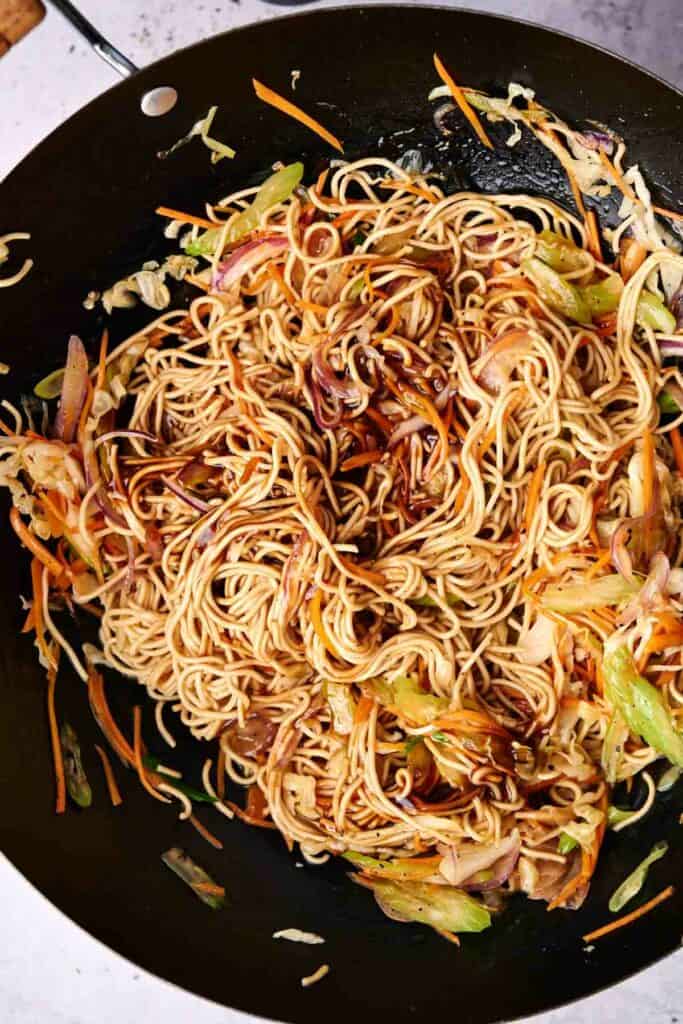
Serve and Enjoy
Finish off by topping stir-fried noodles with green onions and a sprinkle of sesame seeds, then it’s ready to serve. Enjoy your homemade, steamy plate of noodles!
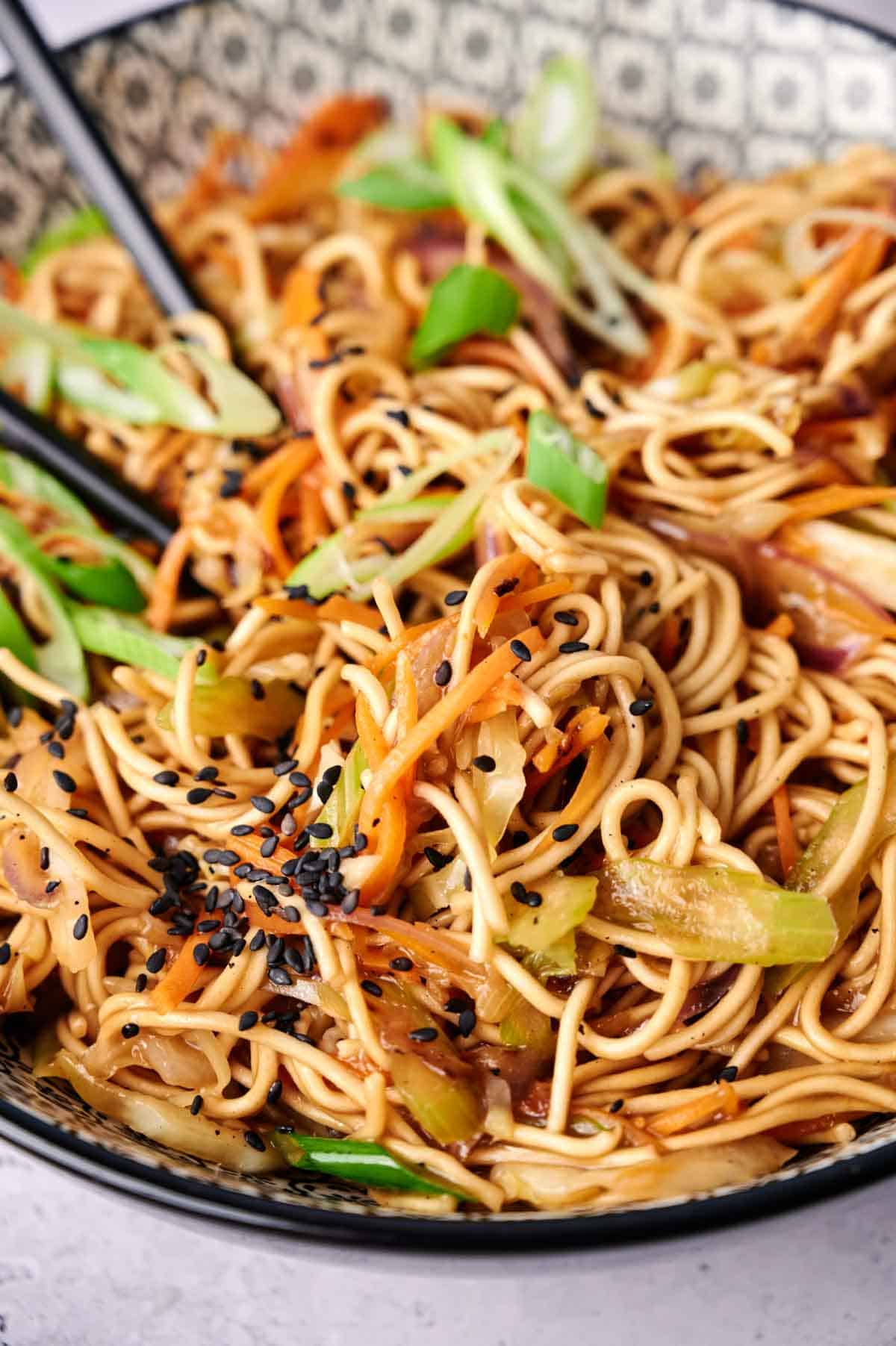
Ingredients
- 16 ounces chow mein noodles
- 2 tablespoons vegetable oil
- 2 cups cabbage thinly sliced
- 1 cup celery thinly sliced
- 1 red onion sliced
- 2 small carrots thinly sliced
- 2 green onions thinly sliced
- Sesame seeds for garnishing
For the sauce:
- 4 tablespoons soy sauce
- 4 tablespoons oyster sauce
- 2 tablespoons sesame oil toasted
- 2 cloves garlic minced
- ½ cup beef broth
- 1 tablespoon cornstarch
Instructions
- In a small bowl, combine all the sauce ingredients (make sure that the cornstarch has been fully dissolved, it may drop to the bottom of the bowl in the process, just make sure to stir it again just before using the sauce at a later step).4 tablespoons soy sauce, 4 tablespoons oyster sauce, 2 tablespoons sesame oil toasted, 2 cloves garlic minced, ½ cup beef broth, 1 tablespoon cornstarch
- Bring 3 cups of water to a boil and dip the chow mein noodles – let them soak for 6-7 minutes, or until soft. Drain and set aside.16 ounces chow mein noodles
- Heat a wok to medium-high and add the vegetable oil. Once it’s hot, add the cabbage, celery, onion and carrots.2 tablespoons vegetable oil, 2 cups cabbage, 1 cup celery, 1 red onion, 2 small carrots
- Sauté for a couple of minutes, or until the veggies begin to be tender. Add the sauce and the noodles and mix well. Cook for a couple of minutes, or until the sauce begins to thicken.
- Serve with green onions and sesame seeds.2 green onions, Sesame seeds
Notes
- Noodle Prep: Do not overcook the noodles in the boiling water; you want them just soft enough to stir-fry. They’ll continue cooking a little in the sauce.
- What’s the best way to keep the noodles from sticking together? The key is to boil the noodles just until they’re tender, then rinse them under cold water to stop the cooking process and remove excess starch.
- Noodle Substitutes: In a pinch, spaghetti, egg noodles, or even linguine can substitute for chow mein noodles. Just cook them al dente to keep the texture right. Rice noodles are a great gluten-free option.
- Soy Sauce: Either light soy sauce or dark soy sauce will work for this recipe. To keep it gluten-free, opt for tamari instead.
- Sauce Thickness: If your sauce isn’t thickening, mix a little more cornstarch with water and stir it in gradually.
- Meat: Feel free to add chicken, beef, or shrimp for a protein boost. Just cook the protein before the vegetables and set aside.
- Broth: To make this suitable for vegetarians, swap the beef broth for vegetable stock and use a vegan fish sauce instead of oyster sauce.
- Spice: Add some chopped chili peppers or a few dashes of hot sauce to the stir-fry to kick up the heat.
- Other Vegetables: The sky’s the limit here. Snap peas, bok choy, broccoli, bean sprouts, bell peppers, and even a little ginger can make great additions. Just remember to add them according to their cooking times to keep everything crisp.
Storage and Reheating Instructions
- Cool and Airtight: Let the Chow Mein cool to room temperature before packing it away, and use airtight containers to store your leftovers.
- Refrigerate: For the best quality and safety, store the leftovers in the fridge and consume them within three days.
- Reheat: When reheating, splash a little water over the noodles and stir-fry them briefly on high heat to bring back their freshness. Avoid microwaving if possible, as it can make the noodles too soft.
Nutrition
Recipe Notes and Expert Tips
Here are some tips to help you nail this Chow Mein recipe every time:
- Noodle Prep: Do not overcook the noodles in the boiling water; you want them just soft enough to stir-fry. They’ll continue cooking a little in the sauce.
- What’s the best way to keep the noodles from sticking together? The key is to boil the noodles just until they’re tender, then rinse them under cold water to stop the cooking process and remove excess starch.
- Noodle Substitutes: In a pinch, spaghetti, egg noodles, or even linguine can substitute for chow mein noodles. Just cook them al dente to keep the texture right. Rice noodles are a great gluten-free option.
- Soy Sauce: Either light soy sauce or dark soy sauce will work for this recipe. To keep it gluten-free, opt for tamari instead.
- High Heat: Keep the heat medium-high when stir-frying to get a nice texture on the veggies and to keep them crisp.
- Fresh Ingredients: Use fresh vegetables for the best flavor and texture. The crispness of fresh veggies makes a big difference.
- Sauce Thickness: If your sauce isn’t thickening, mix a little more cornstarch with water and stir it in gradually.
- Meat: Feel free to add chicken, beef, or shrimp for a protein boost. Just cook the protein before the vegetables and set aside.
- Broth: To make this suitable for vegetarians, swap the beef broth for vegetable stock and use a vegan fish sauce instead of oyster sauce.
- Adjust Seasonings: Taste as you go and adjust the seasonings to your liking. If you need more salt, add a splash of soy, a dash of sugar for sweetness, or extra garlic for a kick.
- Spice: Add some chopped chili peppers or a few dashes of hot sauce to the stir-fry to kick up the heat.
- Other Vegetables: The sky’s the limit here. Snap peas, bok choy, broccoli, bean sprouts, bell peppers, and even a little ginger can make great additions. Just remember to add them according to their cooking times to keep everything crisp.
How to Store Leftover Chow Mein
Storing your leftover Chow Mein properly means you can enjoy it just as much the next day. Here’s how to keep it fresh:
- Cool and Airtight: Let the Chow Mein cool to room temperature before packing it away, and use airtight containers to store your leftovers.
- Refrigerate: For the best quality and safety, store the leftovers in the fridge and consume them within three days.
- Reheat: When reheating, splash a little water over the noodles and stir-fry them briefly on high heat to bring back their freshness. Avoid microwaving if possible, as it can make the noodles too soft.
Our Top 3 Money-Saving Tips for This Recipe
Saving money while cooking delicious meals like Chow Mein is easier than you think. Here are some top tips:
- Use a Wok: Cooking with a wok uses less oil and cooks food faster, saving energy.
- Homemade Stock: Use vegetable scraps and meat bones to make stock instead of buying it.
- In-House Prep: Skip pre-cut vegetables. Buy whole veggies like cabbage and carrots, and slice them yourself.
What to Serve with Chow Mein
Pairing the right sides with Chow Mein can really elevate your meal. Here are some tasty ideas to complement your noodles:
Side Dishes
Try a cucumber salad with a vinegar dressing or a simple shredded carrot salad with sesame dressing. These add a fresh contrast to the hearty noodles.
Proteins
If you want to add more protein to the meal, try serving dishes like kung pao chicken, Asian-style pork chops, or sesame-crusted tofu. These protein options are flavorful and align well with the Asian-inspired theme of Chow Mein.
Soups
A comforting soup can also be a great addition to this stir-fried noodle dish. A miso soup or a hot and sour soup are perfect starters that can go before your main course. They’re both soothing and flavorful, offering a balance to the savory noodles.
